
Sometimes, but only if the timber underneath is sound. Covering rotten boards hides the damage and lets it carry on, so the first job is always to see what is behind the old fascia.
Fitting new boards over old ones sounds tidy and quick, and on some houses it is perfectly reasonable. The question is what the timber underneath is doing. In Cotham, where tall Victorian houses have eaves that are hard to reach and often neglected, the honest answer depends on a close look before any decision is made.
When capping over works
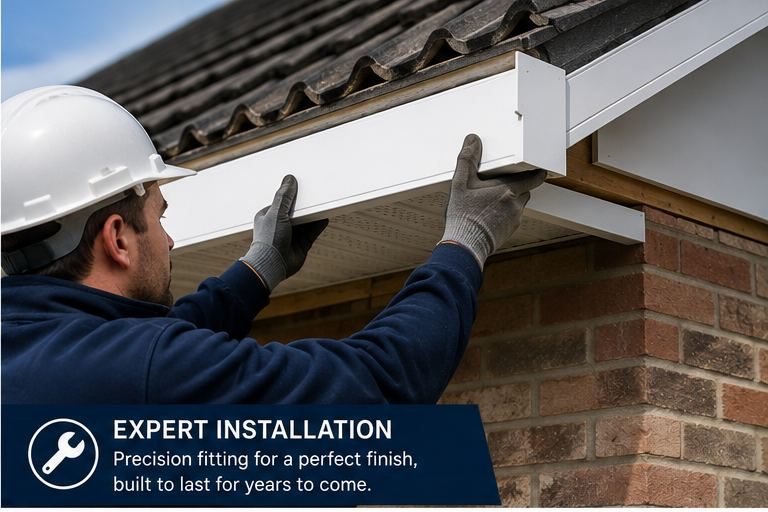
If the existing fascia is solid, straight and dry, a UPVC cover can be fitted over it. The old board then acts as a firm backing for the new one. This suits timber that has simply been repainted too many times and is otherwise healthy, and it avoids disturbing the eaves more than necessary. We tap and probe the board from below and check the line of the gutter as part of that decision.
When it should not be done
Where the timber is soft, split or damp, covering it seals the problem in. Rot carries on behind the new plastic, and nobody sees it until the board sags or the gutter pulls away. Any board that has held water, or that sits behind a leaking gutter, needs to come off so the rafter ends can be checked. The same applies to soffits that look fine from the street but are damp above.
What lies behind the board
The fascia is only the visible part. Behind it sit the rafter ends and the soffit, and these are where trouble starts. Tall houses with parapet gutters and long downpipe runs can send water down the eaves for a long time. Taking the board off is the only way to see whether the structure is dry. This is what we check when a fascia is opened up:
- Rafter ends for softness, staining or rot
- Soffit boards and their fixings
- Evidence of past leaks from gutters or the roof edge
- Whether the roof space has enough ventilation
Why full replacement is often better
Replacing the whole fascia and soffit lets us put in new boards at the right depth, vented soffits or vent strips so the roof space breathes, and fresh gutters hung on solid fixings. It also removes any chance of hidden damp. On older homes we check what the existing soffit boards are made of before disturbing them.
What to ask any installer
Ask whether they will look behind the old boards before deciding, how access or scaffold is arranged, what happens to the gutters, and how ventilation is dealt with. A good answer is written down and specific. If the roof has other problems, call us for a proper look at the whole picture, not just the edge.
Frequently Asked Questions
Is covering old timber less work than replacing it?
It can save labour, but only on sound timber. If the boards are damp or rotten, covering them leads to repeat work later. We tell you honestly which suits your house after checking the eaves.
Do I need to paint UPVC once it is fitted?
No. UPVC is cleaned, not painted, so it is very low maintenance. A wipe down occasionally keeps it looking right. Finishes include white, darker colours and wood-effect options. Wipe it down now and then with water and a soft cloth.
Will you check the rafters first?
Yes. We look at the rafter ends and eaves before anything new goes on. If something needs attention, we show you and explain it so you can decide before the job continues. We keep the old and new details clear so nothing is hidden.
Talk to our team about UPVC fascias and soffits in Cotham
Every roof is different — the fastest way to get an accurate answer is a quick chat with our team.