
Finding a leak is detective work. The stain on your ceiling is rarely under the hole, so tracing it means working backwards through loft, felt, lead work and coverings.
The wet patch you can see is usually the end of the story, not the start. Water runs along timbers and felt before it shows, so the real opening can sit a good distance up the roof. In the tall houses around Cotham, that path can be long, and it pays to trace it properly before anyone touches a tile. We work from the evidence.
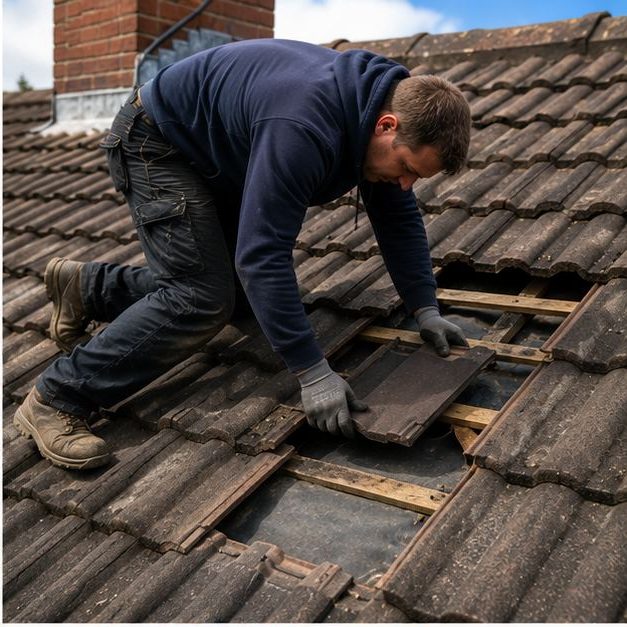
Start with the pattern, not the stain
Before anyone goes near the roof, we ask when it leaks. Only in wind-driven rain points to a flashing or an exposed edge. After any long wet spell suggests a covering that has let go. A drip that follows a chimney breast tells its own story. The timing narrows the search before a single tile is lifted, and it stops us repairing the wrong place. Tall houses give water a long way to run, so the first clue matters.
What the loft or top floor shows
From inside we look for daylight through the covering, dark or damp timbers, stained felt and wet insulation. Water tracks along the timber, so we follow the marks uphill to where they are freshest. In a flat conversion with no loft access, we check the top-floor ceilings, walls and the chimney breast for the same signs. Staining that is fresh and dark is usually closest to the source.
The usual suspects on a Cotham roof
These roofs have more going on than a plain pitch, and several details fail more often than the main slope. Flashings, gutters and chimneys take the weather from several directions at once, so on houses like these, we check these first and work outwards from there.
- Lead flashings where the roof meets a wall or chimney
- Valleys and parapet gutters that can block or lift
- Large chimney stacks, including pointing and the lead around them
- Slipped, cracked or missing tiles and slates
- Gutter edges where water overshoots the eaves
Confirming it from outside
Once the inside clues point to an area, we inspect that part of the roof closely and check the details upslope of the stain. Sometimes a simple test with a hose, run in stages from the lowest point upwards, proves the entry point. We only call it found when the evidence from inside and outside agrees. Written notes and photographs from both visits are passed to you.
What you can safely do yourself
Look from the ground with binoculars if you like, check gutters and downpipes for overflow, and note where stains appear on ceilings. Photograph them with dates so we can see how they change. Please do not climb up or put a hose on the roof yourself. Tell us what you saw and call us for a proper look.
Frequently Asked Questions
Why is the leak nowhere near the stain?
Water follows timbers, felt and the underside of the covering, and drips from the lowest point it can find. That point can be a long way from where it entered. Tracing it back is the job, rather than patching under the stain. That is why a stain can mislead.
Can you find a leak when it is dry outside?
Often, yes. Stained felt, dark timber and daylight showing through the roof tell us a good deal. If it is still unclear, controlled water testing in stages can reproduce the leak, working from the lowest point upwards.
Will you just patch the damp area?
No. Patching the ceiling hides the problem and leaves the opening in place. We find the source, tell you what is causing it and repair that, then explain whether anything else needs attention.
Talk to our team about roof repairs in Cotham
Every roof is different — the fastest way to get an accurate answer is a quick chat with our team.