
Exposed ground and inter-war and post-war roofs bring a recognisable set of problems. Here are the ones we see most often around Bishopsworth and what usually fixes them.
Houses on higher, open ground take more wind than most, and the roofs here are mainly tiled semis with hips, plus plenty of garages. That mix produces a familiar list of faults. Most are simple to put right if caught early, and expensive if left. Knowing what to look for from the ground helps you catch them.
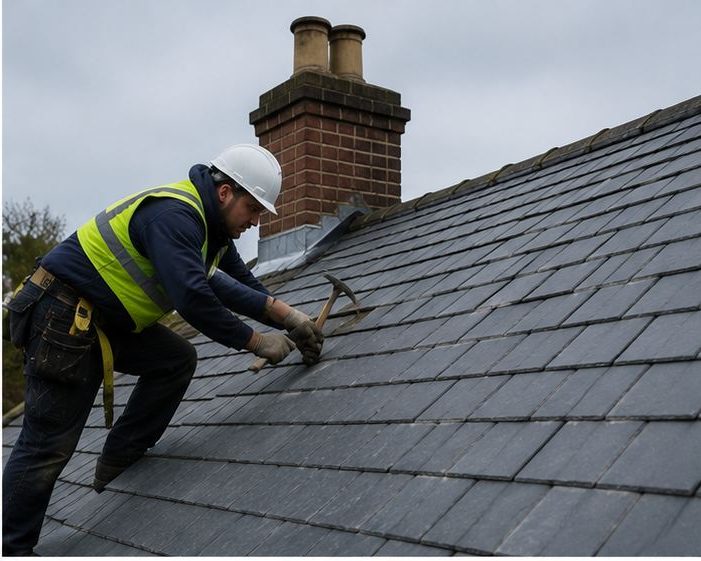
Wind-loosened tiles and ridge
Gusts lift tile edges and shake loose the bedding under ridge and hip tiles. Cracked mortar, tiles that have slipped out of line and gaps along the ridge are common after a blustery spell. Hipped roofs have more of these runs than a simple gable, so there are more places for things to loosen. Photographs taken from the garden after a storm help us plan the visit.
- Slipped or cracked tiles on the main slope.
- Loose or crumbling ridge and hip bedding.
- Edge tiles that sit out of line.
- Debris in the garden after a storm.
Failed mortar at the verge
On gables and garage ends, mortar at the roof edge cracks and falls. Lumps on paths and drives are the first sign. Once the edge opens, wind and rain get under the tiles. A dry verge is one answer where it suits the tile type; a repair is sometimes enough. We look at the wider roof edge when we repair one run. Fallen mortar is one of the clearest signs you can spot yourself from the ground.
Flat roof troubles
Garages, porches and extensions often have flat roofs. Ponding, blisters, splits and failed edges are typical. Because they carry less slope, any weakness shows up as a leak quickly. Whether to repair or replace depends on how widespread the faults are and the condition of the deck beneath. Garage roofs get less attention than main roofs, so faults go unnoticed longer.
Gutters, fascias and soffits
Overflowing gutters and rotting boards cause damp at the eaves. Timber fascias that have not been maintained start to soften, and solid soffits can stop the roof space breathing. UPVC replacements with vented soffits are a common solution, with the gutters refitted or replaced at the same time. Fixing the roof and its drainage together avoids repeat call-outs.
- Gutters that overflow or drip at joints.
- Peeling, soft or bowed fascia boards.
- Stained soffits and a musty roof space.
- Moss and debris blocking downpipes.
Flashings, chimneys and old felt
Lead flashings around chimneys and walls tire over time and let water in. Felt under the tiles, particularly on older roofs, can perish and crack. These faults are not visible from the street, which is why a proper inspection includes the loft. We explain what is urgent and what can wait. Lead work is skilled, and worth doing properly. Ask us what can wait.
Frequently Asked Questions
Which problem is most urgent?
Anything letting water into the house or leaving tiles loose enough to fall. Slow faults like moss or ageing gutters can wait a little, but should be watched. We help you prioritise. Everything else can be planned.
Can I check for these myself?
Yes, from the ground and the loft. Look for slipped tiles, fallen mortar, stained ceilings and daylight in the roof space. Do not climb up. Call us and we will inspect the roof properly. Photos help you describe it.
Does a storm always mean damage?
Not always, but strong wind can loosen things unnoticed. After a bad storm, walk around the house, look for debris, and check ceilings inside. A roof inspection settles any doubt. A short walk round the house is enough.
Talk to our team about general roofing services in Bishopsworth
Every roof is different — the fastest way to get an accurate answer is a quick chat with our team.