Portishead roofs by the marina and the estuary
Wind coming off the estuary lifts and loosens things. Ridge bedding cracks, tiles shift, lead flashings tire and metal fixings suffer in salt air. Exposed slopes feel it most. Roofs here gain from regular attention, because a small fault found early is a minor repair, while the same fault left through a few gales becomes a leak.
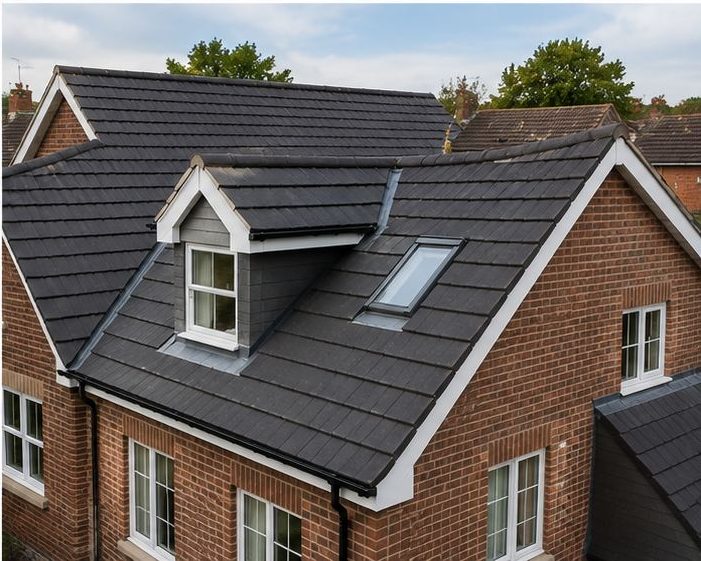
The housing is varied: older seafront houses, Victorian homes and big modern estates. Each ages in its own way, so we look at what a particular roof is made of and which side takes the weather before judging whether it needs repair or renewal. A sheltered rear slope and an exposed front one can tell different stories.
Extensions, garages and bay tops mean many houses carry a flat roof as well as the main pitched one. Because both are in our hands, one visit can take in the main roof, the lower sections, gutters and chimney and produce a single sensible plan for the house, with photographs where they help explain the problem.
Roofing work we do in Portishead
- Storm and wind repairs. Slipped tiles, lifted ridges and loosened coverings are made sound again after a blow, and leaks are followed back to their true source.
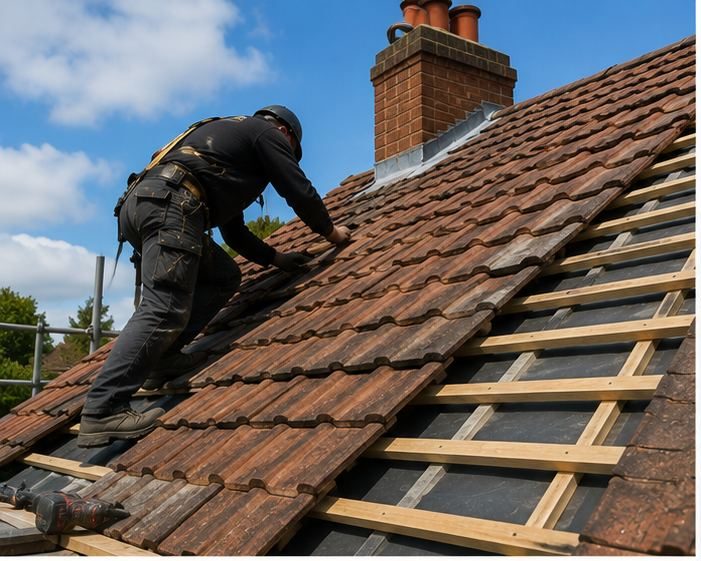
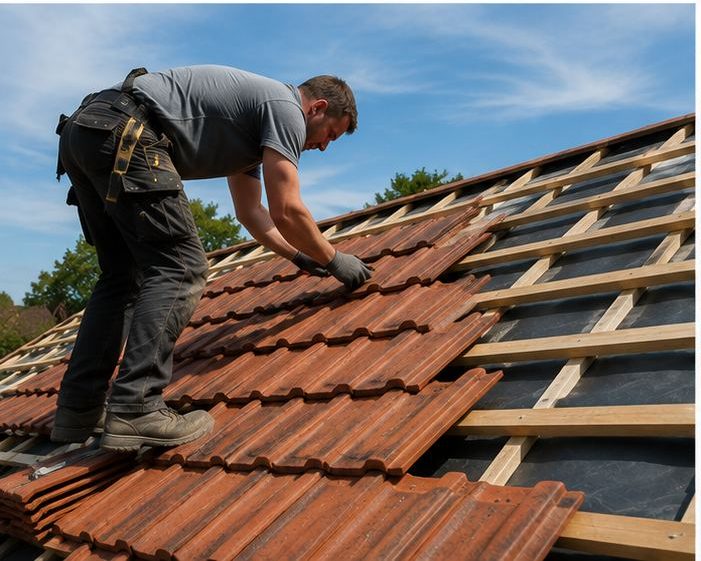
- Whole-roof renewal. Where the covering is tired across a whole slope, we strip and re-cover it, discussing edge details and ventilation as we go.
- Ridges, hips and lead. Ridge and hip tiles are re-bedded, and lead flashings repaired or renewed where salt air and wind have taken their toll.
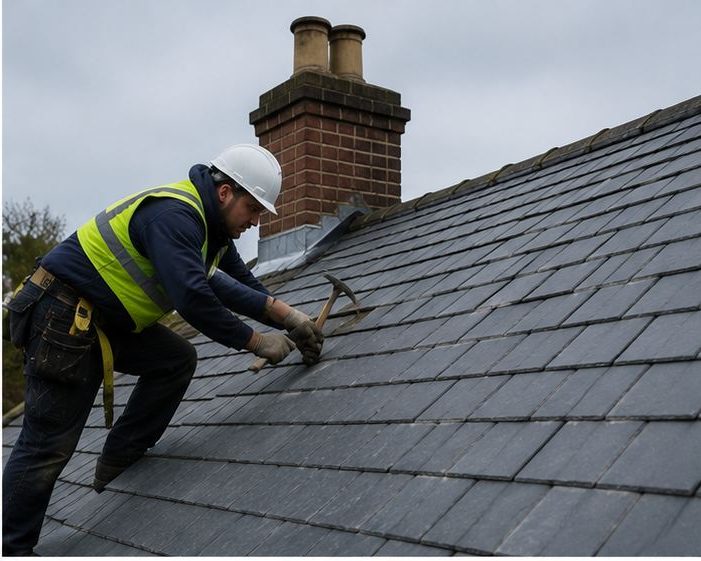
- Chimneys and stacks. Stack flashings, pointing and cappings are put right where weather has worked at them from every side.
- Gutters, fascias and soffits. Gutters and roofline boards that let water into the eaves are repaired or replaced, including UPVC fascias and soffits.
- Flat roofs and inspections. Garage, extension and bay roofs are repaired or replaced, and full-roof inspections give an honest list of what is urgent.
How we approach a Portishead roof
A first visit is mostly looking and listening. We check from the ground and the loft for daylight, damp timber and staining, and look at the covering, ridges, hips, flashings and gutters where it is safe to do so. Then we explain in plain terms what each part is doing.
Next comes a short, honest list: what is urgent, what is worth watching and what is fine as it stands. If a repair will hold, we say so; if more is needed, we explain why. Scaffold and access are agreed before starting, and we do not push work the roof does not need.