Why Portishead roofs need careful repair
The older seafront houses and Victorian homes in Portishead are often tall, with steep roofs that catch the wind hard. Ridge tiles and hips take the worst of it, and where the bedding has cracked, a single strong gust can shift a tile that was holding by habit alone. Those exposed lines are always our first stop on a gusty-weather callout.
Salt air is hard on the small details. Lead flashings, valley linings and nails around chimneys and walls weather faster near the coast, and a flashing that has lifted at one corner is enough to let rain in behind it during a gale from the estuary. Fixings corrode quietly, and the first sign is often a gap you cannot see from the road.
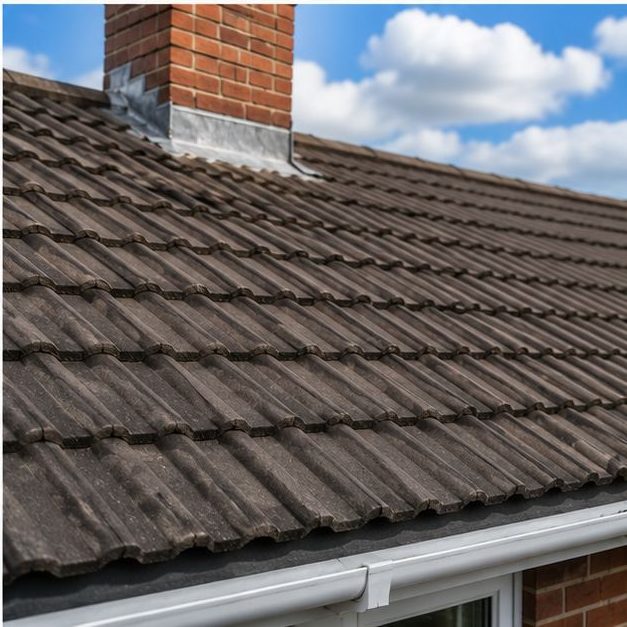
The large modern estates in Portishead have newer roofs, but exposure is the same. Verges, eaves and the tile courses nearest the edge carry the most load in wind, so that is where we look first when a house reports a leak after a storm. Wind pressure at the edge is simply greater, whatever the age of the roof.
Roof repair jobs we carry out in Portishead
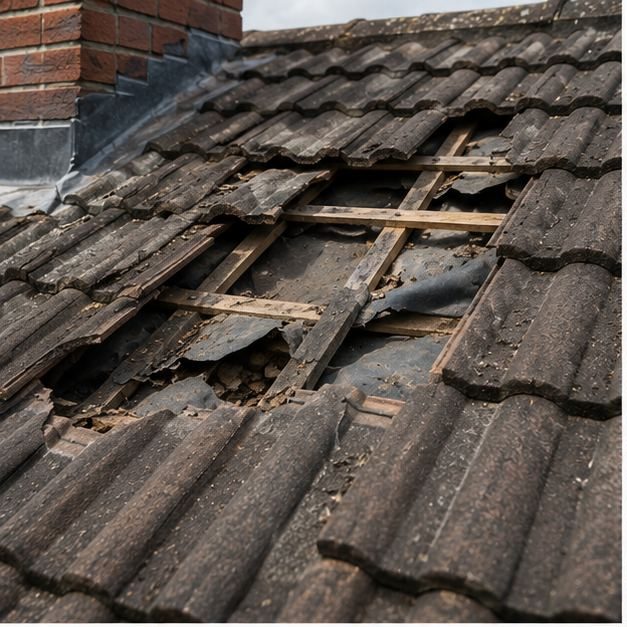
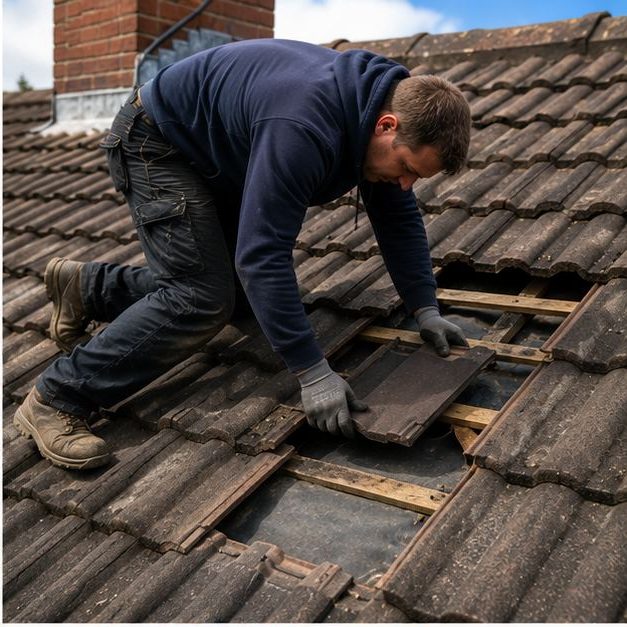
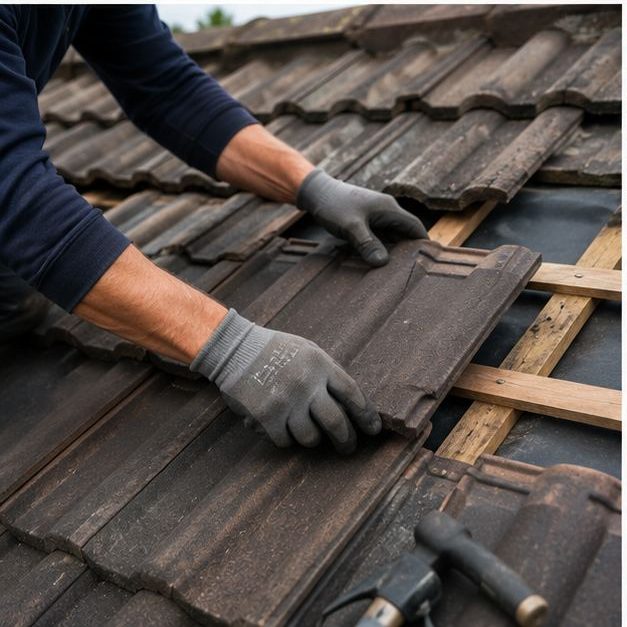
- Loose and slipped tiles. Tiles shaken loose by estuary gales are refixed or replaced, with the neighbouring courses checked so the repair is not undone by the next blow.
- Broken slates on Victorian roofs. Cracked or slipped slates on older homes are replaced carefully, and we check the fixings around them that sea weather may have loosened.
- Ridge and hip re-bedding. Ridge and hip tiles that have lost their bedding to wind and salt are lifted and re-bedded, and the joints pointed to shed water again.
- Lead flashing and valleys. Coastal weather attacks lead and its fixings, so we repair or renew flashings around chimneys, walls and valleys where they have lifted or split.
- Verge and eaves repairs. Roof edges that wind has opened up are secured and made good, which stops rain and gusts working underneath the covering.
- Leak tracing after storms. We follow damp back along the felt and timbers to the real entry point, then repair that point instead of the visible stain.
How we approach roof repairs in Portishead
We start with the view from the ground and then the loft, looking for damp timbers, daylight and stained insulation. That shows us the line the water has followed, which usually leads us to the fault more quickly than guessing from the ceiling. Photographs of the loft and roof help you see what we mean.
Once the problem is found, we explain it in plain words and say whether a repair will hold in this exposure or whether the covering is tired enough across the roof that replacing it would be the more honest advice. The choice is always yours to make. We never push a full replacement when a sound repair will do.