
The right roof depends on the house and the weather it faces. Here is how we think about tiles, slate and flat roofing for the mix of homes in Portishead, from seafront terraces to modern estates.
Portishead has older seafront houses, Victorian homes and large modern estates, all sitting in salty, windy air off the estuary. There is no single best roof for all of them. What suits a property depends on its age, its shape, how exposed it is and what is already fitted.
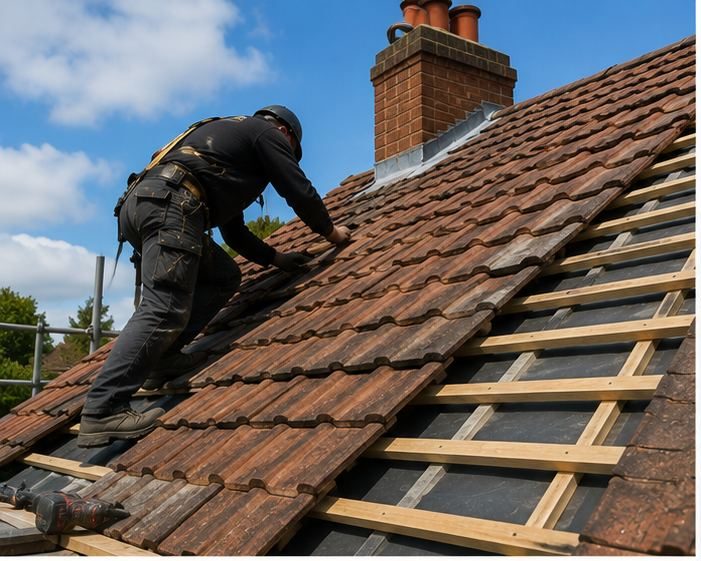
Start with what is already on the house
The existing roof tells us a lot. A Victorian house may carry natural slate or clay tiles, and matching or sympathetically replacing them keeps the look of the street. A modern estate home usually has concrete tiles in a standard profile that are easy to match and repair.
Where a house has been extended, the old and new roofs may differ quite a lot in material and age. We look at how they meet, because that junction is often where weather finds its way in, especially when wind drives rain across it.
Pitched roofs: tile or slate
Tiles and slate both shed water well when fixed properly. The question is weight, exposure and appearance. On exposed sites, the fixing method matters more than the material, so we look at clipping, nailing and edge details. We explain the options and the trade-offs, not just one choice.
- Natural slate for older homes where the look matters
- Concrete or clay tiles for easy matching and repair
- Ridge, hip and verge details chosen for wind exposure
- Lead flashings fitted for the covering used
Flat roofs and extensions
Extensions, garages, porches and dormers often have flat roofs. Single-ply rubber, fibreglass and felt systems each suit different jobs. We look at the shape, access, falls and the deck beneath before suggesting one. A roof with many penetrations or awkward edges may favour a system that can be formed around them.
Dormers and bay tops add further small flat areas. These are best looked at together with the main roof, so the details around them are consistent and one weak corner does not undo the rest of the work on the house.
Exposure and salt
Near the water, fixings, flashings and gutters work harder. Ventilation in the roof space, good edge detailing and well-fixed ridge and verge parts all matter more. A roof chosen well for its surroundings can also be easier to look after with periodic inspections and moss removal.
How we advise
We look at the whole roof, then talk through what is urgent and what can wait. Ask any roofer for a clear written description of the work, how access will be arranged and what they recommend and why. Changes to materials or structure may need planning or Building Regulations checks — we advise before work starts.
Frequently Asked Questions
Is slate better than tile?
Neither is better in every case. Slate suits many older homes and gives a refined look, while tiles are easier to match on estate houses. What matters most is correct fixing and detail for the exposure.
Do I have to match the existing roof?
Not strictly, but matching usually looks best, particularly on older houses. If part of a roof is being repaired, a close match keeps the appearance consistent across the whole house. We discuss alternatives together where an exact match is no longer available.
Can one roofer handle pitched and flat roofs together?
Yes. Many houses have both, such as a pitched main roof and a flat extension. We look at both together so the junctions between them are properly detailed and nothing is missed on the way.
Talk to our team about general roofing services in Portishead
Every roof is different — the fastest way to get an accurate answer is a quick chat with our team.