
A fascia looks like trim, but it holds the gutter and shields the rafter ends. On Easton terraces, a damaged one can let trouble into the roof long before anything shows inside.
The fascia is the board along the bottom edge of the roof, fixed to the rafter ends and carrying the gutter. When it is sound it is easy to ignore. When it is split, rotten or sagging, water and wildlife get into the eaves, and the damage spreads quietly into the roof structure behind it.
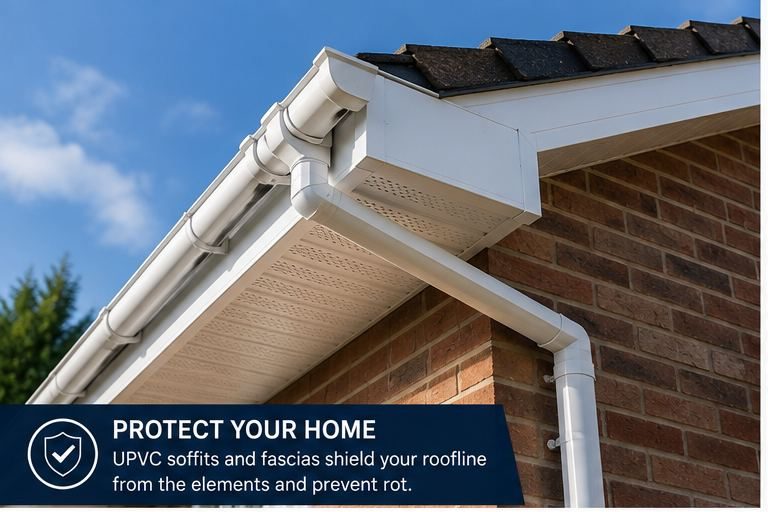
What the fascia is protecting
Behind the fascia sit the ends of the rafters and the edge of the roof covering. Together they make up the most exposed part of the roof, because every drop of rain that runs off the slope passes this point. A sound board keeps that edge covered, the gutter correctly aligned and the eaves closed.
On a terrace the fascia often runs unbroken along the front or rear of several houses, so a fault at one end can affect gutters and eaves further along. That is another reason we look at the whole run rather than just the board you can see damaged.
How damage becomes a roof problem
Once a board splits or lifts, water gets behind it and soaks the rafter ends and the felt tucked into the gutter line. Timber that stays wet goes soft, and soft timber stops holding the gutter or the lowest tiles. Over time the problem moves up the roof from the edge, which is why small faults at the eaves deserve attention.
- Gutters pulling away or sagging between brackets
- Rafter ends stained, soft or crumbling
- Felt at the eaves wet, torn or curling
- Lowest tiles slipping because their support has weakened
Soffits and the gaps birds like
The soffit closes the underside of the eaves. If it cracks or drops, the roof space is open to birds, wasps and damp air. Gaps along the board are a common way for nesting material to get in. On terraces where houses sit tightly together, one open section can allow access along the whole row.
What we check on the day
We look at the boards from the ground and from a safe working position, press for soft spots, and check the gutter line and joints. We also look at the soffit and, where we can, the rafter ends behind. On older homes we check what existing soffit boards are made of before disturbing them.
- Soft, flaking or split sections of timber
- Gaps at joints and corners
- Stains below the gutter on the wall face
- Overflowing or leaking gutter joints above the board
Repair, replace and what to ask
A small localised fault can sometimes be repaired, but once rot has spread it is usually best to replace the run, including the gutter if needed. Ask whether rafter ends will be checked, whether vented soffits or strips are included so the roof space breathes, and how access will be arranged on a busy street.
Replacement also gives the chance to put right anything the old board was hiding, such as worn eaves felt or a gutter set at the wrong fall, so the roof edge works as a system again. You then know the whole edge is sound, not just the board you could see.
Frequently Asked Questions
Can a damaged fascia cause a leak indoors?
Yes, indirectly. Water behind the board soaks the rafter ends and eaves felt and can travel inward. It may show as a stain near the top of an external wall or ceiling edge, long after the fascia first failed.
Is it urgent if only one board is damaged?
Not always, but do not leave it. One damaged section lets water in and holds the gutter badly, and the fault spreads along the board. We can tell you whether it needs doing now or can be planned in with other work.
Will you check behind the board?
Yes. A fascia is only as sound as the rafter ends behind it, so we check those as the old board comes off. If anything is rotten, we tell you before fitting new boards so the repair actually lasts.
Talk to our team about UPVC fascias and soffits in Easton
Every roof is different — the fastest way to get an accurate answer is a quick chat with our team.