
A dry verge is a good fix for failed mortar, but it is not right for every roof. These are the things worth checking, in order, before anyone fixes anything to your gable edge.
The verge is the edge of the roof where it meets a gable wall, and on a terrace it is often only the end house or a rear projection that has one. A dry verge swaps wet mortar for mechanically fixed pieces. Before choosing it, you need to know whether the roof it will sit on is sound enough to deserve it.
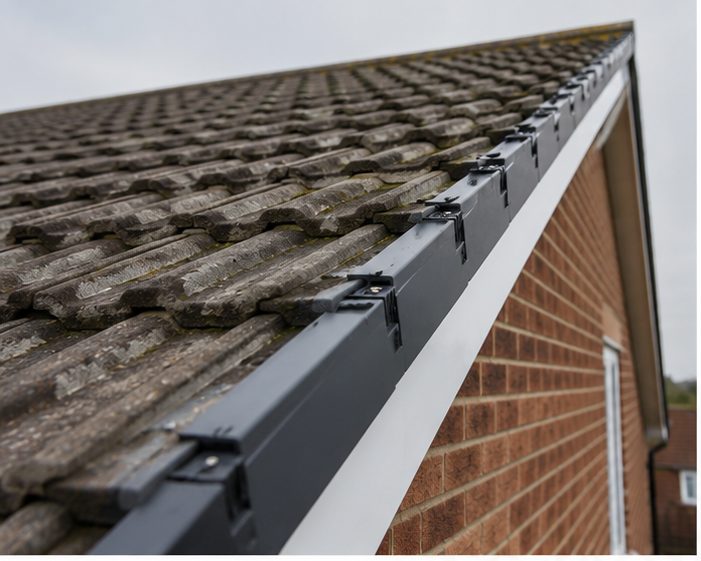
Is the roof itself in good order?
A dry verge protects the edge. It does not cure a roof failing elsewhere. If tiles are slipping, felt has perished or the timbers are soft, those problems need addressing first or at the same time. We look at the whole slope, not just the edge, and say honestly if the verge is the least of your worries.
A roof that is nearing the end of its life may be better served by a full re-roof with a dry verge built in from the start, instead of a new edge on a tired slope. We will tell you plainly which route we would take and why.
Does the system suit your tiles?
Dry verge units are made to suit particular tile profiles, and compatibility is checked on site, not guessed from a photograph. Older terraces may have older tiles or slates, and the edge detail can differ from one roof to the next. A system that does not match the tile properly can look wrong and perform badly.
- The profile and thickness of your existing tiles
- How the edge currently sits against the gable
- Whether tiles can be cut or adapted neatly
- If fixings can be made to the maker's guidance
What is going on at the gable?
Look at the wall below the verge from the ground. Mortar lying on a path or drive is a typical first sign, but also check for cracking, staining or open joints on the wall face. If the gable wall itself is moving or letting water in, the verge is only part of the story and needs to be considered with the wall.
How the work will be done
Ask how the old mortar will be removed, how the verge will be fixed and finished, and how access is arranged. On a tightly packed street, scaffold, deliveries and waste removal affect neighbours and need planning. A proper description of the work, written down, should answer these points without you having to chase.
Ask also how the ridge end and eaves end of the verge will be finished, since those corners are where poor workmanship shows first. A tidy site and a clear explanation of each step are what you should expect from any roofer.
What a clear quote should say
The quote should name the type of dry verge, state that fixing follows the tile maker's guidance, and describe what is included at the ridge end and eaves. It should say what happens if hidden damage is found. Where the work forms part of a re-roof, it may need planning or Building Regulations checks — we advise before work starts.
Frequently Asked Questions
Can a dry verge go on any roof?
Not any roof. It depends on the tile profile and the state of the edge. Most common tiles have a matching system, but we confirm that on site before recommending it, and tell you if another approach would work better.
Does a dry verge need maintenance?
Very little. There is no mortar to crack or fall out, so the usual cycle of cracking and re-pointing goes. It is still worth having the roof looked at after storms, as with any roof, to catch loose pieces early.
What is the first sign my verge has failed?
Often it is pieces of mortar on a path, drive or bin area below the gable. You might also see gaps at the edge, birds nesting, or tiles looking loose. If you see any, call us for a proper look rather than checking from a ladder.
Talk to our team about dry verge systems in Easton
Every roof is different — the fastest way to get an accurate answer is a quick chat with our team.