
Replacing fascias and soffits is a sequence of small jobs done in the right order, from scaffold to final gutter. Here is what happens on site, and what you will notice.
Most people only see the boards at the edge of the roof, but the work behind them decides how long the new ones last. On a Fishponds terrace, semi or extended house the process is much the same, though the details of access and neighbouring eaves differ. This is the order we work in.
Access comes first
Eaves work needs a safe platform, so scaffold or a tower is arranged before anything is touched. On terraces and tight side passages this is planned carefully so neighbours know when it will be up. It also gives us proper access to inspect the roof edge, which a quick look from the ground never does.
Parking and bins are worth thinking about before the scaffold goes up. Tell us about any narrow passages, shared access or tight corners, because those affect where the platform stands and how materials reach the roof edge. We will talk you through the plan before the first board is touched.
Taking the old boards off
The gutters come down first, then the old fascia and soffit boards are removed. Rotten sections tend to crumble and nails often pull through soft wood, so the work is steady rather than fast. This stage can be dusty, so we keep windows and your garden in mind as we work.
On older houses we check what the existing soffit boards are made of before disturbing them, and handle them accordingly. Nothing is thrown down loose onto your garden or path. We take care to handle the boards slowly and keep the garden clear of loose fragments as the work goes on.
Checking what is underneath
With the boards off we can see the rafter ends, the wall plate and the inside of the eaves. Damp or soft timber is cut back and treated or repaired, and any gaps that let birds or insects in are dealt with. This is the stage where hidden problems appear, and we tell you what we find before carrying on.
- Rafter ends sound, dry and firm to the touch
- Wall plate and fixings free of rot
- Eaves clear of old nests and debris
- Level line for the new fascia to sit true
Fitting the new boards and ventilation
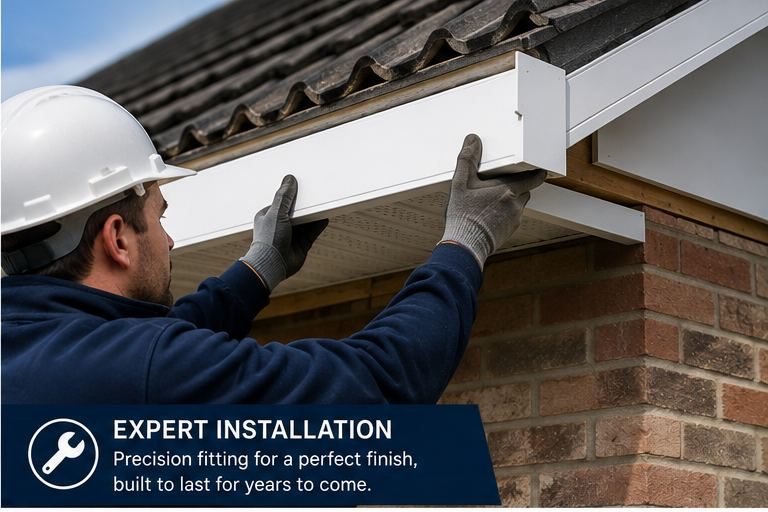
New UPVC fascias are fixed to sound timber, with soffits cut to fit and joined neatly. We use vented soffits or vent strips so the roof space can breathe, which helps stop condensation and damp in the loft. Corners are finished tidily, and bargeboards at gable edges are done in the same finish. Each board is cut and fixed so that joints line up and the run looks straight from the street, which matters on a terrace where your neighbours see the same line.
Gutters and finishing off
Gutters are refitted or replaced, set to run toward the downpipes, and checked with water so joints are seen working before we leave. The site is swept, and the scaffold comes down once you are happy with the result. The work may need planning or Building Regulations checks — we advise before work starts.
Frequently Asked Questions
How long are the boards left open to the weather?
Only for as long as the work needs. We plan the job so that stripped sections are rebuilt the quickly wherever possible, and cover anything we cannot finish in one go so rain does not get into the eaves.
Will my gutters be replaced too?
Not necessarily. Sound gutters can be cleaned and refitted. If they are cracked, sagging or leaking at joints, new ones are usually the better choice, and we say which applies once they are down.
Do I need to be home?
It helps to be around at the start so we can agree access and walk through the plan, but you do not need to stay in the house. We will tell you when we need the garden or drive clear.
Talk to our team about UPVC fascias and soffits in Fishponds
Every roof is different — the fastest way to get an accurate answer is a quick chat with our team.