
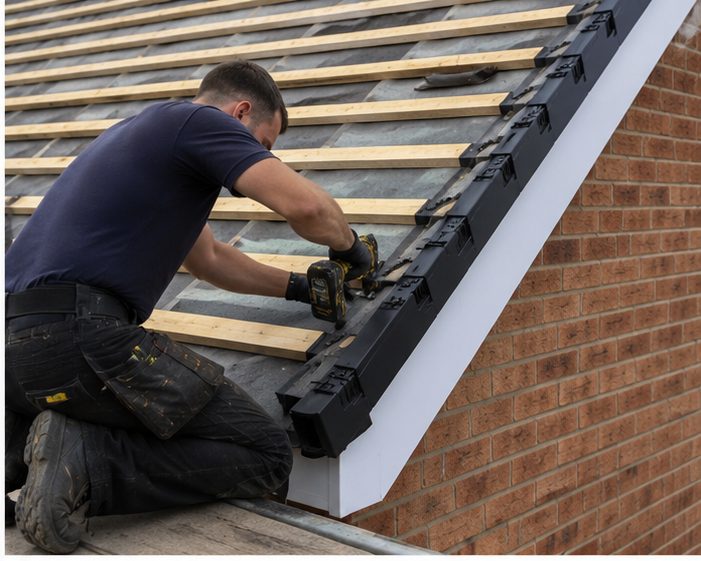
A dry verge replaces the strip of mortar along the gable with fixed units and cap pieces. The edge looks cleaner and more uniform, and there is less to weather and stain.
For many people the surprise is how much tidier a gable looks after a dry verge goes on. Fishponds has plenty of gable-ended terraces and semis, where the roof edge faces the street or side passage and shows its age. Here is what changes and what stays the same.
The edge you notice from the street
Old mortar verges stain, crack, green over and often bulge in places. A dry verge gives a straight, consistent line along the gable, with the tile ends capped and a clear shadow gap. The effect is subtle but you can see the difference from the pavement. Any questions you have along the way get a straight answer before the next stage starts.
Mortar verges also weather unevenly. One stretch may be pale and clean while the next is dark, patched and green, and the difference shows on a gable that faces a street or passage. A fixed verge ages more evenly, so the whole edge reads as one line.
Colour and finish
Verge units come in several shades, chosen to sit well with the existing tiles, so the result looks intended rather than added. Dark brown, grey and tile-red finishes are all common. We help you pick one on site, comparing it against the tiles and any painted trim, and we show you samples where we can.
What does not change
The shape of the roof, the profile of the tiles and the line of the gable wall stay as they were. A dry verge sits where the old mortar was and does not alter the pitch or hide the brickwork below. Bargeboards and fascias are untouched unless they need work of their own.
Chimneys, soffits and barge details at the gable are not touched by the verge work. If the fascia or bargeboard beside it is worn, it is better to deal with both together so the finished edge looks right rather than half renewed. We keep the explanation plain and show you what we have seen, so the decision stays with you.
What you gain beyond looks
The finish is only part of it. With no wet mortar, there is nothing to crack and fall onto the path, and the edge is mechanically fixed, which helps the tiles stay down in gusty weather. Birds and insects also find fewer gaps to exploit. Roofs vary, so we check compatibility with your tile profile on site and fix to the tile maker's guidance.
- No crumbling mortar on paths or drives
- Edge tiles held down by fixings, not mortar
- A cleaner, even line along the gable
- Less repeat maintenance at the verge
Doing it as part of other roof work
A dry verge goes on neatly during a re-roof or a repair, and it is often easiest to do while scaffold is up for fascias or gutters. It is not a cure for tiles failing elsewhere on the roof, so we look at the whole slope before recommending it.
Frequently Asked Questions
Will a dry verge match my existing tiles?
We choose a verge unit and colour that sits well with your tiles. Exact matches depend on the tile and its weathering, so we compare samples against the roof on site before you decide.
Does a dry verge look different to a mortar verge?
Yes, it is tidier and more uniform, with a defined edge instead of an uneven bed of mortar. Some people prefer the traditional look, and we can talk through whether it suits your house.
Can it be fitted to an old roof?
Often, if the tiles and timbers beneath are sound and the profile is compatible. Where the covering is tired, we will say so and suggest the repair that gives the new verge a firm base.
Talk to our team about dry verge systems in Fishponds
Every roof is different — the fastest way to get an accurate answer is a quick chat with our team.