
Three parts, one job: keeping water away from your walls and roof timbers. Knowing which is which makes it much easier to understand what a roofer is telling you.
People often use fascia, soffit and gutter as if they mean the same thing, but they are separate parts with separate jobs. On the varied homes of Henleaze, from bungalows to larger detached houses, all three sit together at the eaves. Here is what each does, how they fit together, and what you can spot from the ground.
The fascia
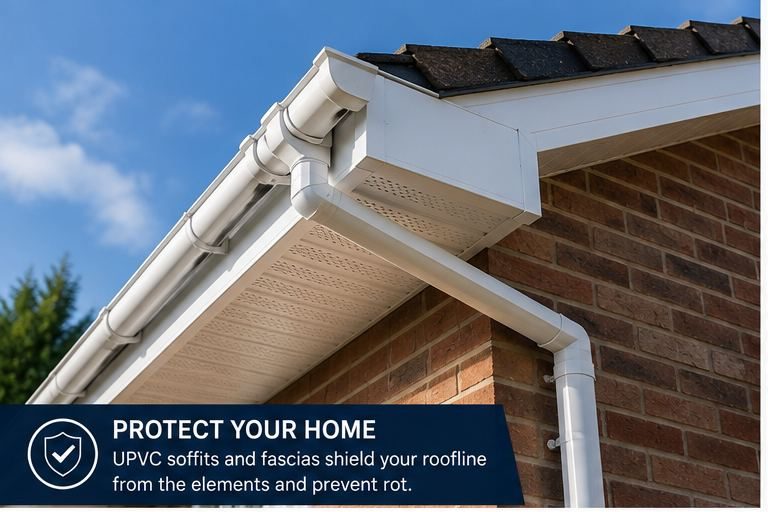
The fascia is the board fixed across the ends of the rafters, running along the front edge of the roof. It carries the gutter and finishes the roofline neatly. On older houses it is usually timber, and where water sits behind a gutter it can rot. On newer or replaced roofs it is often UPVC, which is cleaned rather than painted. Knowing the name of the part helps when you describe a problem on the phone.
The soffit
The soffit is the board that closes the underside of the overhang, between the wall and the fascia. It hides the rafter ends and, when vented, lets air move into the roof space so the timbers stay dry. On Henleaze houses with loft conversions, good ventilation at the eaves matters even more, because more of the roof is lived in.
- Closes the gap under the roof overhang
- Keeps birds and insects out of the roof
- Can carry vents to help the loft breathe
- Seen by looking up from the garden
The guttering
Guttering catches rain from the roof and carries it to downpipes and drains. It is fixed to the fascia, so if the fascia is weak, the gutter sags. Mature trees nearby drop leaves and seeds into gutters, which block and overflow, and that overflow soaks the fascia and soffit below. The three parts fail together more often than alone.
Spotting trouble from the ground
You can learn a lot without leaving the garden. Look for peeling or dark patches on fascia boards, gutters pulling away, green staining on walls beneath a joint, or soffits that sag or have gaps. Overflowing gutters in a normal shower are another clue. Do not climb up or use a ladder to check. Photograph what you see and call us for a proper look.
- Sagging or leaking gutter joints
- Soft, peeling or cracked boards
- Staining on walls under the eaves
- Gaps where birds can get in
How the three are replaced
When the roofline is renewed, we remove the old gutters and boards, check the rafter ends and eaves, and fit new fascias, vented soffits or vent strips and gutters together. Doing it as one job means everything lines up. Scaffold is normally needed for safe access. We discuss white, darker or wood-effect finishes with you beforehand. Everything is checked and measured before ordering, so the parts match.
Frequently Asked Questions
Can I replace just the guttering and leave the fascia?
Sometimes, if the fascia behind is sound. But if the gutter has been leaking onto it, the board may be soft. We check it first, because fixing new gutters to a weak fascia would not hold.
Do soffits need to be vented?
Venting helps air move through the roof space, which keeps timbers and insulation dry and reduces condensation. We fit vented soffits or vent strips when renewing the eaves, so the roof can breathe.
Is UPVC fascia a lot of work to look after?
It is very low maintenance. A wash with warm soapy water now and then keeps it clean, and it does not need painting. You still want gutters kept clear so water does not overflow onto it.
Talk to our team about UPVC fascias and soffits in Henleaze
Every roof is different — the fastest way to get an accurate answer is a quick chat with our team.