
In most cases an existing roof can be given a dry verge, but the tile profile and the state of the edge decide it. We confirm both on site before promising anything.
Gable ends are common on the Edwardian and inter-war semis and detached houses of Henleaze, and the wet mortar along their edges tends to crack and drop out. Many owners ask whether a dry verge can replace it without re-roofing. Often it can. This guide covers what we check, how the work goes, and when the answer is no.
The short answer
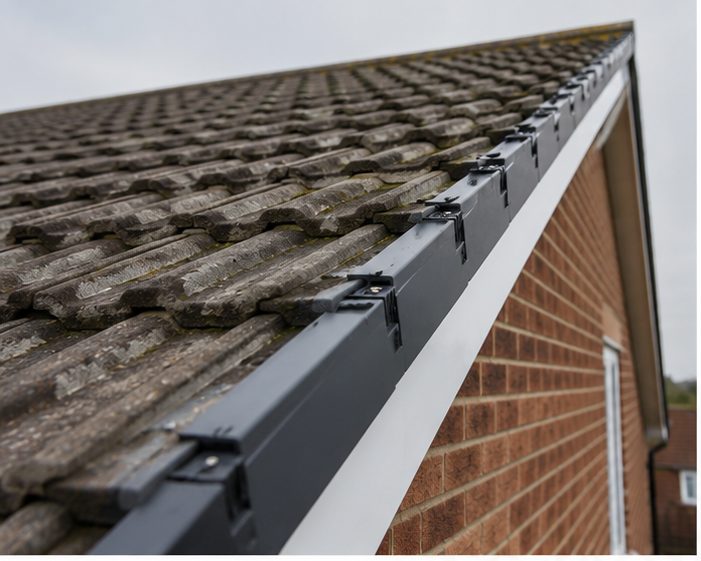
A dry verge replaces the mortar line at a gable edge with mechanically fixed verge units and tile-end pieces. Because it sits at the edge only, it can usually be added to a roof that is otherwise sound. What decides it is whether suitable units exist for your tile profile, and whether the edge timbers and the last courses of tiles are in good order. It is a neat job on the right roof.
Tile profile comes first
Verge units are made to suit particular tile shapes and thicknesses. Older tiles on Henleaze roofs may be plain, interlocking or of a profile that is no longer made, so we identify what you have, measure it, and test a unit against it on site. Where nothing matches properly, we say so rather than forcing a poor fit. A quick comparison on the roof itself settles it better than any catalogue.
- Plain clay or concrete tiles
- Interlocking tile profiles that suit factory units
- Slate edges with matching cappings
- Mixed or replaced tiles from past repairs
What we check at the edge
We look at the verge from the ground first: crumbling mortar, tiles sitting out of line, dark staining down the gable and moss at the edge. Then, with safe access, we check the barge board or undercloak, the rafters at the edge, and the felt, since a dry verge is only as secure as what it is fixed to. Any damp or rot found here is dealt with first.
How the retrofit is done
Old mortar and any loose tiles are removed, the edge is made sound, and units are fixed to the tile maker's guidance with the right fixings and tile-end pieces. The result stays tidy and needs no repointing. Tiles that are cracked are swapped for matching ones. Where work may need planning or Building Regulations checks, we advise before work starts. Waste is cleared away as we go.
When a dry verge is not the answer
A dry verge is not a cure for a roof failing elsewhere. If the felt is perished across the slope, tiles are slipping widely, or battens are rotten, we explain that the edge is only part of the story. We will say what is urgent, what can wait, and whether fitting the verge now still makes sense. The edge is worth doing, but not at the cost of ignoring a bigger fault.
Frequently Asked Questions
Do I need to re-roof to get a dry verge?
Not necessarily. If the existing tiles are sound and suit the available units, the verge can be fitted on its own. If the roof is tired overall, it may be better to do the edge as part of wider work.
What if my tiles are a rare or old profile?
We try different units against your tiles on site. Sometimes a close match works well. If nothing fits securely, we may suggest a neat alternative edge finish instead, and we are honest about the limits. so you always know where you stand.
Will it look different from my current verge?
Slightly. The mortar line is replaced by a clean cap piece, so the edge looks more uniform. Colours are chosen to suit your tiles, so it blends with the house rather than standing out. It reads as a deliberate, finished edge.
Talk to our team about dry verge systems in Henleaze
Every roof is different — the fastest way to get an accurate answer is a quick chat with our team.