
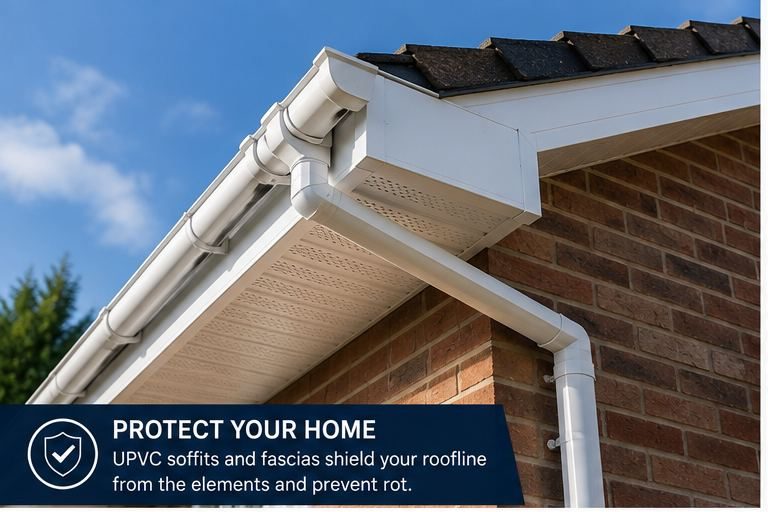
Vented soffits let air move through the roof space, carrying moisture away before it condenses on timber. Without that airflow, even a sound roof can rot from the inside.
Warm, moist air from a house rises into the roof space. If it has nowhere to go, it settles on cold timber and felt as condensation. Vents in the soffit, the board under the eaves, let fresh air in at the bottom of the roof so the whole space can breathe. Cotham's tall houses make that airflow matter. It is a small detail with a large effect.
Where the moisture comes from
Everyday living puts moisture into the air: cooking, washing, drying clothes, breathing. In a tall house with many floors, a lot of that warm air drifts upwards and ends up in the roof space. When it meets cold timbers and underlay, it condenses. Over time that means damp rafters, wet insulation and mould, even when the roof covering is perfect. It is a quiet, slow kind of damage.
How soffit vents move the air
Air enters through the vents at the eaves, rises along the underside of the roof and leaves at the ridge or through high-level vents. This gentle flow carries moisture out before it settles. A vented soffit board or a discreet vent strip along the eaves provides that inlet, so the roof structure stays drier and healthier through the seasons. The air path has to stay open to work.
Why it matters in older, converted houses
Many Cotham villas and terraces have been altered over the decades, with loft rooms, extra insulation and flats made out of single houses. Insulation pushed hard against the eaves, or old closed boards, can block airflow completely. Replacing fascias and soffits is the moment to put the ventilation right, rather than boarding it in again.
What we do when replacing soffits
When fitting new boards we remove the old ones, check the rafter ends and eaves for damp, and fit new soffits with vents or vent strips. Gutters are refitted or replaced at the same time. On older homes we check what the existing soffit boards are made of before disturbing them. The sequence is usually the same on each job, whatever the house.
- Scaffold or safe access arranged first
- Old boards and gutters removed carefully
- Rafter ends and eaves checked for damp or rot
- New vented soffits and fascias fitted
- Gutters refitted and tested for flow
Signs your roof space may not be breathing
From inside the house, look for condensation on the loft hatch, musty smells on the top floor, damp patches on ceilings away from any leak, or mould in corners. From outside, look for solid soffits with no vents at all. None of these prove a fault, but they are good reasons to call us for a proper look. We can open the question up from the ground and the loft hatch, then tell you what we find.
Frequently Asked Questions
Will vents let in birds or insects?
Properly made soffit vents and vent strips have small openings that allow air through while keeping birds and insects out. We choose the type to suit the eaves and fit it so the gap is covered.
Do all new soffits have vents?
Not every soffit board needs vents in it, but the roof space does need airflow somewhere. We check the existing ventilation and fit vented soffits or vent strips wherever the roof needs them. That keeps the timber dry.
Will vents make my loft colder?
No. Moving air removes moisture; it does not take away the effect of the insulation. We keep insulation clear of the eaves so air can flow, while the house stays properly insulated. Both jobs matter.
Talk to our team about UPVC fascias and soffits in Cotham
Every roof is different — the fastest way to get an accurate answer is a quick chat with our team.