
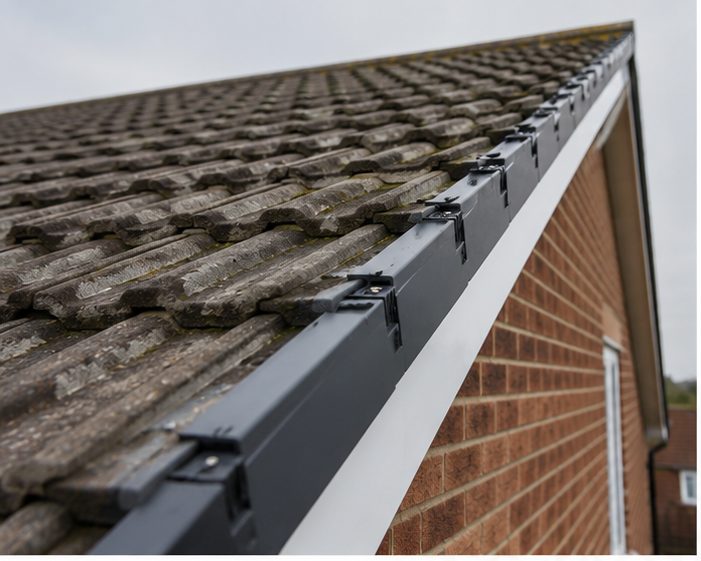
A dry verge closes the gap at the gable edge with fixed units instead of mortar. That leaves far less room for birds, wasps and other insects to get under the tiles.
The verge is the roof edge at a gable, and in a tall Cotham house the gable is a long, exposed run. When the mortar there cracks and falls away, it leaves gaps. Birds nest in them, insects crawl in, and weather follows. A dry verge changes that by replacing wet mortar with mechanically fixed pieces.
How the gaps appear in the first place
Mortar on a verge is hard and rigid, while the roof moves slightly with wind and temperature. Over time it cracks, loosens and drops out in lumps. Those gaps open directly into the space under the tiles. On a tall gable, they are well out of sight, so nesting can go on unnoticed from the street. Wind and rain then get in at the same openings as the birds.
What a dry verge does at the edge
Dry verge units are fixed to the roof with mechanical fixings, and tile-end and cap pieces close the line of the edge. There is no wet mortar to shrink, crack or fall out. The edge is sealed by the units themselves, which leaves much less opening for a bird to push into or an insect to find. Fixed units also stay put in a gale, which keeps the line tight.
Birds and insects: what to expect
It is not a cage, and no system is magic. A well-fitted dry verge removes the easy gaps that crumbling mortar creates, so birds are far less likely to nest at the edge and wasps or bees have fewer ways in. If a nest is already inside, we deal with how it is cleared before closing anything up. Points we consider before fitting:
- Whether any nest or activity is already in the verge
- The condition of the tiles near the edge
- The profile of the tile and which units fit it
- Whether the roof is failing elsewhere
What it does not cure
A dry verge is not a fix for a roof that is failing elsewhere. If tiles have slipped or the felt is wet, the verge will not stop leaks from other places. It sits well on new roofs, re-roofs and repairs where the old mortar has failed, and compatibility depends on the tile profile, which we check on site.
Signs to look for from the ground
Look for mortar crumbs on paths or drives, birds going in and out at the gable edge, or gaps you can see along the line. In a converted house, tell whoever looks after the building. Do not climb up to look yourself; call us for a proper look and we will tell you what is happening. Mortar crumbs on the ground are usually the first clue.
Frequently Asked Questions
Will a dry verge stop birds nesting completely?
It closes the gaps they use at the edge, which makes nesting there much less likely. Nothing is absolute, but removing crumbling mortar takes away the openings that invite them in the first place.
Is there anything I should do if a nest is already there?
Leave it alone and call us. Wild birds and their nests may be protected while in use, so we look at timing and handling before closing the edge up. Do not poke at the verge yourself.
Do wasps still get under a dry verge?
They have far fewer routes in than with cracked mortar, because the units close the line of the edge. A wasp nest elsewhere in the roof is a separate matter and we can look at that too.
Talk to our team about dry verge systems in Cotham
Every roof is different — the fastest way to get an accurate answer is a quick chat with our team.