
The two common opening types behave very differently once fitted. Choosing between them comes down to how the room is used, the pitch and how high the window sits.
Roof windows open in two main ways: they pivot around a bar across the middle, or they hinge from the top and swing outward. Both are used in loft rooms across Arnos Vale's Victorian houses, and neither is simply better. The right one depends on where the window sits in the room, how steep the roof is, and whether you need a view or ventilation.
How a centre-pivot window works
A centre-pivot window turns on a horizontal axis at about the middle of the sash. You push the top out and the bottom swings in. That makes it easy to reach the outside pane for cleaning from indoors, and the opening is usually large. It tends to suit a window fitted at a comfortable height, where you can reach the handle at the bottom without stretching.
How a top-hung window works
A top-hung window is hinged along the top, and the bottom edge swings outward, rather like an awning. It gives a generous opening for fresh air and, because the sash moves out, it can leave more headroom beneath. It often suits a lower pitch, a window set high in the roof, or a position over a bed or desk where an inward-swinging sash would be in the way.
- Which end of the sash moves in the room
- Headroom and furniture under the window
- Whether you can reach the handle comfortably
- How easily the outside glass can be cleaned
Pitch, height and where the room sits
On the steep roofs common on older Arnos Vale houses, a pivot window sits well and gives a good view down the slope. Where the roof is lower or the window is set up high, a top-hung unit may be easier to use. Since many of these houses have sloping ground around them, outlook matters too: a view across the valley is worth the right choice of window.
What goes into fitting either type
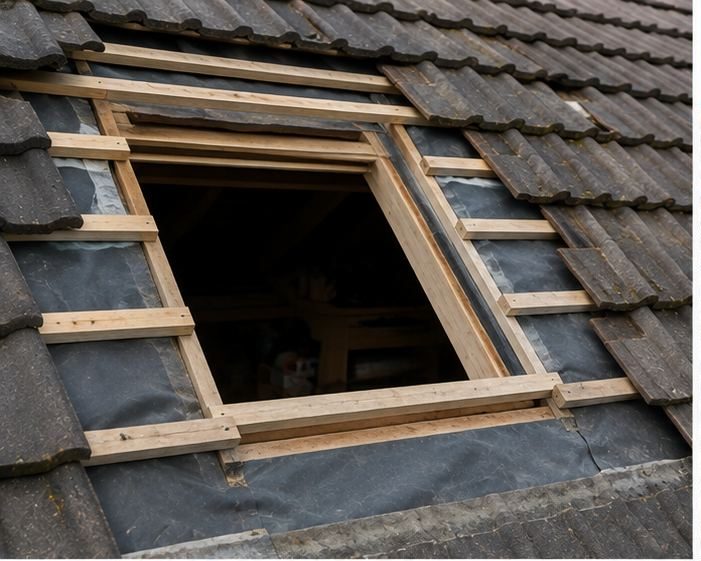
The fitting is largely the same either way. The window must be matched to a flashing kit for your roof covering. Rafters may need trimming and doubling up to frame the opening, and the lining, insulation and vapour control around it are done properly so the room stays warm and free of condensation. Scaffold or other safe access is arranged beforehand. We advise on planning or Building Regulations checks before work starts.
How we help you choose
We look at the room, the roof pitch, the position between rafters and how you plan to use the space, then explain which type suits. We talk about VELUX and similar roof windows in general terms and show you what the choices mean in practice. If one type would be awkward in your room, we tell you so before anything is ordered.
Frequently Asked Questions
Which type is better for ventilation?
Both open to let air in. Top-hung windows give a wide opening at the bottom, while pivot windows allow air to pass at both top and bottom. The better choice depends on the position of the window and what you want from it.
Can an old window be swapped for the other type?
Often yes, but the frame size, flashing and lining may need adjusting, so it is not always a straight swap. We check the existing opening and tell you what is involved before you commit.
Does the opening type affect how easy it is to clean?
Yes. A pivot window turns so you can reach the outer pane from inside, which many people like. Top-hung windows can be harder to clean from within, depending on the size and where they are fitted.
Talk to our team about VELUX and roof window installation in Arnos Vale
Every roof is different — the fastest way to get an accurate answer is a quick chat with our team.