
Roof windows open in two main ways, and the better one depends on the room, the pitch and how high the sill sits. Here is how to choose for a St Pauls terrace, conversion or flat.
The choice between a centre-pivot and a top-hung roof window is mostly about how you reach the glass, how the window sits in the slope and what the room is used for. In a central Bristol terrace or converted house, space is tight, so the way a window opens can matter as much as its size.
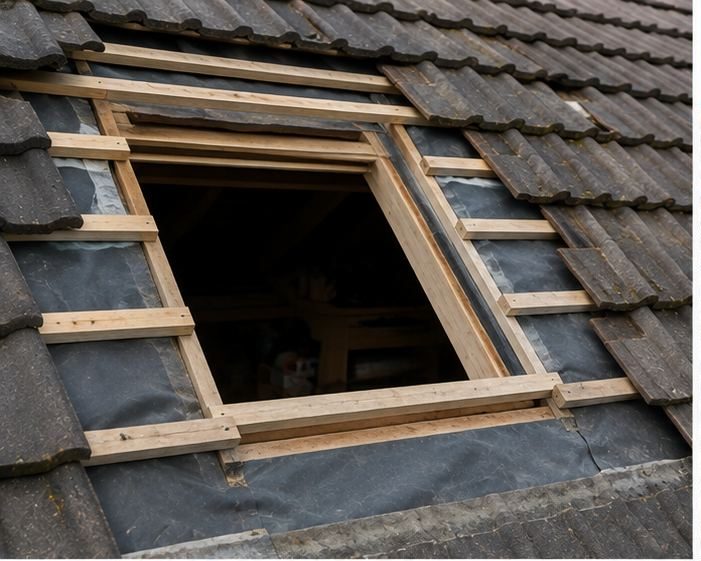
How a centre-pivot window works
A centre-pivot roof window turns on a central axis, so the lower half swings out and the top half swings in. It is the usual choice for lofts and attic rooms where the sill is within easy reach, and it makes the outside pane simple to clean from inside the room.
It suits a room where you want a clear view out at standing height and easy ventilation without stretching, and it is a natural fit for the shallow loft rooms and attic bedrooms found in older central terraces. Both types have their place, and the choice should follow the room.
How a top-hung window works
A top-hung window is hinged along the top edge and opens outwards from the bottom, like a flap. It suits positions where the window sits higher up the slope, because the handle is at the bottom and easy to reach. It gives a wide opening for air, and can suit a stairwell or a landing.
Which suits which room
Low-pitched slopes, bedrooms and conversions usually favour the pivot type, as people look out of them seated or standing. Higher sills, landing windows and rooms with furniture under the glass often suit the top-hung type. Any choice should be matched to the room, the pitch and the roof covering.
- Attic bedrooms and shallow loft rooms
- Landings, stairwells and higher positions
- Rooms where furniture sits below the sill
- Flats and conversions with limited headroom
What has to be right whichever you choose
Whatever the opening style, the window needs a flashing kit matched to the roof covering, the rafters may need trimming and doubling up around the opening, and the lining, insulation and vapour control around the frame all have to be done carefully. These details decide whether the window stays dry in the long run.
Getting these right at the start avoids draughts, condensation and damp patches at the reveal later, and it is where most of the skill in a roof window installation lies. Our job is to get those hidden parts of the installation right.
Checking before you order
We look at the pitch, the room height, where the rafters fall and how the roof is covered. We can then tell you which style suits and which flashing kit is needed. We fit VELUX and similar roof windows, and any work may need planning or Building Regulations checks — we advise before work starts.
- Where the sill will sit in the room
- Which way the window is reached and opened
- The type of flashing kit for your roof covering
Frequently Asked Questions
Can I swap one opening style for the other?
Sometimes, but the frame size, position and flashing all change, so it is not simply a like-for-like swap. We check the opening and the rafters before saying whether a different style can go in the same place.
Which type is better for ventilation?
Both ventilate well. A top-hung window gives a wide opening and is easy to operate when set high, while a pivot window turns open at a comfortable height. The better choice depends on the room and where the handle falls.
Do both types need the same flashing?
The flashing is matched to the roof covering and the size of the window rather than the opening style. We select the right kit for your tiles or slates and fit it as part of the installation.
Talk to our team about VELUX and roof window installation in St Pauls
Every roof is different — the fastest way to get an accurate answer is a quick chat with our team.