
Heavy rain finds the weak points a light shower misses. Here is how leaks show up in St Pauls terraces, converted houses and flats, and what a proper look involves before anything is repaired.
A roof that stays dry through drizzle and then drips in a downpour usually has a small defect that only matters when water arrives fast. In central Bristol, with Georgian and Victorian terraces packed tightly together, the cause is often hidden between neighbouring roofs rather than in plain sight.
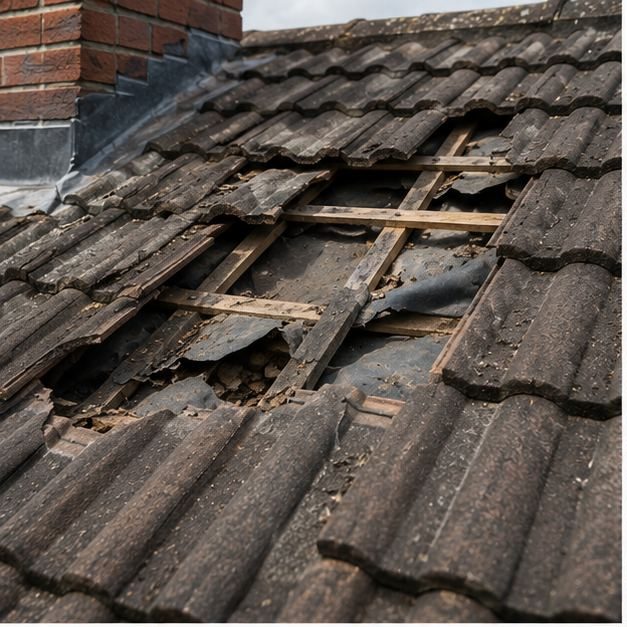
Why heavy rain shows up what light rain hides
Driven rain pushes water sideways and upwards under tiles and slates, and gutters can overflow when downpipes are slow to clear. A hairline gap in a flashing or a slightly lifted tile may cope with a shower, then pass a steady flow into the roof space when the rain is hard and prolonged.
In a built-up street, wind swirls between buildings and throws rain at angles you would not expect, so a slope that seems sheltered can still take the worst of a storm. That is why we ask which way the rain was coming from when the leak showed.
Where the water really comes in
The stain on a ceiling is rarely under the fault. Water runs along rafters, battens and felt before it drops, so the damp patch can sit well away from the source. On terraced and converted houses the usual suspects are listed below, and we trace each one rather than guess.
- Lead flashings where the roof meets a party wall or chimney
- Valleys and parapet gutters shared between neighbouring houses
- Slipped, cracked or missing tiles and slates
- Ridge and hip bedding that has cracked or lifted
What you can check from inside and the ground
Stay indoors and on the ground. With a torch, look in the loft for daylight through the covering, dark stained felt, wet or darkened timbers and drips on insulation. From the street, binoculars may show a gap in a line of tiles. Take photographs and note when the leak appears, then call us for a proper look.
Please do not go onto the roof to look. Everything we ask you to check can be done safely from inside the house or from the pavement. If anything looks worrying, write it down and send us a photograph from inside. Photographs help us plan the visit.
Flats, conversions and shared roofs
Newer flats and converted houses often share one roof, so a leak in your top-floor room may come from a part that is not yours. We look at the whole roof, explain which part is leaking and what repair is needed, which helps when you need to speak to a neighbour, landlord or managing agent.
How we put it right
Once the source is found we repair that, not the symptom. That may mean refixing tiles, renewing a section of lead, re-bedding ridge tiles or clearing and resealing a valley. If the roof is failing across its whole area we say so plainly and explain the choice between repair and replacement.
- A written description of what was found and what is proposed
- Photographs of the defect where access allows
- Clear advice on what is urgent and what can wait
Frequently Asked Questions
Should I put a bucket under the drip and wait?
A bucket is sensible for the night, and moving furniture and electrics away from the area helps. Do not leave it for long, though, because water soaks timbers and insulation out of sight. Call us so the source can be found before the damage spreads.
Can a leak be repaired in the rain?
Emergency protection can sometimes be fitted in poor weather, but a lasting repair needs dry surfaces and safe access. We judge each job on the day, make the roof as watertight as conditions allow and return to finish the repair properly.
Why did the leak start after a dry spell?
Dry weather lets cracked bedding, perished sealant and loose tiles go unnoticed. The first hard rain afterwards finds them all at once. A leak that appears suddenly is often an old fault finally given enough water to show itself.
Talk to our team about roof repairs in St Pauls
Every roof is different — the fastest way to get an accurate answer is a quick chat with our team.