
Fitting roof windows is the point where a Hotwells loft conversion meets the weather. Here is how the work runs on terraced houses, with steep streets, older roofs and tight access.
Roof windows give a converted loft its light, its air and often its view. They also make a hole in the roof, so the fitting has to be right. On Hotwells terraces, with Georgian and Victorian roofs, steep streets and limited access, we plan more than we would on an open site. This is what happens, step by step.
Planning the access first
Before any window arrives we work out how materials and people reach the roof. On a steep street with parked cars and narrow pavements, scaffolding and deliveries need arranging, and neighbours need warning. Good access is a safety matter and also helps the quality of the work, as we can see and reach every part of the opening.
Positions and structure
We mark window positions from inside, considering the room layout, sill height and what you want to see. The rafters are then checked. If one must be cut, it is trimmed back and doubled up around the opening so the load is carried properly. Georgian and Victorian roofs often have old, wide-spaced or irregular timbers, which affects where a window can go without bigger structural change.
We also think about how the window will be reached and cleaned from inside, and whether a view across the rooftops is wanted or privacy is more important. Those small decisions are easier to settle before cutting than after, so we raise them early with you on site.
- Mark positions from inside the room
- Check rafter size and spacing
- Trim and double up rafters
- Support the opening before cutting more
Flashings and covering
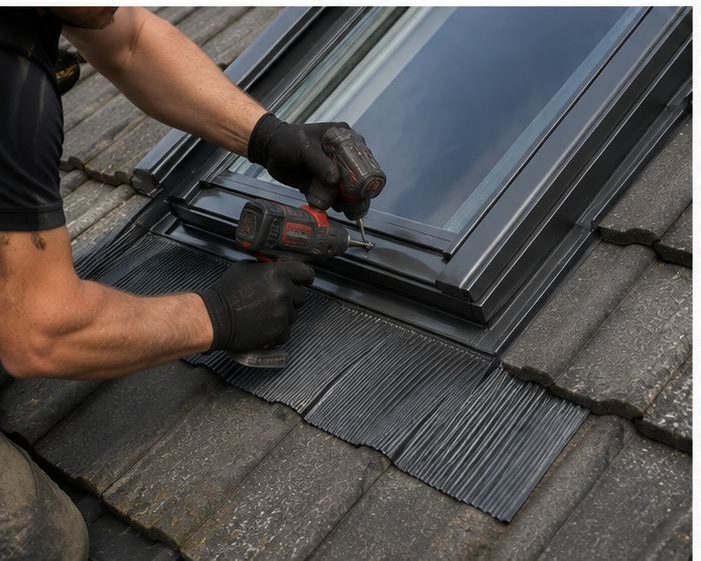
Each window needs a flashing kit matched to your roof covering, slate or tile, so that water runs over the joints and not into them. On older slate roofs, careful lifting and re-laying of slates around the opening keeps the roof looking right. We use lead where needed, and take care at the junction with party walls and parapets that are common on terraces.
Insulation, vapour control and lining
Around the frame we fit insulation, a vapour control layer and a neat lining. This stops warm, moist room air reaching cold timbers and causing condensation, and it avoids a cold patch round the window. The lining is finished ready for plastering and decorating, and we coordinate with the other trades on the conversion.
What to ask and expect
Ask for a written description of the work, how the roof will be kept watertight while it is open and what happens if rafters need extra repair. Expect a tidy site, clear explanations and warning of any noise or disruption. Conversion work may need planning or Building Regulations checks — we advise before work starts.
Also ask who coordinates with the other trades on the conversion, so the window opening is ready when the plasterer arrives and nobody waits. It is a practical question that avoids delays, and the answer tells you how well organised the job will be.
Frequently Asked Questions
Can the roof be left open overnight?
We avoid it. Openings are covered and made weathertight at the end of each working period, and work is planned so the roof is not left exposed. We explain the plan before we start. We explain this on site.
Will a roof window fit my old slate roof?
Usually, with the right flashing kit and careful work. Old slates need handling with care, and rafter condition matters. We check on site and tell you what is involved before you commit. We explain this on site.
Do I need scaffolding for roof windows?
For most terraced houses, yes, or a safe equivalent. It gives a stable platform and protects people below. On steep streets we plan where it goes and how it is reached before work begins. We explain this on site.
Talk to our team about VELUX and roof window installation in Hotwells
Every roof is different — the fastest way to get an accurate answer is a quick chat with our team.