
Misting on a roof window has two very different causes: moisture in the room or a failed sealed unit. Telling them apart is the first step, and it changes what you do next in a Montpelier loft room.
Roof windows mist for two main reasons, and the fix for one is no use for the other. Either damp air in the room is condensing on cold glass, or the sealed unit has failed and moisture is trapped between the panes. In Montpelier's loft rooms and top-floor flats, both are common.
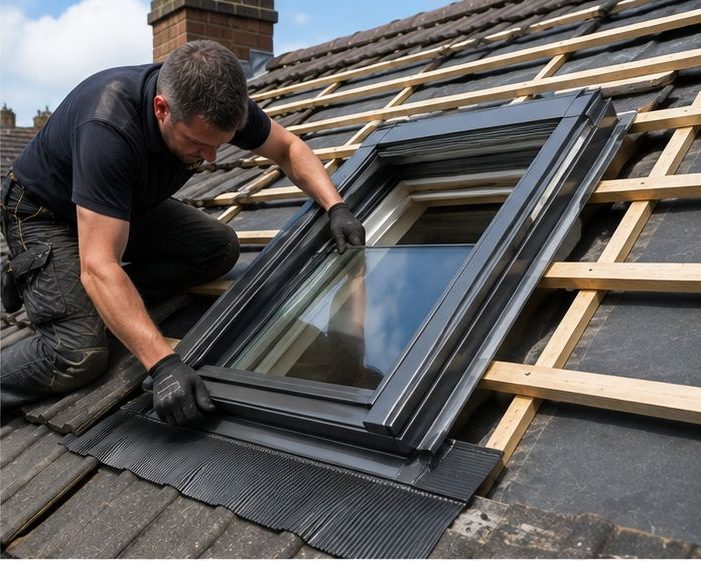
Misting inside or between the panes
Wipe the glass. If the mist clears on the room side, it is condensation from the air in the room. If the cloudiness stays and sits between the two panes, the seal around the glass unit has failed and the unit cannot be dried out. Pay attention to where the film sits and whether it changes through the day, because that decides which cause you have.
Look at the window early in the morning and again later in the day. Room-side mist often clears as the room warms and ventilates, while a failed unit stays hazy whatever the temperature, which helps us narrow the cause quickly.
Room-side condensation
Warm, moist air from breathing, cooking, showers and drying clothes settles on the coldest surface in a room, and a roof window is often that surface. Top-floor flats and loft bedrooms in tall Victorian houses are particularly prone because the glass is cooler and the air upstairs holds the moisture of the whole building.
- Open the window slightly or use trickle vents
- Run extractor fans and keep bathroom doors shut
- Avoid drying washing in the same room
- Wipe off water before it reaches the frame
A failed sealed unit
Between the panes is a sealed space. Once the edge seal fails, damp air gets in and leaves a permanent haze or droplets that cannot be wiped off. It is not a leak from the roof, though it can look like one at first glance. The fix is usually a replacement glass unit or, on older windows, a new window altogether.
When the problem is not the glass
Wet frames, stained linings or drips under the window usually mean water is getting in around the window. The flashing, the seals or the roof covering around the opening are the likely causes, rather than the glass itself. We look at the opening from outside and inside, because insulation and vapour control around the frame also affect how much condensation forms.
Condensation that runs down the glass and stains the lining can look just like a leak. Checking the lining and the flashing together tells us which it is, and avoids replacing a window that only needed better ventilation. Either way you get a straight answer.
What we check and what we do
We inspect the glass, seals, frame, lining and the flashing round the opening, and tell you plainly which of the problems you have. Where the unit has failed, we can replace the glazing or the window, matched to the existing flashing or a new kit where needed. Where the issue is damp air, we suggest practical changes to ventilation in the room.
Frequently Asked Questions
Will the mist between the panes clear up by itself?
No. Once moisture is inside a sealed unit it will not leave, and the haze usually grows. The glass unit or the whole window needs replacing for a clear view again. The unit is replaced, not repaired. Sealing the edges with a patch does not help either.
Does misting mean my roof window is leaking?
Not necessarily. Condensation on the room side is common, and a failed unit is a glass fault. A true leak shows as drips, stains on the lining or damp plaster around the frame. Sealing it with a patch does not help. A clear view is what you want.
Can I stop the condensation myself?
You can reduce it by ventilating the room, running extractor fans and keeping moisture-producing activities away from loft rooms. If it carries on, we check the window, lining and insulation for faults. We can also check the lining.
Talk to our team about VELUX and roof window installation in Montpelier
Every roof is different — the fastest way to get an accurate answer is a quick chat with our team.