Dry Verge on Henleaze Gables and Detached Roofs
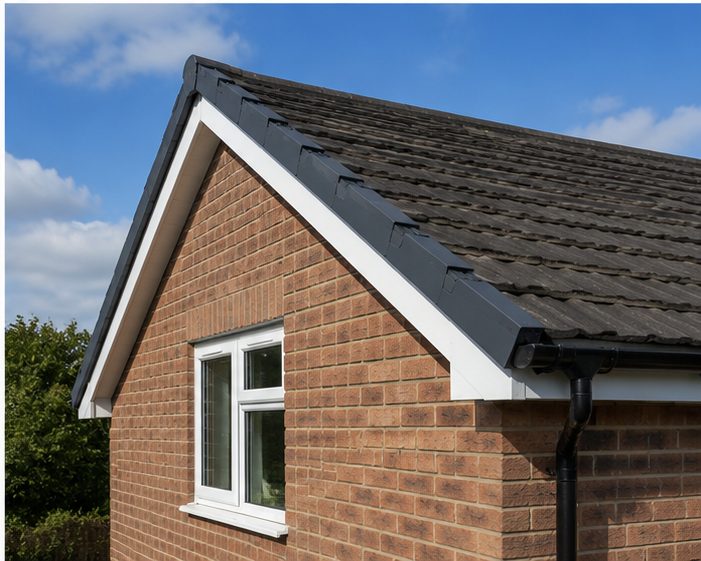
Henleaze has many gabled semis from the Edwardian and inter-war periods, and larger detached houses with big gable ends. The verge on these is a long exposed edge, and in a westerly wind it takes more force than the middle of the slope. That wind exposure is the main reason owners here choose it over fresh mortar.
A common first sign is bits of mortar on a path, a drive or a bay roof below the gable. If you notice crumbs of mortar there, the verge above has started to fail and the tiles at the edge may be loose. Pieces that fall can land on a car, a path or a flat porch roof.
Loft conversions often mean a re-roof or a rebuilt gable, and that is a good moment to fit dry verge. Whether it suits depends on the tile profile, which we check on site, and on the roof being sound elsewhere. If it is not suitable, we say so and suggest a better route.
Dry Verge Work We Carry Out Around Henleaze
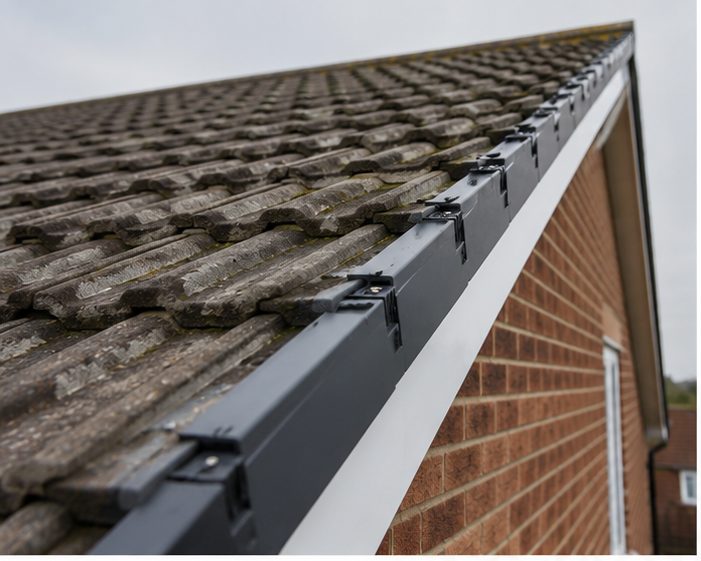
- Replacing failed mortar verges. Removing crumbling wet mortar from gable edges and fitting dry verge units in its place, fixed to the tile maker's guidance.
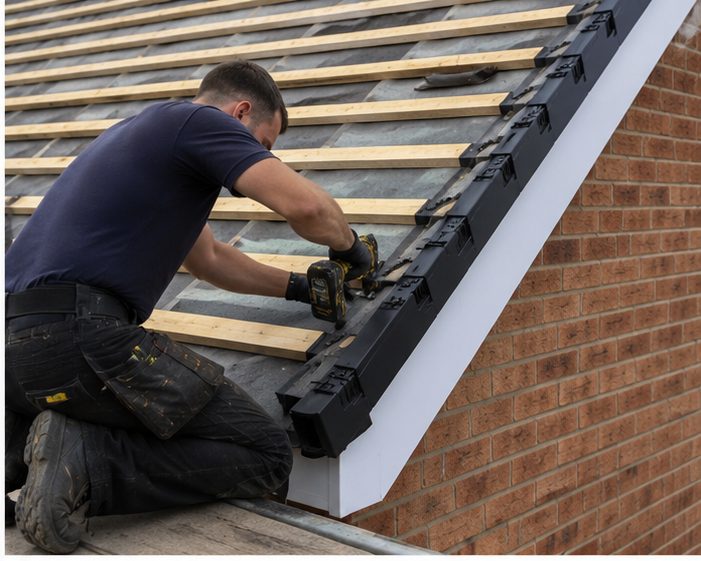
- Dry verge on re-roofs. Including a dry verge as part of a full re-roof, so the new roof edge is mechanically fixed from the start.
- Dry verge for loft conversions. Finishing the gable edge of a converted roof with verge units, once the new work and old tiles meet cleanly.
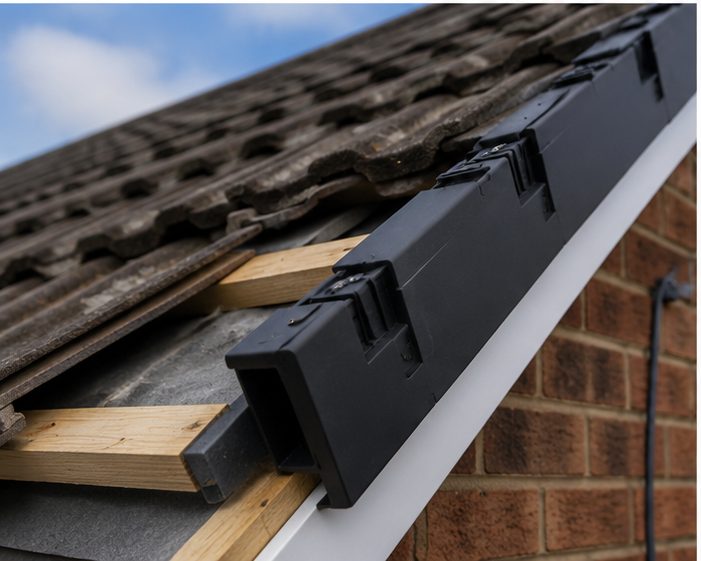
- Verge tile and cap pieces. Supplying and fitting the matching tile-end and cap pieces that close the edge without any mortar showing.
- Loose verge tile refixing. Securing tiles at the roof edge that have loosened because the mortar under them has gone.
- Compatibility check on site. Looking at your tile profile and gable construction to confirm a dry verge will fit before any work is booked.
How We Fit Dry Verge in Henleaze
We start by looking at the verge from the ground and at the tiles along the edge. We check the profile of the tiles, as that decides whether a dry verge system is compatible, and note any other faults in the roof. That check saves wasted effort and avoids unwelcome surprises later.
A dry verge will not cure a roof that is failing elsewhere, and we say so if that is the case. Where it suits, we remove the old mortar, fix the units to the maker's guidance and leave the edge clean. The finish is tidy and mortar-free along the whole edge.