
Swapping mortar for a dry verge changes the roof edge more than you might expect. The line is tidier, the colour is consistent and the gable looks finished.
A gable end is the face of a house that people notice from the street, and the roof edge above it frames the whole elevation. Across Ashley Down, with semis and end-of-terrace houses showing their gables to the road, the edge detail is visible. Here is how a dry verge changes that look, and what to think about before choosing.
The traditional mortar edge
A mortar verge has a handmade look: a bed of mortar between the end tiles and the gable wall, often with a slightly irregular line. When new it can look good. As it weathers it stains, cracks, goes patchy and may be repaired in a different colour, leaving a mixed, tired edge. Pieces falling onto the path complete the picture, and patch repairs rarely match the original colour.
What a dry verge looks like
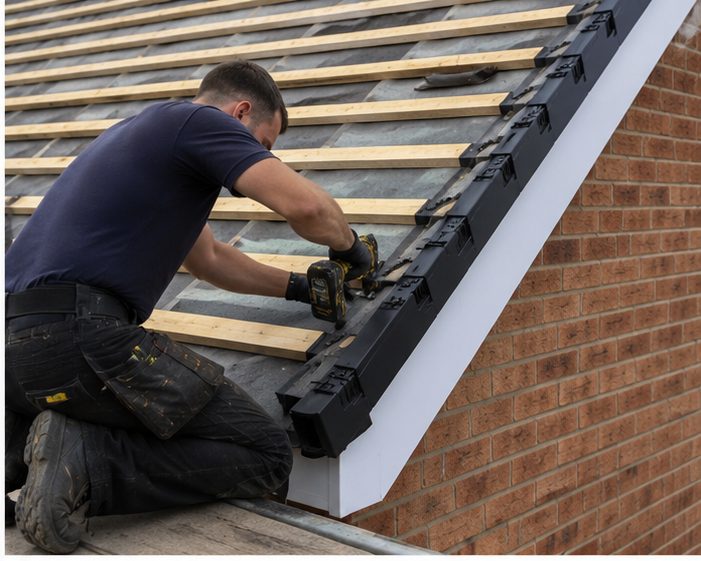
A dry verge gives a neat, even line from eaves to ridge. The verge units are made to a regular profile, with matching cap or end pieces, so the edge looks clean and consistent along its whole length. There is no mortar line to discolour. Many people find it looks sharper and more modern, which suits an inter-war semi well. The cap pieces at the top and bottom of the run also give the gable a deliberate, finished look.
- Even, straight line along the gable edge
- Matching end pieces at the top and bottom
- No mortar joint to stain or crumble
- Consistent colour from one end to the other
Colour and finish choices
Verge components come in colours made to go with the main tile ranges, so the edge can blend in or contrast slightly with the roof. We check what is available for your tile and show you the options before ordering. If the roof is old and weathered, new components may look slightly fresher at first, and settle over time as the tile surface weathers.
Older houses and the street scene
Victorian and Edwardian houses have their own character, and some owners want the edge to look traditional. A dry verge can suit these homes, but the profile needs to look right with the tile. Where a terrace has uniform rooflines, we think about how a new edge sits beside neighbouring gables. We advise on what looks right and what might stand out, honestly.
What does not change
A dry verge improves the edge, not the rest of the roof. If tiles elsewhere are patchy, cracked or moss-covered, the gable will look tidier but the roof as a whole will not. Compatibility depends on the tile profile and is checked on site. Some changes to a roof's appearance may need planning or Building Regulations checks, and we advise before work starts.
Frequently Asked Questions
Will a dry verge look out of place on an older house?
Not if the profile and colour are chosen with care. We look at the tile, the gable and the street, and tell you honestly if a mortar finish would look more natural for the property.
Can I choose a darker verge colour?
Often there is a range of shades to match or complement the main tiles. What is offered depends on the tile ranges available, so we check on site and show you samples where we can.
Does it make the roof edge look thicker?
The profile is designed to sit close to the line of a mortar edge, so the difference is usually subtle. Depth and overhang depend on the tile, and we explain how it will look before you decide.
Talk to our team about dry verge systems in Ashley Down
Every roof is different — the fastest way to get an accurate answer is a quick chat with our team.