Where dry verge helps in Ashley Down
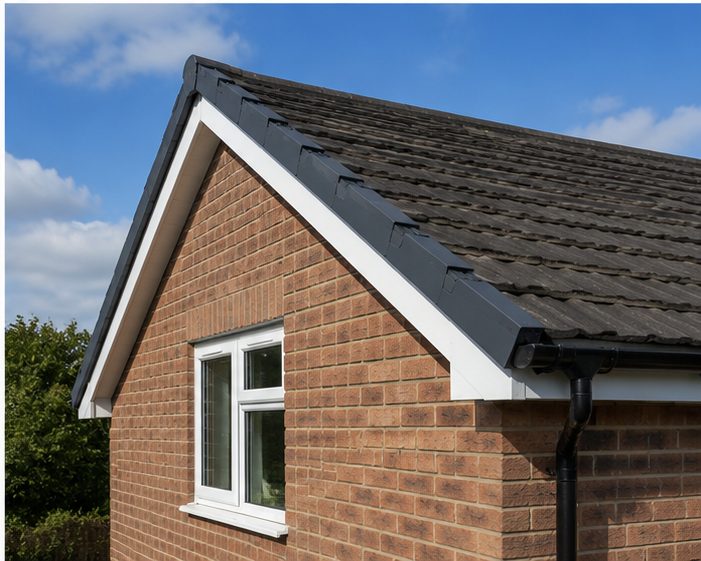
Verges only appear at gable ends, and in Ashley Down that mostly means inter-war semis and the end house of a terrace row. Those are the roofs where the side of the roof meets open air, and where the wind gets a grip. A gable on an inter-war semi stands clear of its neighbour, so rain and wind arrive from the side as well as from above.
Look for mortar fragments on the path or in the front garden, a line of cracks along the roof edge, or end tiles that sit at a slightly different angle to the rest. These small signs show the bedding is failing and moisture is entering the edge. Walk past your house and look up: dark gaps or white crumbs along the edge are usually what the mortar looks like when it is going.
Mid-terrace roofs have no verge, so this is a job for particular houses. Where we do fit one, we first check the tile profile on site, because dry verge units must match the tiles to sit and fix correctly. We would sooner tell you a dry verge will not fit than sell you units that sit badly on the tiles.
Dry verge work in Ashley Down
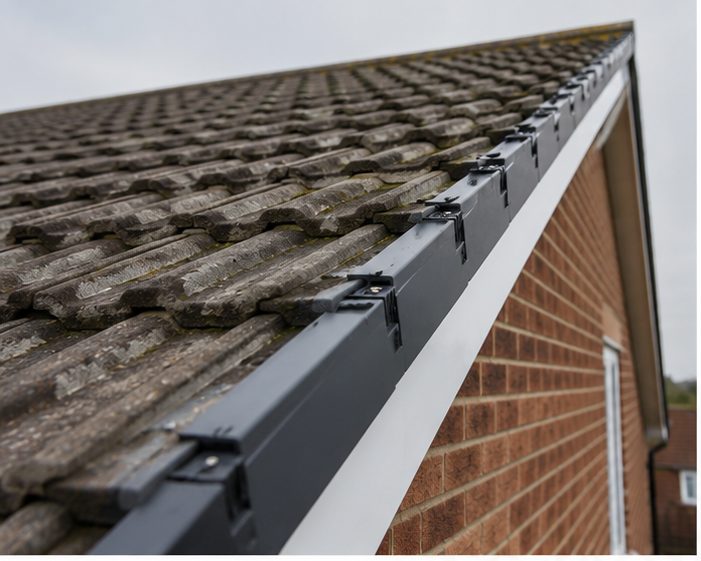
- Dry verge on semi-detached gables. Failed mortar verges on inter-war semis are removed and replaced with fixed units, giving the gable a secure and tidy roof edge.
- Terrace-end verge replacement. The end house of a terrace row often takes the weather on its gable, so we replace the failing verge with a mechanically fixed system.
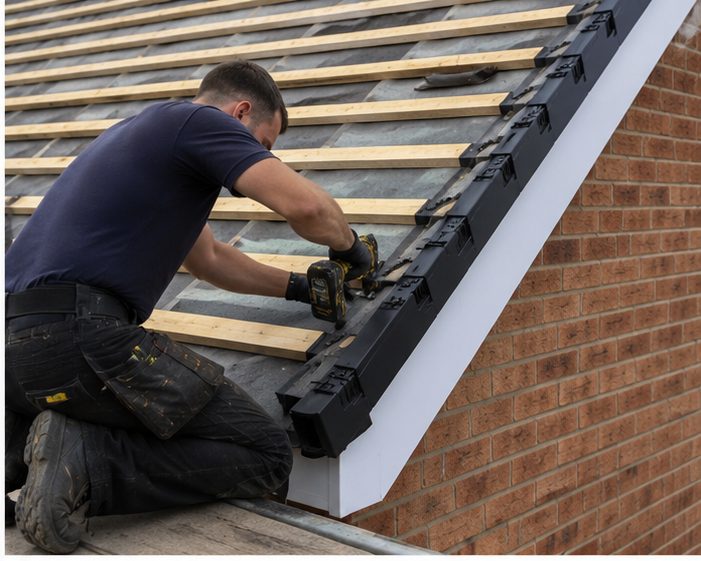
- Dry verge with a re-roof. When a roof is stripped and recovered, a dry verge is fitted as part of the job so the new edge never relies on wet mortar.
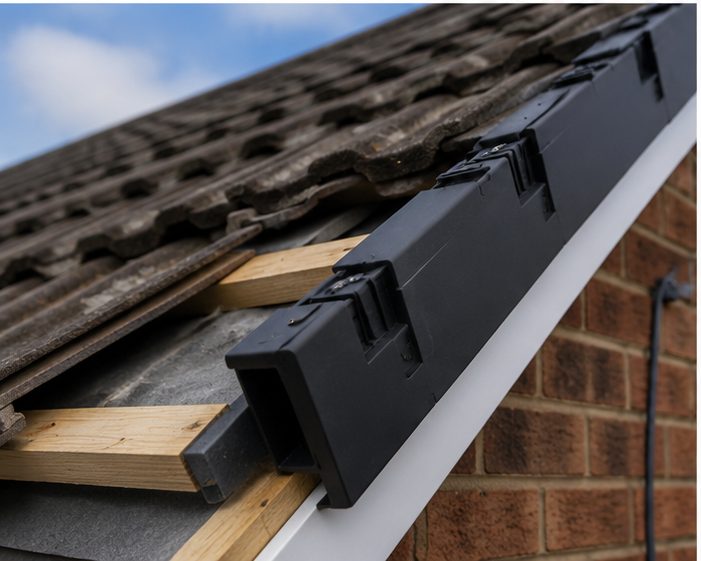
- Tile-end and cap pieces. Cap and tile-end pieces are fitted following the tile maker's guidance, holding the last courses down and closing the edge of the roof.
- Verge compatibility check. We check the tile profile on site before ordering, because not every tile suits a dry verge system and we will say so if yours does not.
- Repairing a single failed verge. If one gable edge has failed and the other is sound, we repair the one that needs it and report honestly on the rest.
How we fit dry verge in Ashley Down
We look at the gable from the ground first, noting fallen mortar, gaps and lifted tiles, and then check the tile type. Dry verge is not a universal fit, so the compatibility check on site decides whether we can go ahead with the system. Terrace streets leave little room for materials, so we also settle where the units will be stored and how the gable is reached.
The units are fixed in line with the tile maker's guidance. We are clear about its limits as well: a dry verge secures the roof edge, but it does not cure a roof that is failing elsewhere, and we will say if other work is needed. A dry verge is a fix for the roof edge only, so we look at the slope, ridge and flashings while we are there and report on them.