
A dry verge swaps the mortar strip for neat mechanical pieces. The result is a cleaner, more even roof edge that stays that way.
The gable end is one of the first things people see when they look at a house, and a ragged mortar edge stands out. In Warmley, where older village buildings, Victorian houses and later estates all show their gables to the road, the change to a dry verge is easy to notice. Here is what it looks like.
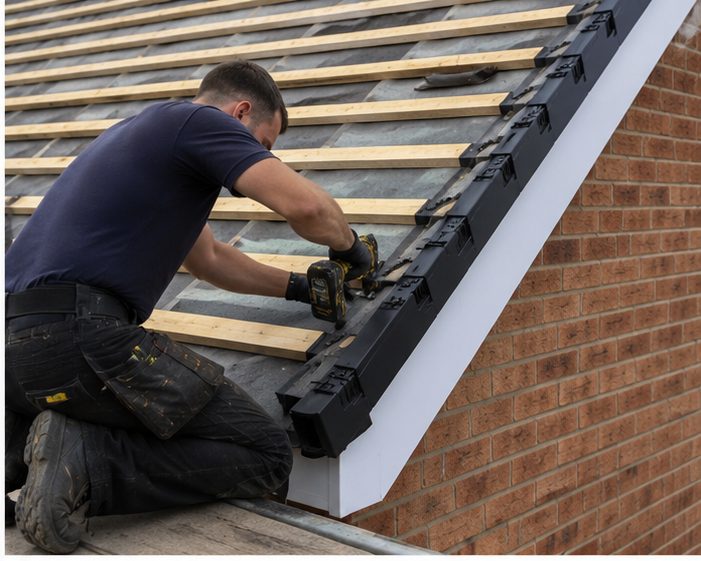
From a crumbling strip to a tidy line
With wet mortar, the edge often shows patches, stains, cracks and uneven filling that grow worse over time. A dry verge uses factory-made units, so the edge looks uniform along its length. There is no grey mortar line to weather unevenly, and the roof edge reads as a single straight finish.
Over a few winters the difference grows. A mortar edge tends to darken, crack and lose chunks, while the dry verge keeps its shape and colour, so the gable keeps looking cared for without repeated patching or repainting of the edge. That steady appearance is a large part of the appeal.
What the pieces look like
Dry verge units sit along the gable edge with tile-end or cap pieces closing the ends. Colours are chosen to sit with your roof tiles, so the edge blends rather than shouting. The detail is slim and neat, and from the ground it looks like a deliberate part of the roof rather than a patch of filler.
- Uniform units along the full length of the edge
- Cap or tile-end pieces closing each run neatly
- Colours matched sensibly to the existing tiles
- No mortar line to crack, stain or fall away
Older homes and newer estates
On a Victorian house, we aim for an edge that respects the style, and we say frankly if a dry verge will look different from a traditional mortar finish. On later estate homes the dry verge usually looks right straight away, as many were built with similar tile profiles and clean lines.
Appearance is not the only gain
The cleaner look comes with practical benefits. With no wet mortar there is nothing to crack and drop onto the path, the edge holds better in wind, and the gap is closed to weather, birds and insects. Looks and performance improve together, which is why dry verge suits new roofs, re-roofs and repairs.
Fewer repairs also means fewer scaffold or access visits to the same gable, which is a quiet advantage that owners notice once the edge simply stays put through each season of wind and rain. It is a small gain, but it adds up on a tall gable.
How we decide on site
Whether a dry verge suits your roof depends on the tile profile, so we check this on site and show you how the finished edge would sit. A dry verge also cannot cure a roof that is failing elsewhere, and we will tell you if other work comes first.
Frequently Asked Questions
Will a dry verge match my existing tiles?
We choose units and colours to sit sensibly with the roof you have, and we talk through the options on site. Some difference in finish is possible next to weathered tiles, but it settles into a tidy, even line.
Does a dry verge look out of place on an older house?
It depends on the house and the tile type. On many roofs it looks perfectly natural. On a very traditional gable, we will tell you honestly how it will compare to mortar so you can decide with the facts.
Is a dry verge only for repairs?
No. It suits new roofs, full re-roofs and repairs where the mortar has failed. It is a neat finish whichever route you are taking, provided the roof tile profile is compatible with the system.
Talk to our team about dry verge systems in Warmley
Every roof is different — the fastest way to get an accurate answer is a quick chat with our team.