Gable edges on Warmley houses
Warmley has a mix of older village buildings, Victorian houses and later estates, and gable ends appear on all three. The estate houses often have simple gables with verges that were bedded once and never touched, so mortar failure tends to show at around the same time. Streets near woodland keep their roofs damp for longer after rain.
On Victorian and older buildings the verge may follow an uneven line, and the barge detail beneath can be tired. We look at those before fitting anything, because a neat new verge on a weak edge does not last. Roofs fail at edges and joints far more often than in the middle of a slope.
Where streets are leafy and near woodland, debris and damp collect at the roof edge. Mortar on the path or drive is the usual first sign of trouble. A dry verge is not a cure for a roof failing elsewhere, so we check the whole slope. Leafy plots mean more debris in gutters and valleys than on open streets.
Dry verge work in Warmley
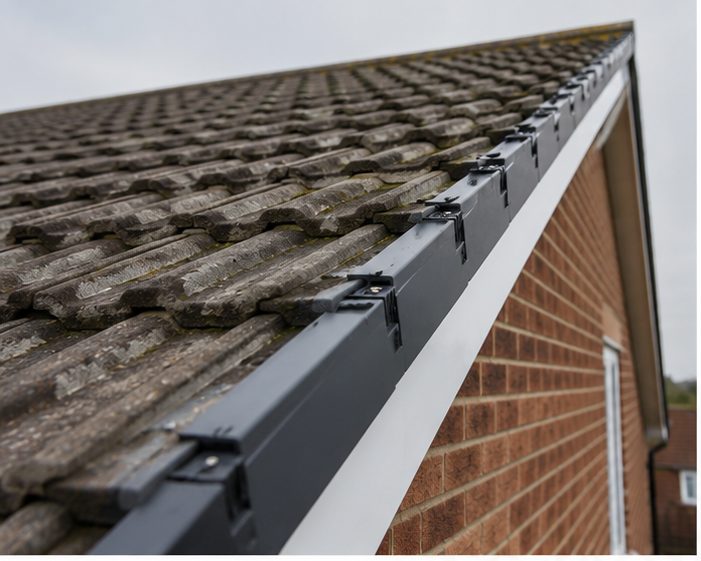
- Replacing failed mortar verges. Crumbling mortar is removed and replaced with fixed verge units, so the gable edge stops dropping pieces onto the ground.
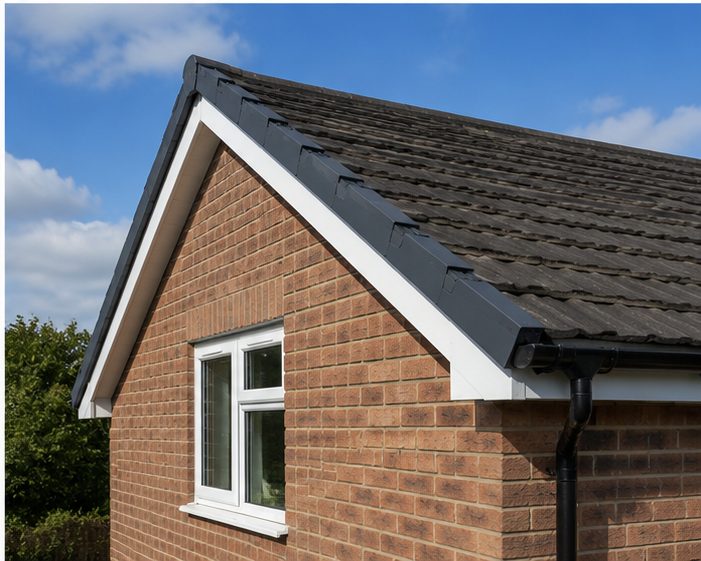
- Dry verge on estate roofs. Simple gables on later estate houses are fitted with fixed units and matching cap pieces, giving a neat and consistent finish.
- Verges on older buildings. On Victorian and older buildings, the edge and barge detail are checked first so the new verge sits on something sound.
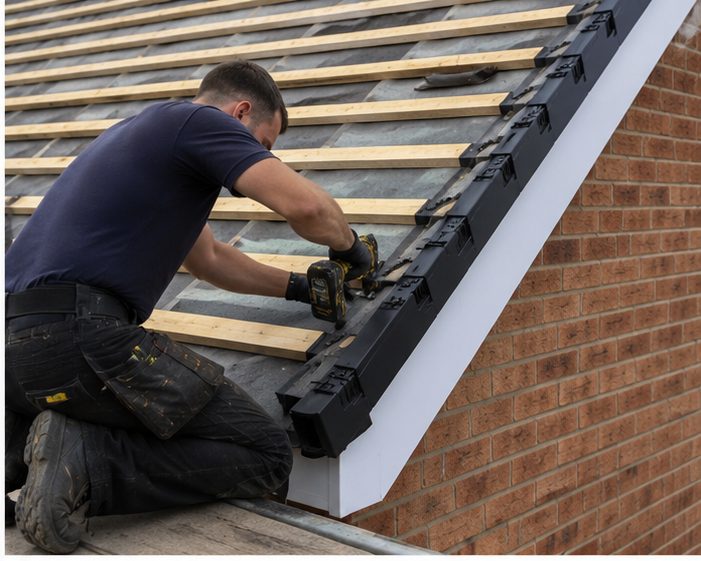
- Dry verge with a re-roof. When a roof is re-covered, a dry verge is fitted at the same time and finished to suit the tiles.
- Dry verge on extensions. New gables on extensions can be finished with fixed units from the start, so no mortar line is needed.
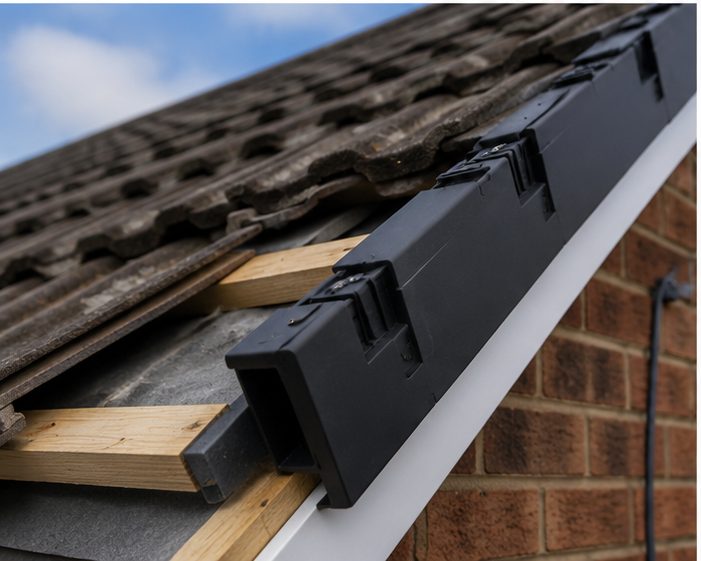
- Tile-end and cap pieces. Matching pieces finish the edge cleanly and close the gap at the top of the wall.
How we fit a dry verge in Warmley
Whether a system fits depends on the tile profile, and we check that on site before agreeing the work. Units are fixed according to the tile maker's guidance, and we explain how the finished edge will look. Where there is a choice of approach, we set out the differences in ordinary language.
We also look at the covering beside the verge. If it is worn, we tell you, as a new verge would only be part of the answer. Access to a gable usually needs scaffold, and any change that may need planning or Building Regulations checks — we advise before work starts.