
Mortar dropping onto the path is the roof edge telling you its bedding has failed. Patching it again usually just restarts the countdown.
If you keep finding crumbs of mortar on a drive or path, the verge at your gable end is coming apart. Around Warmley, where Victorian houses, older buildings and later estates all have gable ends, it is one of the most common roof edge faults. Understanding why it happens shows why a fresh patch rarely lasts.
What the verge does
The verge is the edge of the roof where it meets the gable wall. Traditionally the tiles are bedded in a strip of wet mortar, which seals the gap and holds the edge tiles down. It sits right where wind, rain and frost hit hardest, so it gets a tougher life than most of the roof.
Gables on exposed spots take the worst of it, and older mortar can already be thin or poorly bonded from earlier work. That is why one gable may drop mortar while the other, facing away from the weather, looks fine.
Why wet mortar cracks and drops
Mortar is rigid, while a roof moves slightly with temperature, damp and wind. Over time hairline cracks open, water gets in, freezes and widens them, and pieces fall away. Once the bedding is loose, the tiles beneath lose their grip, and gusts can lift them. Birds and insects also find the gaps and start pulling the mortar apart.
- Hairline cracks that let water in and freeze
- Movement between tiles, mortar and wall
- Wind lifting the edge tiles once bedding loosens
- Birds and insects working into gaps
Why patching does not hold
A repair with fresh mortar sticks to old, crumbling material and rarely bonds well. It looks right for a season, then the same cracks return. If the original problem is movement and weather exposure, the same method will fail in the same way, so you end up paying to repeat the repair.
It is worth asking what the repair is bonding to. Sound bedding can be repaired, but when most of the old mortar is loose behind the surface, you are only dressing up a failing edge and the result will not last.
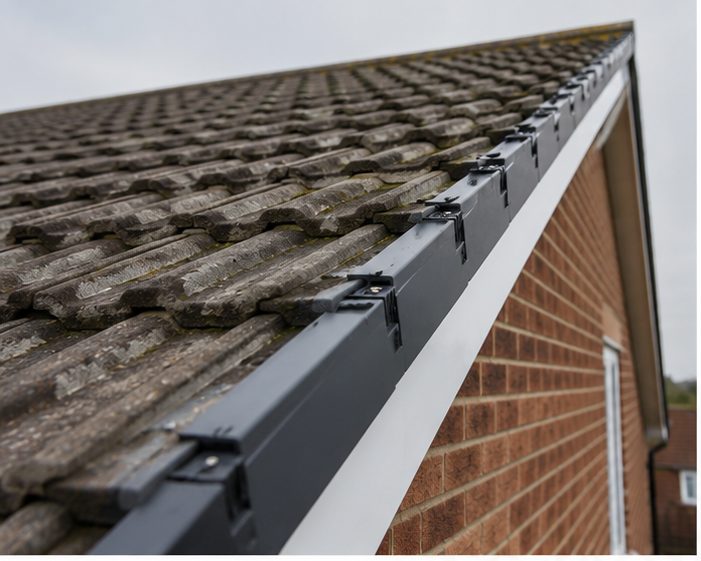
How a dry verge solves it
A dry verge replaces the mortar with mechanically fixed units and tile-end or cap pieces, held down by fixings rather than glue. There is no wet mortar to crack, the edge resists wind better, and the gap is closed against weather, birds and insects. It is fixed to the tile maker's guidance and suits repairs where the mortar has failed.
What we check first
A dry verge is not a cure for a roof that is failing elsewhere, and whether the units suit your roof depends on the tile profile, which we check on site. We also look at the tiles beside the verge, the felt and the gable wall edge, so the new edge is fitted to something sound.
Frequently Asked Questions
Is falling mortar dangerous?
It can be. Pieces falling from height may land on paths or people, and a loosened verge means the edge tiles are less secure. Keep clear of the area and call us for a look from the ground rather than trying to knock it off yourself.
Can the mortar just be repointed?
Sometimes a small section can be, but if the bedding is failing along the edge, repointing is a short term fix. A dry verge removes the weak point altogether, which is why we often suggest it where mortar has failed more than once.
Will a dry verge fit any roof?
Not always. Compatibility depends on the tile profile and the condition of the edge, so we check on site before recommending it. Where it suits the roof, it is a straightforward upgrade at the gable.
Talk to our team about dry verge systems in Warmley
Every roof is different — the fastest way to get an accurate answer is a quick chat with our team.