
A dry verge shuts the gap that crumbling mortar leaves at a gable. That removes an easy nesting spot, though it does not deal with other openings in the roof.
Gaps at the verge are a favourite with birds and insects. Hanham has plenty of older roofs and estate houses where the gable mortar has worn away, and the open edges towards the river mean the weather keeps working at it. A dry verge changes what happens there, and it is worth knowing how.
Why the gable edge attracts them
Once mortar crumbles, the edge of the roof develops gaps and pockets between the tile ends and the wall. These are dry, sheltered and out of reach, which suits sparrows, starlings, bees and wasps very well. You may notice nesting material, droppings or insects entering a single spot. Left alone, these gaps keep growing and let in rain as well. Hanham's older village streets and estates have plenty of roofs in this state.
What the dry verge changes
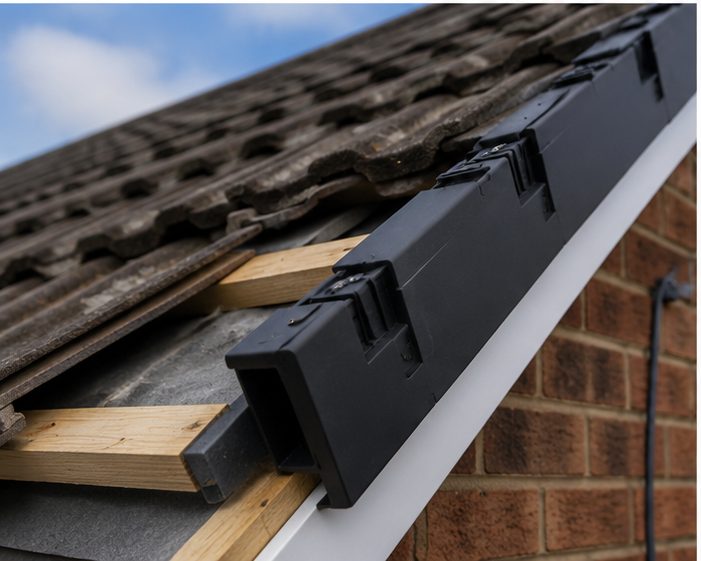
A dry verge replaces the mortar with mechanically fixed units and tile-end pieces, running neatly along the gable. There are no open pockets, no soft bed to peck out and nothing loose to fall away. The edge becomes a closed, weathertight line. It is fitted to the tile maker's guidance, so the fixings and units suit your tiles.
- Closed edge with no mortar pockets.
- Fixed units that birds cannot pull out.
- Fewer insects finding entry points.
- Less debris dropping onto paths.
Dealing with existing nests
If a nest is already there, we do not simply seal over it. Active bird nests are protected, so we plan around the nesting season and tell you what to expect. If it is a wasp or bee nest, it is dealt with first, carefully. Only when the edge is clear do we fit the units. We would rather delay than trap anything inside.
What it does not cover
A sealed verge does not seal the whole roof. Birds and insects also use gaps at the eaves, under broken tiles, around the ridge and through damaged soffits. If any of those are open, they will find them. When we work on a roof we look at the whole edge system, not just the gable, and advise on anything else that is open. Where the work involves access above a conservatory or lean-to, we plan the safest way to reach the edge.
- Eaves and soffits with gaps or damage.
- Ridge ends that are broken or loose.
- Broken tiles creating a pocket.
- Vents without mesh in them.
What to watch from the ground
Watch for birds going in and out of one spot, wasps or bees at the gable, or straw and mortar dust on the path. These tell you the edge needs a look. Do not poke at it or go onto the roof. Take a photo from the ground and call us, and we will inspect the verge properly.
Frequently Asked Questions
Will a dry verge keep wasps out?
It removes the gaps in old mortar that wasps like to use at the edge. They can still enter through other openings in the roof, so we check the eaves and ridge as well. We tell you what we find and what we recommend.
Can you fit one with a nest present?
Not until the nest is dealt with. Active bird nests are protected and may need to wait. Wasp and bee nests are removed first. We will explain what applies to your roof before we start.
Do dry verges look different to birds?
Birds mainly look for gaps, not looks. A closed, smooth edge offers them nowhere to settle, so they tend to move on. The aim is a tidy roof edge that stays sealed. Bird droppings below the gable are a common clue.
Talk to our team about dry verge systems in Hanham
Every roof is different — the fastest way to get an accurate answer is a quick chat with our team.