Dry verges for Hanham gables
Hanham has plenty of gable ends, especially on the older village streets and the post-war estates, and many verges still rely on mortar that has been patched more than once. Where it has pulled away, wind and rain get in behind the edge tiles. On an older gable that has been repointed before, we often find several layers of patching that never really bonded.
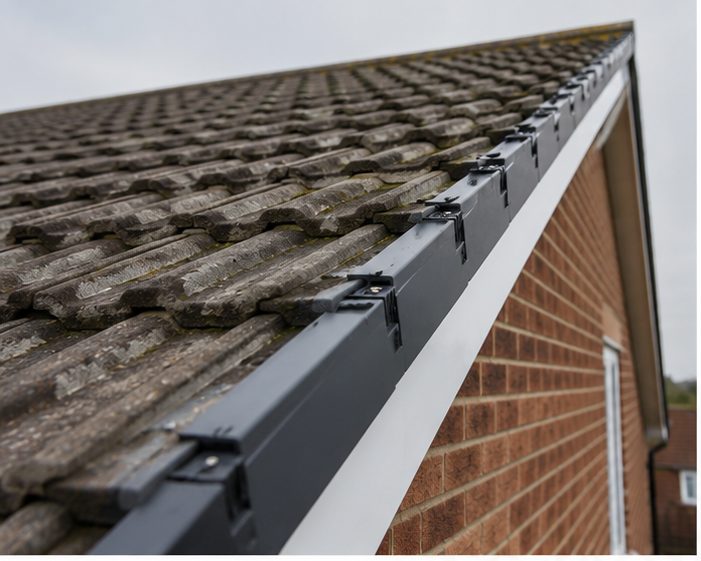
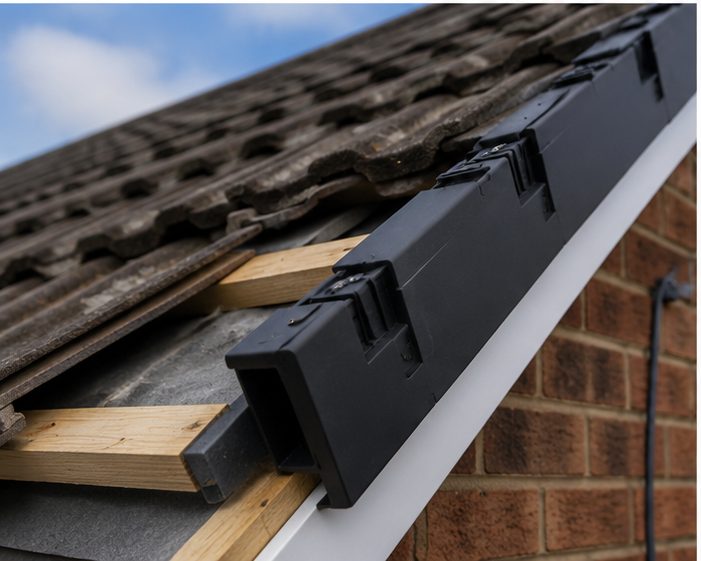
Open edges towards the river leave some gables more exposed to wind. A verge that is bedded in mortar can lift or loosen in a hard blow, whereas a mechanically fixed unit holds the edge tiles down and keeps the roof edge tight. For houses on the exposed side of the estates that matters, because a loose edge tile in a gale lands on someone's path.
Compatibility depends on the tile profile, and Hanham's mixed housing means a range of coverings. We check on site whether the dry verge units match your tiles. A dry verge is not a cure for a roof that is failing elsewhere, and we say so if that is the case. Sometimes the better answer is a repair elsewhere first.
Dry verge jobs we do in Hanham
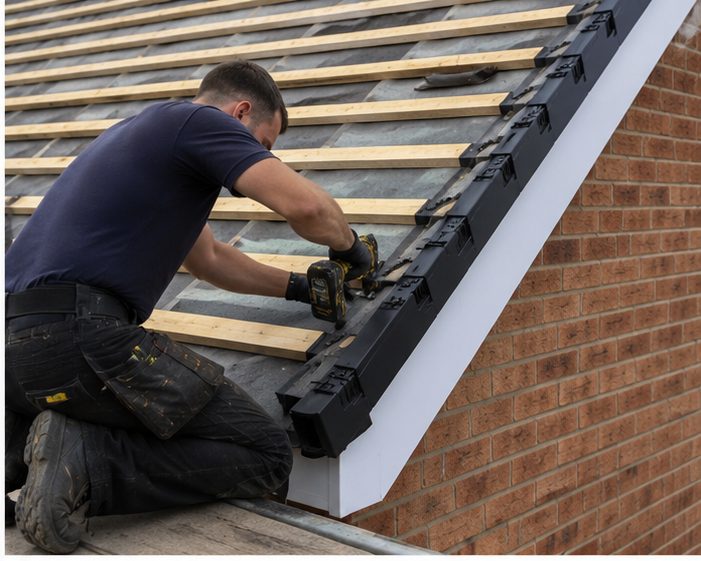
- Dry verge on a new roof. On a new roof the verge units and cap pieces are fixed as the covering goes on, giving a firm edge from the start.
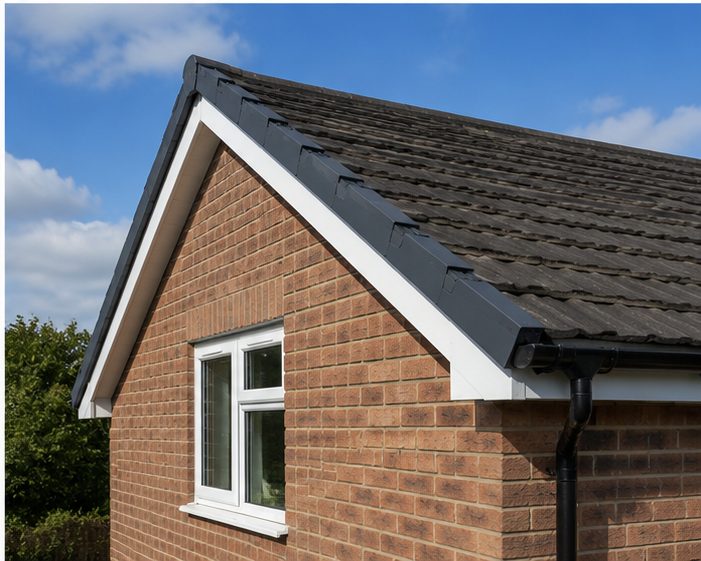
- Re-roof with dry verge. When an old roof is stripped and relaid, we replace the mortar edge with a dry verge as part of the new covering.
- Replacing failed mortar. Where verge mortar has cracked and fallen out, we remove it and fit dry verge units in its place, fixed to the tile maker's guidance.
- Gable end tile refixing. Loose or slipped tiles along the gable edge are refixed or replaced so the verge is solid before the units are fitted.
- Verge cap and tile-end fitting. Matching cap and tile-end pieces finish the edge neatly and keep weather, birds and insects out of the roof edge.
- Repairs after wind damage. If wind has lifted a verge, we make it safe and then replace damaged tiles and units to restore a sound edge.
How we fit a dry verge in Hanham
First we look at the verge from the ground and from the roof, noting where the mortar has failed and what profile your tiles have. We check that dry verge units are compatible with them before promising anything, because the fit depends on the tile. Rushing that step is how mismatched units end up on a roof.
Fixing follows the tile maker's guidance. We work from scaffold or safe access, remove the old mortar, check the tiles and battens at the edge, and fit the units. We also tell you plainly if other parts of the roof need attention. Anything we spot along the way, such as slipped tiles or worn flashing, goes into the same conversation before you decide.