
A dry verge shuts the roof edge with fixed units, leaving far fewer gaps for birds and insects than cracked mortar does. It also deals with the weather that gets in along the same route.
On steep terraces and small streets, a gable or party-wall end can be a quiet spot, which suits birds and insects looking for a sheltered gap. When the mortar at the verge cracks, the way in is ready-made. A dry verge closes that route, though it is worth understanding what it does and does not cover.
Why cracked mortar invites nests
Old mortar shrinks and falls out, leaving gaps between the tiles and the wall. Behind them is a dry, sheltered space that is hard to reach, which is ideal for sparrows, starlings, bees and wasps. Once a nest is established, droppings and nesting material can block gutters and work their way into the roof space. Pigeons and starlings often reuse the same gap year after year, so an open verge tends to be a repeat problem.
What the dry verge does
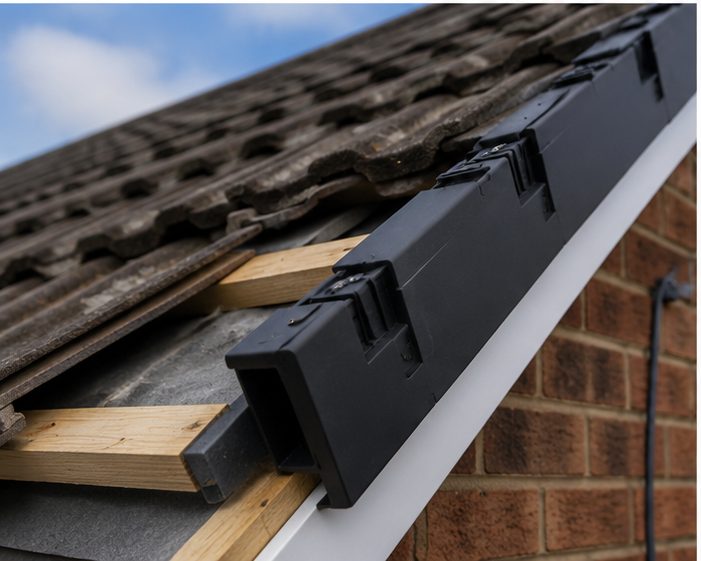
Mechanically fixed verge units sit tight to the roof edge, with a cap or tile-end piece finishing it. There is no wet mortar to crack, so the gap does not open up in the first place. The edge is closed to weather as well as wildlife, and it is fixed according to the tile maker's guidance. Closing the gap also stops draughts and damp driving in at the roof edge, which is a quiet benefit.
If something is already living there
We do not seal in an active nest. Where birds are using the edge, we agree the timing, which may mean waiting. Where wasps or bees are involved, a pest specialist should deal with the nest first, and we work around that. Once the edge is clear, the dry verge can be fitted and the route closed.
- Do not block a gap yourself while a nest is in use
- Watch from the ground for birds entering the same spot
- Tell us about wasps or bees near the roof edge
- Keep clear of the area beneath a nest
What it does not cover
A dry verge closes the verge, not the whole roof. Gaps at the eaves, under ridge tiles, round chimneys and flashings can still be used. It is not a cure for a roof failing elsewhere, so we look at the roof as a whole and point out other places where animals could get in. Eaves gaps next to a gable are worth a look too, because animals will switch to the next opening available.
Fitting on a Kingsdown roof
Compatibility depends on the tile profile, checked on site. On tall terraces, access matters too, and we plan scaffold or tower use before the work starts. A dry verge suits new roofs, re-roofs and repairs where mortar has failed, and a neat, closed edge is easier to keep free of nests in future. Because a sealed edge looks tidy, it also makes it easier to spot any new damage from the pavement.
Frequently Asked Questions
Will a dry verge stop birds nesting in my roof?
It stops them using the verge gap. Birds can still try other openings, so eaves, ridge and flashings should be sound as well. Closing the main routes makes a real difference. If in doubt, ask us and we will explain what we find.
Does closing the verge cause ventilation problems?
No. A roof space is ventilated at the eaves and ridge, not at the verge. A closed verge keeps animals and rain out while the roof breathes where it is meant to. If in doubt, ask us and we will explain what we find.
What if I hear scratching in the roof?
Note where and when you hear it, but do not go on the roof. It could be birds or insects at the edge or elsewhere. Call us and we will look at the verge and the rest of the roof.
Talk to our team about dry verge systems in Kingsdown
Every roof is different — the fastest way to get an accurate answer is a quick chat with our team.