
A leak should not be left to see how it goes. On tall terraced roofs, water can run a long way through old timbers and masonry before it shows, so waiting often means more to put right.
The honest answer for Kingsdown is as soon as you can. The houses are tall and the roofs steep, with chimney stacks and parapet gutters that route water into the building quietly. By the time a mark reaches a ceiling, the damp may already have soaked rafters, joists and brickwork higher up.
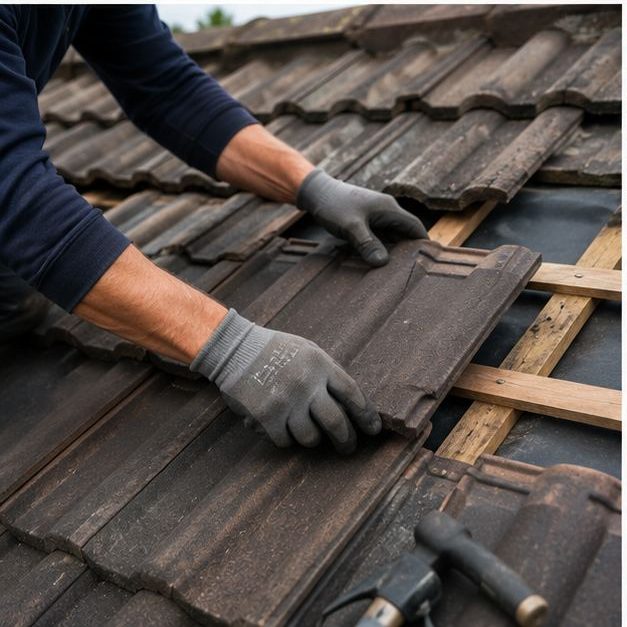
Water that travels unseen
In a terrace with party walls and tall stacks, water can follow timber, masonry and lead for a long way before it finds a place to drip. The stain you see in a top-floor bedroom may be the end of a path that started at a flashing near the chimney. Time lets the damp spread further each wet spell. A top-floor ceiling is rarely the first thing to get wet, only the first thing you can see.
What starts to suffer
Roof timbers that stay damp soften and can rot, and in older houses they matter a lot, because they carry the whole roof. Plaster stains and lifts. Insulation holds moisture. In the walls, damp brickwork around a stack can crumble and let in more water. The longer the delay, the more of that can be affected. Old lath and plaster ceilings in particular can hold water for a surprisingly long time before they finally give.
- Rafters and wall plates left damp for long periods
- Ceiling plaster that stains, sags or comes down
- Insulation soaked and no longer doing its job
- Brickwork round chimneys that is slowly weakened
Why parapets and valleys raise the stakes
A parapet gutter or valley carries water from a large area. If its lining has split or an outlet has blocked, a lot of water can enter every time it rains, not just a drip. Those leaks tend to get worse with each storm, so waiting for the next fine spell is not a safe plan.
What to do in the meantime
Catch drips in a bucket, move belongings and photograph any staining so we can see whether it is spreading. Look at the loft from the hatch with a torch if it is safe. Do not go up on the roof or lean a ladder against it. Tell us when it happens and how heavy the rain was. If water is coming near light fittings or wiring, switch off the circuit and tell us when you call.
Access is part of the picture
On steep, tightly packed terraces, getting to the fault safely can take a scaffold or tower, which is another reason not to leave it until it is urgent. Booking a look sooner gives time to plan access properly, and we can tell you what needs doing now and what can safely wait. The aim is to stop the water first and then talk through the wider repair when the roof is dry and safe to work on.
Frequently Asked Questions
Is a small stain in the ceiling a big deal?
It can be. The stain shows where the water ended up, and the opening may be much larger further up. A small mark that keeps returning after rain is a sign something needs looking at soon.
Will a leak stop when the weather dries out?
The dripping may stop, but the opening is still there, and timbers stay damp for a while after rain. The next heavy shower will put the water back in, so a dry spell is a good time to have it looked at.
Can I wait until I have a scaffold in place for other work?
If other work is planned soon, it may be sensible to combine them, but do not let a live leak wait long. Tell us about the plans and we can say whether the leak should be dealt with first.
Talk to our team about roof repairs in Kingsdown
Every roof is different — the fastest way to get an accurate answer is a quick chat with our team.