
A dry verge swaps the mortar along a gable edge for units that are fixed in place. This is how that works and what it changes for a tiled semi.
On a gable-ended semi in Brentry, the verge is the edge of the roof where the tiles stop at the side wall. For years it was finished in wet mortar. A dry verge does the same job with purpose-made units fixed to the roof, so there is no mortar to crack or fall out.
The old way, in mortar
Traditionally the edge tiles were bedded in mortar and the gap to the wall pointed up. That bedding is rigid and brittle, and it shrinks as it ages. It cracks, lets rain through and eventually drops out in lumps onto paths. Once the mortar goes, wind can lift the edge tiles and water enters the roof structure.
On Brentry semis, with gable ends facing the street and the side path, falling mortar tends to be noticed quickly, since it lands where people walk and park. That is often the moment owners start asking what else they could use.
What the dry system uses
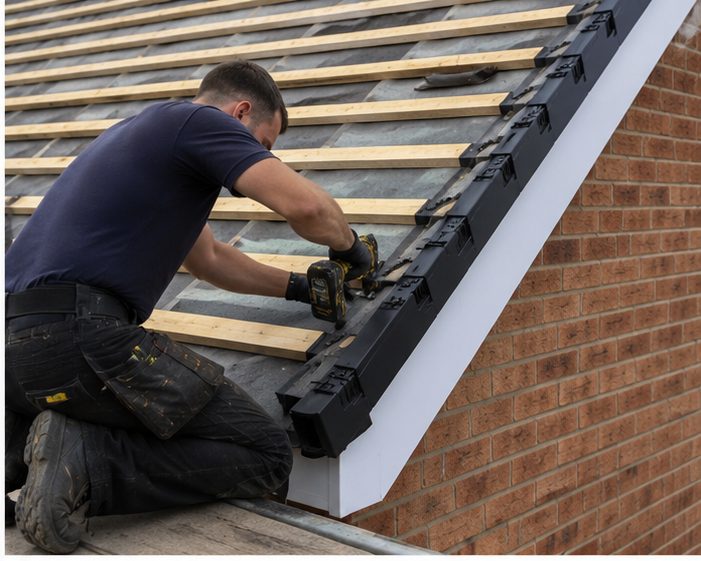
A dry verge uses fitted units that run along the edge of the roof, with tile-end and cap pieces to finish the top and bottom. They are fixed with screws or clips to the structure instead of relying on adhesion. The units cover and protect the edge, resist wind and keep out weather, birds and insects.
The parts are made to suit particular tile profiles, so we check which system fits yours on site. A close match matters, because the unit must sit properly on the tile edge and be fixed through to the roof structure beneath.
- Verge units fixed along the gable edge
- Tile-end and cap pieces at the ends
- Mechanical fixings instead of wet mortar
- Closed edge against weather and wildlife
Where it makes sense
A dry verge suits new roofs, re-roofs and repairs where the old mortar has failed. It is a good answer for homes where verge repairs keep recurring. It is not a cure for a roof that is failing elsewhere, and it should not be used to cover over tiles that are already wearing out.
How we fit it
We strip the old mortar and check the edge tiles and timbers, then fix the new units to the tile maker's guidance. Each piece is lined up and fixed so the edge is straight and firmly held. The result needs no repointing, and a quick look from the ground after storms is all the checking required.
Things to ask about
Ask which system is proposed for your tile, how it is fixed and what happens to the existing edge tiles. Ask for the detail in writing. Some roof work may need planning or Building Regulations checks, and we advise before work starts. Clear answers show the work has been properly thought through.
Frequently Asked Questions
What is the first sign mortar has failed?
Pieces of mortar on the path, drive or garage roof are typical. You may also see cracks, gaps along the edge or loose edge tiles. If you spot any of these from the ground, we can check the verge properly.
Will a dry verge look different?
The edge is usually neater and more uniform, with a clean line along the gable. Colours are chosen to suit the tiles. It looks different from a mortar verge, but most owners find it tidier.
Can a dry verge be added to a tiled semi?
Usually yes, if a compatible system exists for the tile and the roof edge is sound. We confirm the tile profile on site, and tell you straight if the roof needs other work first.
Talk to our team about dry verge systems in Brentry
Every roof is different — the fastest way to get an accurate answer is a quick chat with our team.