
A dry verge suits many roofs, but not all. These are the checks that tell you whether it is the right fix for your gable, and how to judge the quote.
Choosing a dry verge is a simple decision once you have the facts. Most roofs in Eastville, from Victorian terraces to later infill houses, can take one, but it has to match the tiles and sit on a roof that is sound. These checks help you decide, and help you judge any quote you receive.
Ask about the tile profile
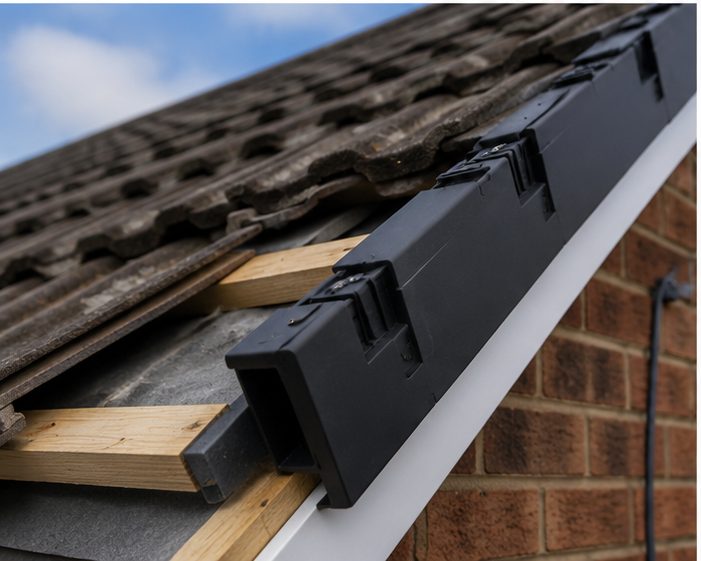
Dry verge units are made for particular tile shapes. A good roofer will identify your tiles and confirm a compatible system on site, not from a guess. If your tiles are old or unusual, ask directly how the system will fit and what the finished edge will look like, and ask for it in writing. A photograph of the tile and the edge helps, but nothing replaces checking on site.
Look at the edge itself
A dry verge protects the edge of a sound roof. Before fitting, the roofer should check the battens, the felt at the edge and the end tiles. If those are in poor shape, they need fixing first. A new verge on a rotten edge looks tidy for a short while and then fails. We show you what we find at the edge, with photographs, before agreeing the scope.
- Condition of the end battens and felt
- Whether the end tiles are cracked or slipped
- Signs of damp on the gable wall
- Whether the rest of the slope is sound
Check the gable wall
From the ground, look at the wall below the verge for cracks, damp stains or loose brickwork. Mortar lying on the drive is the usual first sign of verge failure. If the wall itself is in trouble, the verge repair should be part of a wider plan, not done alone. Mention any cracks you have noticed in the gable, so they are not missed.
Ask how it will be fitted
Ask what happens to the old mortar, how the units are fixed, what guidance is followed, and how the ridge end and eaves end are finished. Ask about access and who takes responsibility for protecting paths, cars and neighbours' space. Clear answers, given calmly, are a good sign. A tidy site and plain explanations at each stage are what you should expect.
Judging the quote
A sound quote names the system, describes the fixing method and states what is included, such as removal and disposal of old mortar. It should explain what happens if hidden problems appear. Where a dry verge forms part of a bigger job, the work may need planning or Building Regulations checks — we advise before work starts. Ask for the quote to be itemised so you can compare it like for like.
Frequently Asked Questions
Do all tiles have a matching dry verge?
Most common profiles do, but not every one. We confirm compatibility on site. If a standard system does not suit, we explain the alternatives and the effect on the finish. We explain it plainly and put it in writing.
Can a dry verge fix a leaking roof?
Only if the leak is at the verge. It is not a cure for a roof failing elsewhere. We trace the leak to its real source before recommending anything, so you do not pay for the wrong repair.
What are the signs I need one?
Mortar on the ground, cracks and gaps at the gable edge, loose end tiles or birds nesting at the verge. Please check from the ground only. If you notice any, call us and we will take a proper look. It is better to catch the problem early than wait until a section falls.
Talk to our team about dry verge systems in Eastville
Every roof is different — the fastest way to get an accurate answer is a quick chat with our team.