Dry Verge Work on Eastville Gables
The end of a Victorian terrace, and any house with a side gable, shows its verge to the street and to the weather. Pieces of crumbling mortar landing on a path or the ground below are the usual first sign that the verge needs attention. Residents often notice the grit before they notice the roof, and that is the right moment to get it looked at.
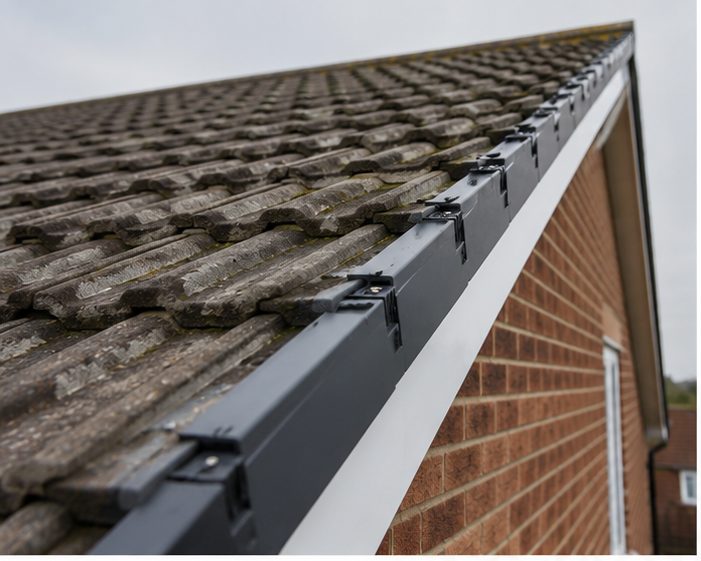
Eastville's position beside the Frome valley means gable edges can take the brunt of wind and driven rain. A mortar verge that is loose here lets the end tiles lift, so a mechanically fixed edge is a sensible repair as well as a tidy one. Fixing the units to the roof, rather than relying on mortar alone, gives the edge something firm to hold onto.
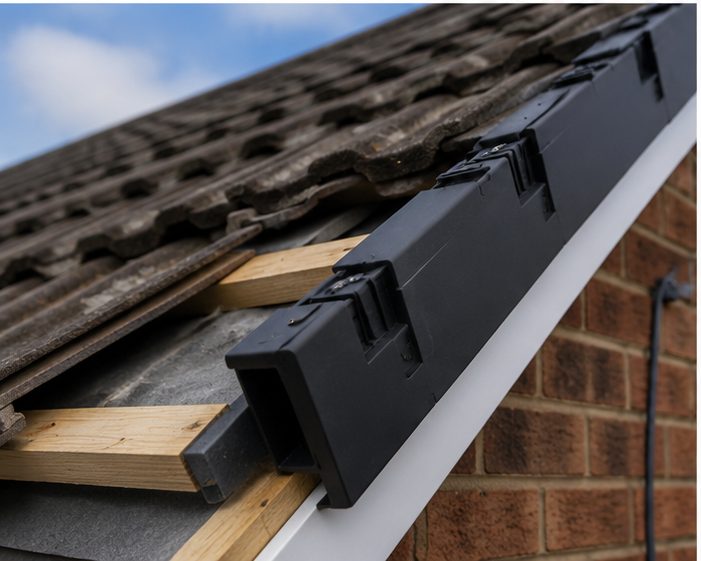
Not every roof suits every system. The right verge unit depends on the profile of the tiles in front of us, which varies between the older terraces and the later infill houses. We check compatibility on site before agreeing anything. If a system does not suit, we say so rather than force it, and talk through what else will do the job.
Dry Verge Services in Eastville
- Dry verge repairs on failed mortar. Removing cracked and loose mortar at a gable and fitting a dry verge in its place, so the tile ends are held firmly.
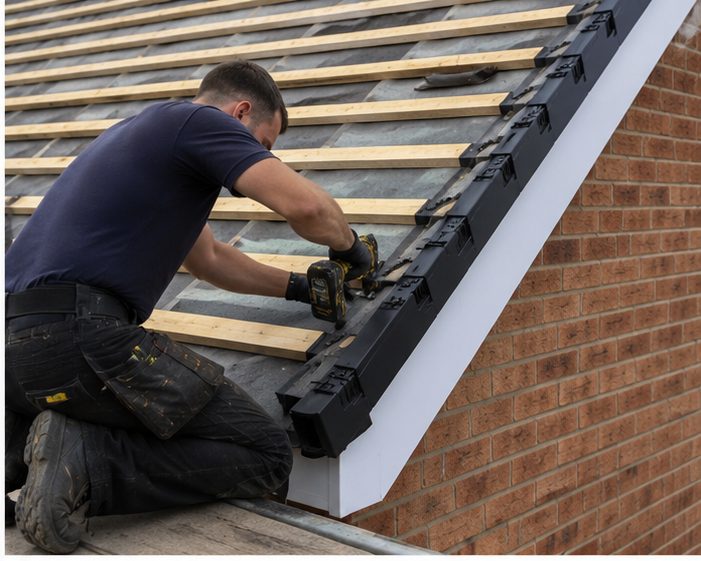
- Dry verge on a re-roof. Building the fixed verge into a full re-roof from the start, so the roof edge is finished without wet mortar.
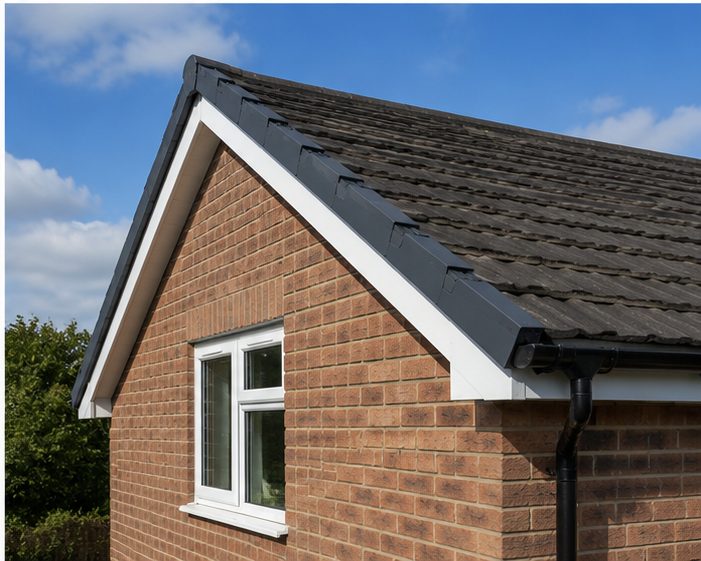
- End-of-terrace gable edges. Treating the exposed gable of a terrace or semi, where the verge sees the most wind and weather on the whole roof.
- Tile-end and cap pieces. Fitting matching tile-end and cap pieces along the verge so the finish looks neat and the edge is sealed against the weather.
- Bird and insect proofing. Closing off the roof edge so that birds, insects and wind-driven rain cannot get in where old mortar has fallen away.
- Checks on adjoining roof details. Looking at ridge ends, flashings and the top course next to a verge, so a dry verge is not fitted on a roof failing elsewhere.
How We Fit a Dry Verge in Eastville
We begin with a look at the roof edge from the ground and, if you want it, a talk through what we can see: loose mortar, tilted end tiles, gaps. We then check whether the tile profile suits a dry verge system, since that decides which units we can use.
The work is fixed following the tile maker's guidance, with access arranged to suit the house, often scaffold at a gable. A dry verge is not a cure for a roof that is failing elsewhere, and if we find other problems along the edge, we explain them before starting.