
Bits of mortar on the path or drive are often the first sign a verge is failing. This guide explains why it happens, what we look at, and how a dry verge ends the problem.
The verge is the edge of the roof at a gable end, and for a long time it was finished with a strip of wet mortar bedding the tiles down. That mortar cracks, loosens and drops away, which is why you find crumbs and chunks on the path below. In Barton Hill, with so many Victorian gables and later houses, it is a common call-out.
Why wet mortar does not last
Mortar is rigid, but roofs and walls move a little with changing weather. Rain gets in, freezes and thaws, and the bond between mortar, tile and wall slowly breaks down. Wind then works at the loosened edge. Re-pointing the same strip often buys only a short reprieve, because the same forces act on it again.
What falling mortar is telling you
The first sign is usually crumbs or chunks on a path, drive, car roof or bin lid beneath the gable. Looking up from the ground you may see dark gaps along the edge, or tiles that look unsupported where the bedding has gone.
Once the mortar has gone, the end tiles are free to lift in the wind, and rain and birds can get into the roof edge. Once the mortar has gone, the end tiles are free to lift in the wind, and rain, birds and insects can get into the roof edge. A verge that looks only slightly rough from the ground can be quite loose on closer inspection.
What we check
We look at the verge from the ground and then at close range. We check the tiles at the edge, the felt and the timber beneath, and the condition of the wall top. If water has got behind the verge, there may be damp batten ends or loose tiles that need fixing before anything new is added.
- Gaps and cracks along the mortar line
- End tiles that have shifted or lifted
- Felt or battens showing at the edge
- Staining on the gable wall below the verge
How a dry verge solves it
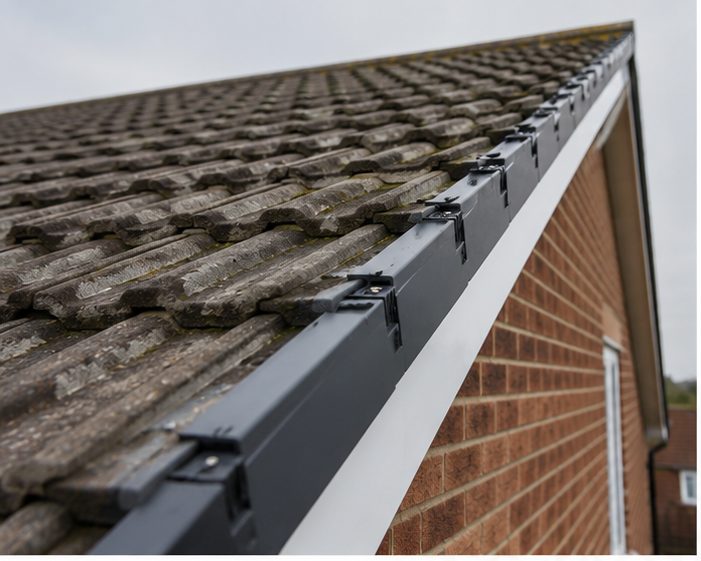
A dry verge uses mechanically fixed verge units and tile-end pieces instead of wet mortar. There is nothing to crack and fall out, and the fixings hold the edge down against the wind. It also keeps weather, birds and insects out of the roof edge. Compatibility depends on the tile profile, so we check that on site.
When it is not the only problem
A dry verge cures a failing verge. It does not cure a roof that is failing elsewhere, such as slipped tiles, tired felt or leaking flashings. We look at the whole roof and tell you honestly what else, if anything, needs attention. Where the roof is sound apart from the mortar, a dry verge is a sensible, lasting fix.
Frequently Asked Questions
Can the mortar just be repointed?
It can, and sometimes that is reasonable for a short-term fix. But the same movement and weather will crack it again. A dry verge removes the mortar altogether, so there is nothing left to fail. Repeated patching tends to cost you more visits than a lasting fix, so it is worth asking about the dry option.
Is falling mortar dangerous?
It can be. Lumps can land on paths, cars and people walking below, and the loose edge may let tiles lift. If you see a lot coming down, keep the area below clear and call us for a proper look.
Will a dry verge fit my tiles?
Usually, but it depends on the tile profile. Different tiles need different verge units, and the fixing is done to the tile maker's guidance. We check the profile on site before recommending the right system. Different tiles need different verge units, and where nothing suitable exists we say so honestly.
Talk to our team about dry verge systems in Barton Hill
Every roof is different — the fastest way to get an accurate answer is a quick chat with our team.