
A flat roof is never truly flat. It needs a gentle slope and a clear outlet to shed water. Here is how falls and drainage affect extensions and outbuildings, and what we check.
A flat roof only works if water can leave it. The slope, called the fall, carries rain towards an edge or outlet, and the gutter or drain takes it away. In Barton Hill, where flat-roofed extensions and outbuildings are common on terraces and later houses, standing water is one of the first things we look for. It tells us a lot about the roof beneath.
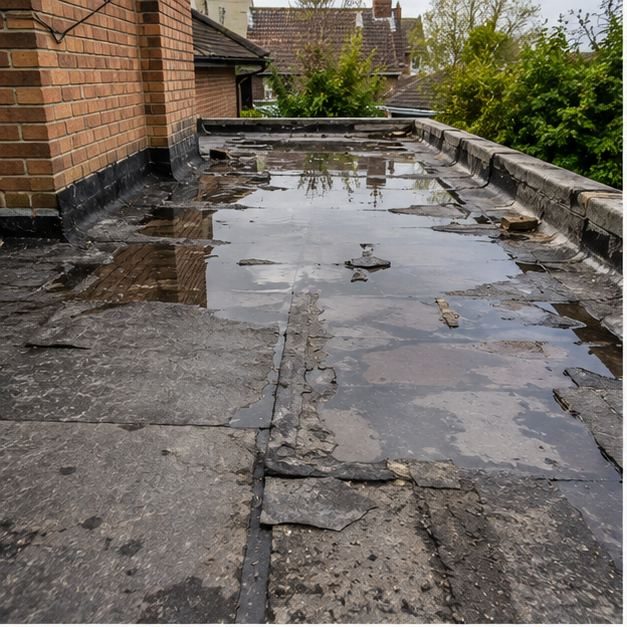
What a fall actually does
A fall is a gentle slope built into the deck or the insulation so rain runs off instead of sitting. Even a small amount of slope makes a real difference. Where the fall is poor, water collects in the low spots, and the covering there works harder, ages faster and is more likely to fail at joints.
Many older extensions were built with only a slight slope, or the fall has changed as the deck has settled over time. Both leave water sitting where it should not, and both are worth checking before anything is laid over the top.
Spotting ponding from the ground
After rain, look at the roof from an upstairs window or from the ground. Puddles that linger long after the rain stops show where water is not draining. Dirt rings and algae in a patch mark where water has sat before.
You do not need to step onto the roof to check this. Describe what you see, or send photographs taken from a window or the ground, and we will assess it properly when we visit and see what the surface is actually doing.
Gutters, outlets and edges
Water needs somewhere to go. A blocked outlet, a gutter full of leaves or a drip edge that has dropped can all hold water back. On extensions and garages the drainage is often an afterthought and easy to forget. Overflowing at one corner after rain, or staining on the wall below, suggests the outlet is not coping.
What poor drainage does to the roof
Standing water stresses joints and seams, breeds moss and algae, and can find its way through small flaws that would otherwise stay dry. Over time the deck beneath can soften and rot. If we find soft timber under the covering, a patch will not do, and we explain whether a section or the whole roof needs attention.
- Soft or spongy feel inside at the ceiling below
- Brown stains that grow after heavy rain
- Moss or algae growing in a pattern on the surface
- Water overflowing at a corner or down the wall
Putting falls right
Where the roof is sound but drains poorly, we can often improve the situation with a tapered insulation layer or by correcting outlets and edge trims. Where the deck is sagging or rotten, repair or replacement of the structure comes first. We look at the whole roof and tell you which route is sensible before any work starts.
Frequently Asked Questions
Is a little standing water after rain a problem?
A small amount that clears soon after rain is common. Large puddles that stay for a long time are a warning, because they mean the fall or outlet is not doing its job and the covering is under strain.
Can poor falls be corrected without a new roof?
Sometimes. Tapered insulation or reformed outlets can improve drainage where the deck is sound. If the structure has sagged or rotted, we need to repair or replace it first. We assess on site and explain the choice.
Do garages and outbuildings need the same attention?
Yes. They are often built with less care over drainage and then forgotten. A small outbuilding with ponding can fail just as a house extension can, so it deserves the same check whenever the roof is looked at.
Talk to our team about flat roofing in Barton Hill
Every roof is different — the fastest way to get an accurate answer is a quick chat with our team.