
Wooden fascias can last well when painted and kept dry, but they do not stay sound forever. Here are the signs it is time to switch to UPVC, and what to expect.
A wooden fascia carries your gutter and protects the ends of the rafters, so when it fails, water tends to follow. Barton Hill has older Victorian terraces and later council-built houses, many with timber boards that have been painted over and over. Deciding when to replace rather than repaint comes down to what you can see from the ground and what we find behind the board.
Signs the timber is giving up
Look up at the boards from the pavement or garden. Peeling paint that keeps returning, dark patches, open joints, sagging sections and gutters pulling away all suggest the wood is wet or soft. Once rot has set in, repainting only hides it, and a damp board will keep deteriorating.
- Paint flaking or bubbling soon after being redone
- Boards that look wavy, split or open at the joints
- Gutters sagging or leaving stains on the wall
- Birds, wasps or insects getting in behind the board
Repair, repaint or replace
If rot is limited to a short section and the rest is sound, a repair may do. If the boards are soft in several places, or you are already facing scaffold for gutter work, replacing the lot is more sensible. Painting every few years adds up, and UPVC removes that routine.
We will tell you honestly if a repair is just delaying the inevitable. Sometimes it is, and sometimes a short section of new board is all that is needed, particularly where only one corner or one run beside a downpipe has taken the weather.
What UPVC offers
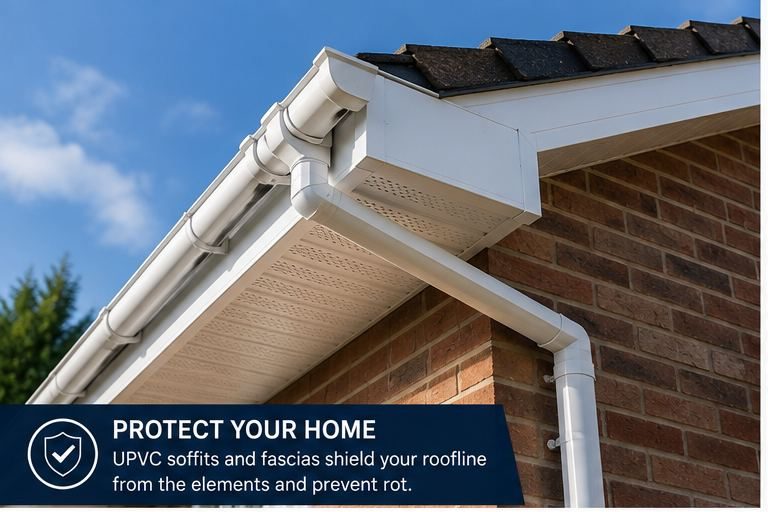
UPVC boards are cleaned, not painted, and they are very low maintenance. They come in white and in darker and wood-effect finishes, so you can match or change the look of the house. Vented soffits or vent strips let the roof space breathe, which timber boards often did not allow for.
Cleaning is usually just a wash down with soapy water from the ground, or by us when we are on site for other work. You never need to repaint, which is the main reason people choose to move away from timber.
What we check behind the board
Once the old fascia is off we look at the rafter ends and the eaves. If the timber is damp or soft we deal with it before the new boards go on. On older homes we also check what the existing soffit boards are made of before disturbing them, and we handle them accordingly.
Timing the work
It makes sense to replace fascias when gutters need renewing, when the roof is being repaired or re-covered, or when scaffold is already up. Doing the jobs together means fewer visits and less disruption for you and the neighbours. The work may need planning or Building Regulations checks — we advise before work starts.
Frequently Asked Questions
Can I just repaint the wooden fascias again?
If the wood is sound, yes. If it is soft, split or holding water, paint will not last and the rot will continue behind it. We look at the condition of the board and rafter ends before advising.
Will UPVC change the look of my house?
It can, depending on the finish. White is the usual choice, but darker and wood-effect boards are available. We can discuss what suits the style of the house and the terrace or street.
Do soffits and gutters have to be replaced as well?
Often it makes sense, because the gutters must come off to replace the fascia, and soffits sit right alongside. We check each one and tell you which are worth replacing and which can stay.
Talk to our team about UPVC fascias and soffits in Barton Hill
Every roof is different — the fastest way to get an accurate answer is a quick chat with our team.