Dry verge on Barton Hill roofs
Many council-built houses in Barton Hill have gabled roofs with a mortar verge that has been left alone since they were built. Years of weather leave it cracked and patchy, and it is one of the most common roof faults we see on that kind of house. Because the roofs were built to a repeated pattern, one failed verge often hints that its neighbours are ageing in the same way.
A good early warning is mortar on the path, the drive or the front step below the gable. Sometimes you can see a dark gap along the roof edge from the road. Either one suggests the bedding has failed and the end tiles are loosening. The mortar line is also where birds and insects find their way into the roof edge.
Terrace ends carry a verge too, though mid-terrace houses do not. Whether a dry verge suits the roof depends on the tile profile, so we check that on site first and say plainly if it will not fit. Mid-terrace roofs simply do not have a gable verge, so this is work for the end houses and detached or semi-detached homes.
Dry verge work in Barton Hill
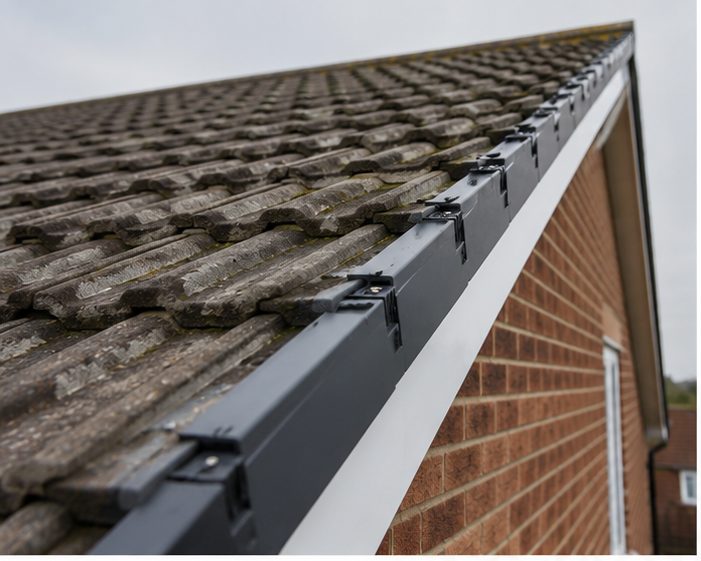
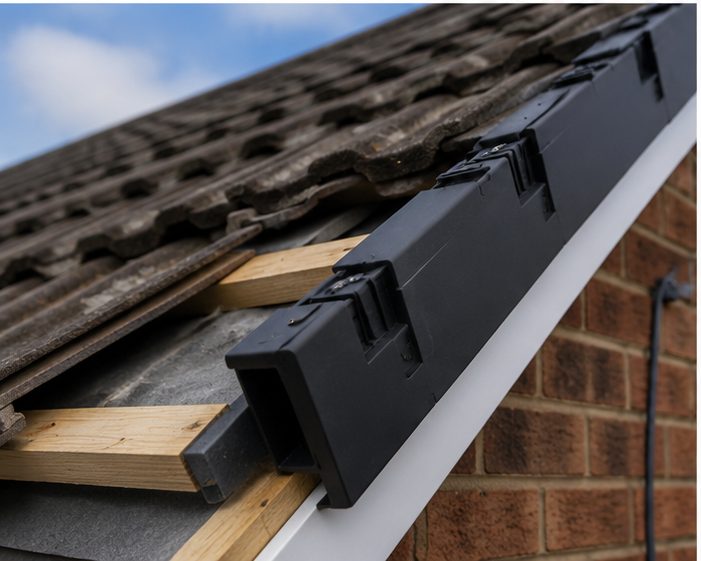
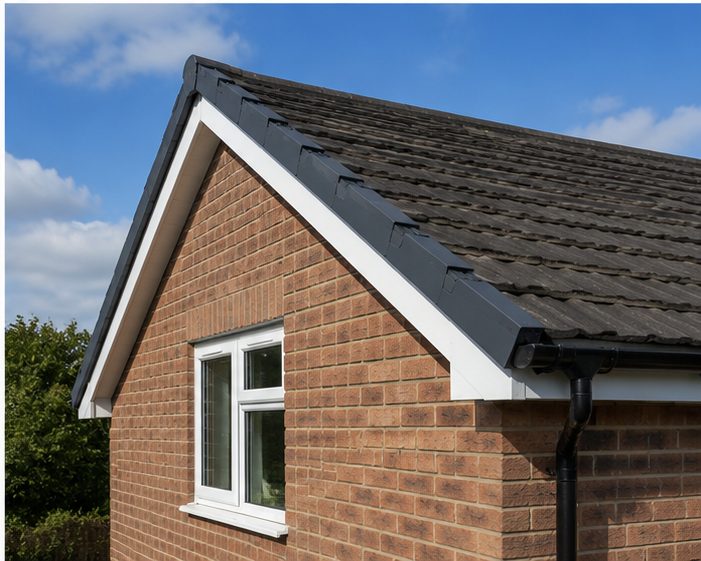
- Dry verge on council-built houses. Failed mortar verges on gabled houses are removed and replaced with fixed units, giving the edge a secure, tidy and long-wearing finish.
- Terrace end gables. The end house of a terrace row has a gable edge exposed to the weather, so we replace the failing mortar with a mechanically fixed system.
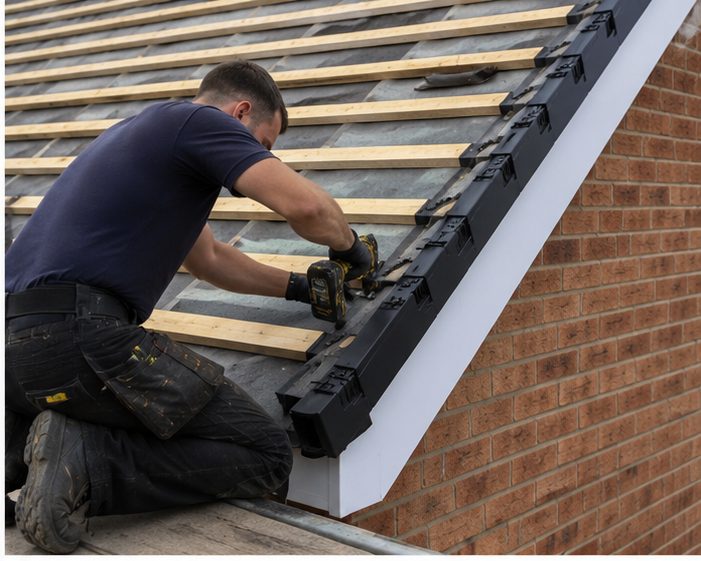
- Dry verge with a re-roof. When a roof is stripped and recovered, a dry verge goes in as part of the work, so the new edge never relies on wet mortar.
- Tile-end and cap pieces. Tile-end and cap pieces are fixed in line with the tile maker's guidance to hold the final courses down and close the roof edge.
- Tile profile check. We check on site that the tile profile will take dry verge units before ordering, because not every tile suits the system.
- Single gable repairs. Where one gable has failed and others are sound, we repair only what needs it and report honestly on the condition of the remainder.
How we fit dry verge in Barton Hill
We look at each gable from the ground first, noting fallen mortar, gaps and tiles that sit out of line. Then we confirm the tile type, because the units only suit certain profiles, and we settle this on site before anything is ordered. We take photographs of any problems for you where useful, so you can see what we are describing.
Fixing follows the tile maker's guidance. We are also clear about what it does not do: a dry verge secures the roof edge, but it will not cure a roof failing elsewhere, and we will tell you if other work is needed. That honesty matters more to us than selling the bigger job.