
Mortar on the path or in the alley is a sign the verge is failing. Here is why it keeps happening on terraced gables and how to stop it for good.
Pieces of mortar in the yard, alley or on a wheelie bin lid are a classic first sign. They come from the verge, the edge of the roof at a gable, where wet mortar was used to bed the tiles. In Bedminster's terraces, end-of-row gables take the weather and the mortar gives up. Patching it just starts the countdown again.
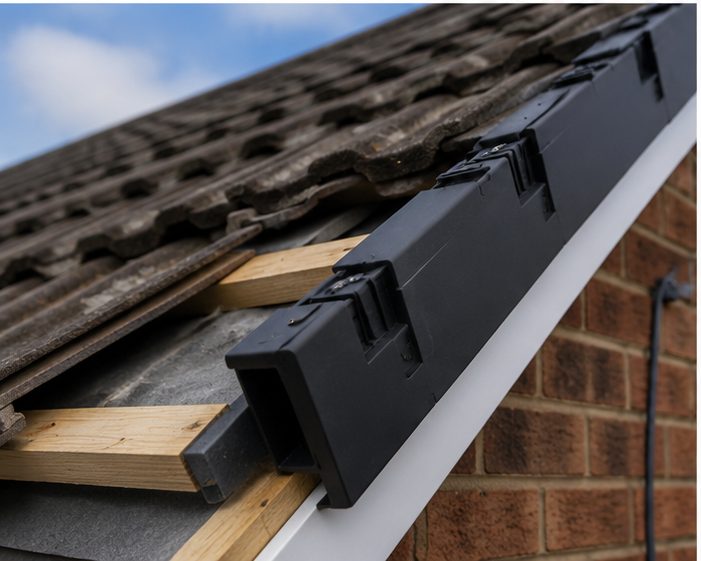
What the mortar is doing
Mortar bedding at the verge is rigid and brittle. Roofs flex a little, walls expand and contract, and water gets into every hairline crack. Frost then works it apart. Eventually the bond to the tile and wall fails, and pieces drop. It is a natural failing of the material rather than bad workmanship.
Why repairs do not last
Repointing replaces like with like. The new mortar faces the same movement, weather and water, so it will crack in time. Each repair may also be on top of loose old bedding, which hides the real state of the edge. Terrace gables face the wind and rain more than the middle of a row does, so they suffer the most.
If you keep finding mortar on the ground after a repair, the problem is the method, not the person who did it. If you keep finding mortar on the ground after a repair, the problem is the method rather than the person who did it. Wet mortar at an exposed gable edge is simply a short-lived material, and no amount of careful repointing changes that.
What we look for
Standing at the gable we check the line of the edge, any tiles that have moved, gaps where mortar has gone and signs of damp on the wall below. Close up, we check the felt and battens at the verge. Rotten battens and torn felt are common once the mortar has failed.
- Mortar crumbs and chunks on paths or yards
- Dark gaps along the roof edge
- Tiles at the gable edge that have shifted
- Birds or insects getting in at the edge
The dry verge answer
A dry verge replaces the wet mortar with mechanically fixed verge units and tile-end pieces. Nothing crumbles, nothing needs repointing, and the fixings hold the edge against the wind. It also keeps weather, birds and insects out. We check the tile profile on site to make sure a compatible system exists.
Keeping it in proportion
A dry verge cures a failing verge, not a failing roof. If the rest of the roof has problems, we tell you. Where the mortar is the only fault, a dry verge is a sound, lasting repair that stops the debris and the repeat visits. Fixing both gables together keeps the roof edges matching.
Frequently Asked Questions
Is it safe to leave falling mortar?
It is better not to. Pieces can land on people or property, and a loose edge can let tiles lift. If you see it coming down, keep the area clear and call us for a proper look. A short, firm look from the ground is enough to tell us whether the edge needs attention soon.
Can a terrace end gable be done without scaffold?
Usually not. Safe access is needed, and on tight terraces we plan how to get it in. We explain how access will be arranged before we start. On a narrow terrace the back gable can be the harder one to reach, but it is still done safely and properly.
Does a dry verge suit older tiles?
Often, but it depends on the tile profile. We check the existing tiles on site and tell you whether a standard system fits or whether another approach is better. Where nothing suitable exists for an unusual tile, we say so and suggest the sensible alternative.
Talk to our team about dry verge systems in Bedminster
Every roof is different — the fastest way to get an accurate answer is a quick chat with our team.