
Little pieces of mortar on the drive or garage roof are an early warning. Here is why verge mortar keeps failing on Longwell Green houses, and what a lasting repair looks like.
If you keep finding crumbs of mortar by the garage door or on a path, look up at the gable edge. Wet mortar at the verge is a rigid strip fixed to a roof that flexes with the weather. On Longwell Green's short verges and estate gables, it lasts a while and then starts to let go.
What the mortar is doing up there
At a gable the roof tiles stop at the wall, and the gap is traditionally sealed with mortar. It bonds the end tiles, closes the gap and keeps wind and rain out. It is a thin strip in the most exposed spot on the roof, taking the full weight of every gust and every wet winter. On older cottages the mortar may be older still, and some of it has simply worn out.
Why it cracks and crumbles
Roofs expand, contract and flex slightly through the seasons, and mortar cannot follow. Hairline cracks appear and let in water. Frost then expands the water in the cracks and forces pieces out. Once a bit falls, the neighbouring mortar loses support and tends to follow.
Repointing with the same material usually repeats the cycle sooner or later. That is why a lasting fix removes the mortar from the equation instead of renewing it every few seasons. Cottages with older roofs often show this earlier, since their mortar has seen more weather than the newer estates.
Reading the signs from the ground
You do not need to climb up. Look along the gable edge from the garden and check the ground below. Crumbs on a path, gaps between the end tiles and the wall, green staining or a tile at the edge sitting out of line all say the verge is failing. Garage and porch roofs show the same signs.
- Mortar fragments on drives, paths and garage roofs
- Visible gaps at the very end of the tile rows
- Dark staining or moss along the gable edge
- End tiles sitting out of line or tilted
How a dry verge changes things
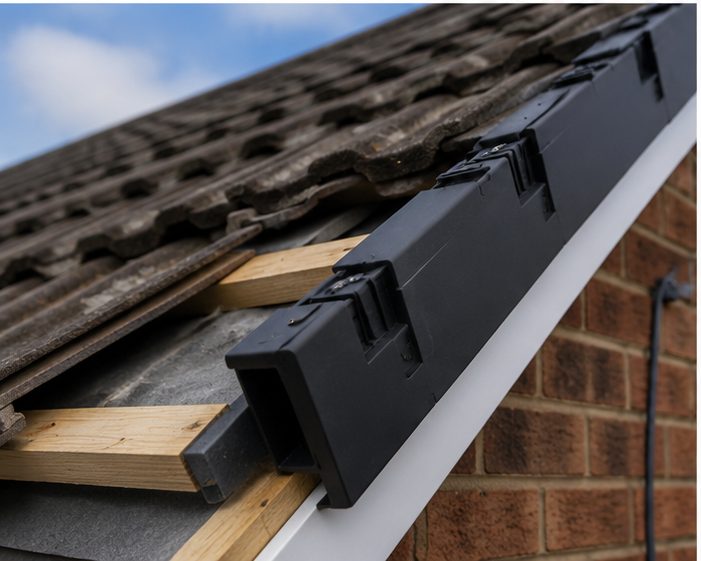
A dry verge replaces mortar with mechanically fixed verge units and tile-end or cap pieces. There is nothing to crack and fall, wind resistance at the edge improves, and weather, birds and insects stay out. It is fixed to the tile maker's guidance and suits repairs where mortar has failed, as well as new roofs and re-roofs.
Checks before we recommend it
A dry verge is not a cure for a roof failing elsewhere, and whether it fits depends on the tile profile, which we check on site. We also look at the end tiles and battens. If other repairs come first, we tell you plainly, so the verge is not fixed onto a tired roof. We clear any fallen debris from the drive and the garage roof when we finish.
Frequently Asked Questions
Is it safe to leave failing mortar?
Falling pieces can hit people or cars, and loose end tiles can be lifted by wind. Keep the area below clear and arrange a proper look rather than leaving it to get worse. We can also advise on what is safe to do from the ground.
Why does repointing not last?
Because the same rigid material is placed in the same spot and faces the same movement and weather. It may buy time, but it does not change the cause, which is why a dry verge is often better.
Will a dry verge suit my tiles?
In many cases yes, but compatibility depends on the tile profile and we check that on site. We also look at the rest of the roof so you get an honest picture. We explain the fit before any work.
Talk to our team about dry verge systems in Longwell Green
Every roof is different — the fastest way to get an accurate answer is a quick chat with our team.