
Gales and driving rain test the edges of any roof. This guide explains what to check after a storm on a Longwell Green home, what to avoid, and how repairs are put right.
On the eastern fringe of Bristol, estates sit open to the weather and a hard blow finds loose edges quickly. After a storm, the aim is to find out what has moved without putting yourself at risk. Here is a sensible order of events, from the garden to the loft and then to us.
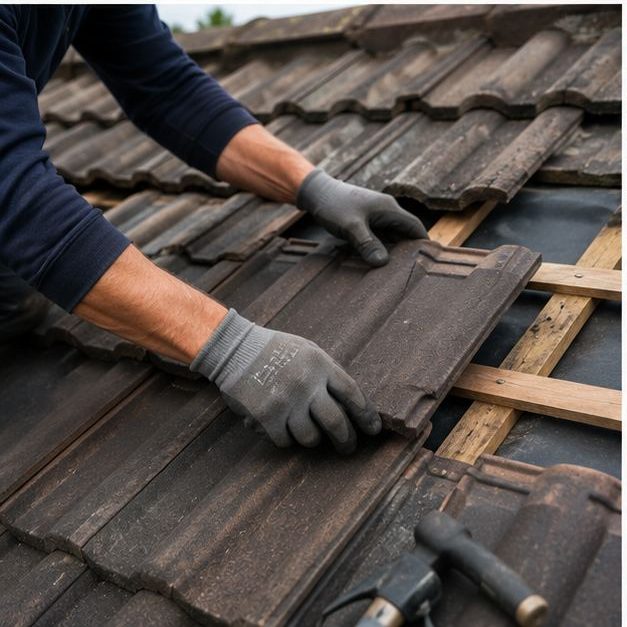
What to look at from the garden
Stand back and look along the roofline. Missing or tilted tiles, a ridge line that has gone out of true, gutters hanging at one end and debris on the lawn all tell you where wind has done its work. Garage roofs, short verges and the edges of lean-to coverings take a lot of the force on modern estate houses. Look at the porch or garage edge as well, since lower roofs are easy to forget.
Take notes and photographs
Photograph everything from where you are standing, including fallen pieces, with the date noted. That gives us a clear starting point and is useful if you speak to your insurer. Zoom into the roof if your camera allows, rather than going closer.
Do not pick up broken tile or slate with bare hands, and keep it away from children and pets. Wear gloves if you must move anything small, and put it somewhere safe so we can see what has come off.
Keep clear of the danger zones
Do not climb onto the roof or lean a ladder at the eaves, however small the damage looks. Wet surfaces and loosened coverings are unpredictable. Keep people away from the ground beneath loose tiles or hanging gutters, because they can still drop. If something looks about to fall, mark it off and let us deal with it.
- No climbing, no ladders to the roof edge
- Keep children and pets off paths below damage
- Do not try to push tiles back from a window
- Move cars away from hanging material
Check the loft and ceilings
With a torch, look for daylight, new damp patches, wet insulation and drips. Check the ceilings under the damaged area and below any flat garage or porch roof. Place a bucket under any drip. Water can arrive hours after the wind has eased, so check again later in the day and after the next shower.
How we put it right
We look at the whole roof, not just the obvious spot, and tell you what is urgent and what can wait. Repairs usually mean replacing broken tiles, refixing slipped ones, re-bedding ridges and hips, and renewing flashings that have lifted. If the damage shows an ageing covering, we explain the options plainly, with no pressure to do more than is needed. Everything we do is explained as we go.
Frequently Asked Questions
Should I call straight away or wait?
If water is coming in or something is hanging loose, call straight away. For a few slipped tiles with a dry loft, a short wait is fine, but check inside regularly so a small fault does not become a larger one.
Can temporary measures be put in place?
Yes. Where water is getting in, we can protect the roof until a proper repair is done. We explain what the temporary fix is, how long it is meant to hold, and what the permanent repair involves.
Will wind damage mean a whole new roof?
Often not. Most storm damage is local: tiles, ridge pieces or flashings. We only suggest more when the wider covering is tired, and we show you the reasons so you can decide with the facts.
Talk to our team about roof repairs in Longwell Green
Every roof is different — the fastest way to get an accurate answer is a quick chat with our team.