
Wooden fascias are fine until water sits on them. This guide explains the warning signs on Longwell Green houses, and when replacing with UPVC beats another round of painting.
Paint holds timber fascias together for only so long. On the estates and cottages around Longwell Green, the first signs of trouble are usually small: a flake here, a stain there. Knowing when to stop repainting and start replacing keeps you from paying twice for scaffold and access. Here is what to watch for.
The warning signs from the ground
Walk round and look up. Peeling paint that exposes bare grey timber, dark patches below gutter joints, boards that look wavy, and gaps where fascia meets soffit are all clues. Look at garage fascias too, since they are exposed and easily overlooked until a section starts to sag. A few minutes with a camera from the pavement can save you a lot of guessing.
- Flaking or blistering paint on the board
- Black staining under gutter joints or corners
- Soffits bowed, stained or coming away
- Gutters sagging between the brackets
Why rot starts at the roof edge
The fascia carries the gutter and sits where all the roof's water ends up. Any leak at a joint, any overflow in heavy rain, lands straight on the board. Timber that stays damp rots from the bottom edge and behind, often long before the front face shows it. A screwdriver tip pressed gently into a suspect spot tells quickly whether the wood is firm.
When repainting still makes sense
If the timber is hard and sound and only the paint has aged, repainting is a reasonable choice. It must be done carefully and repeated as the finish wears. If you already need scaffold for another job, ask whether the timber is worth the cost of treating, because access is the largest part of any eaves job. We tell you which camp your boards fall into.
When replacement is the better choice
If rot appears in several places, if soffits are failing, or if the gutters need replacing anyway, new UPVC boards are the more lasting answer. They are cleaned rather than painted, are very low maintenance, and come in white as well as darker and wood-effect finishes.
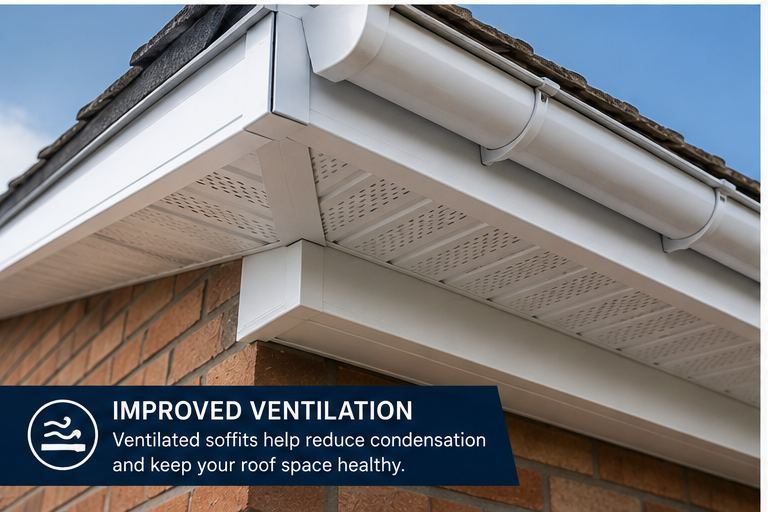
We fit vented soffits or vent strips at the same time, so the roof space can breathe, and refit or replace the gutters. Gutters are refitted or replaced and tested for flow, and we clear away the old boards and fixings once the work is finished.
What we check before deciding
When the old boards come off we look at the rafter ends and eaves. Sound ends stay, and rotten ones are dealt with before new boards are fixed. On older cottages, we check what the existing soffit boards are made of before disturbing them. Then we explain what we found, so you can see why replacement was or was not needed.
Frequently Asked Questions
How can I tell if a fascia is rotten?
From the ground, look for flaking paint, dark staining and sagging gutters. We press the timber to check it is firm, and we look at the rafter ends once the boards are off.
Is UPVC always better than wood?
UPVC suits most houses because it needs only cleaning, not painting. Wood can still make sense on some older properties. We talk through what suits yours rather than assuming one answer. Photos of the eaves help us advise.
Do soffits and fascias need replacing together?
Often, since they meet at the same edge and share the same access. If only one is failing we say so, but doing both together saves paying for scaffold twice. We tell you which applies.
Talk to our team about UPVC fascias and soffits in Longwell Green
Every roof is different — the fastest way to get an accurate answer is a quick chat with our team.