Short verges on Yate's late 20th-century gables
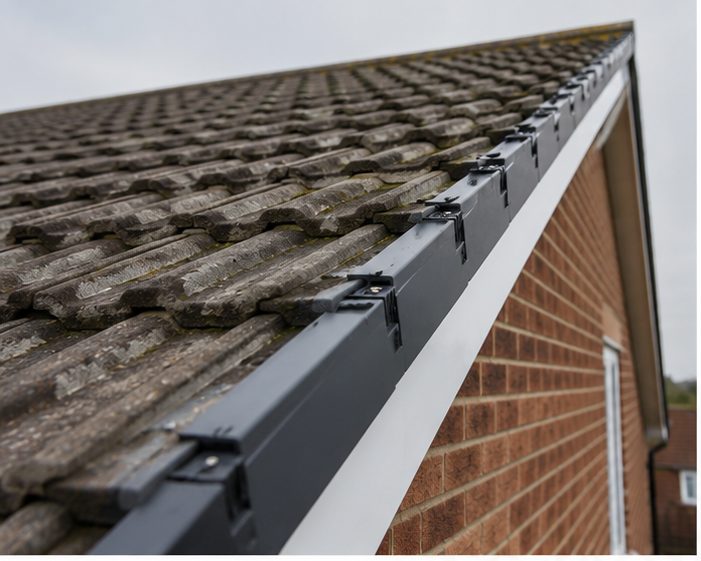
On the estates built in the late 20th century, concrete tiled roofs finish at short verges. Short does not mean trouble-free: the mortar there has been through decades of frost and sun, and a good number are now cracked or hollow. Gable ends over garages and porches have the same problem on a smaller scale. A cracked verge is easy to miss from the road, because the damage sits right at the edge of the slope.
The usual first sign is mortar on the path, drive or the porch roof below the gable. Once it starts coming away, wind can get under the edge tiles, and that is how an edge repair turns into a bigger job. Estate roofs of this age have had many winters of wind and frost working at the same joints. We look at the tiles next to the verge at the same time.
Because these roofs use concrete tiles, we check the profile before recommending a dry verge, as compatibility depends on the tile. Garages and porches with a gable end can be done in the same visit. Loose edge tiles are often what let the wind in first. Each of these details is checked on the day rather than assumed.
Dry verge jobs we do in Yate
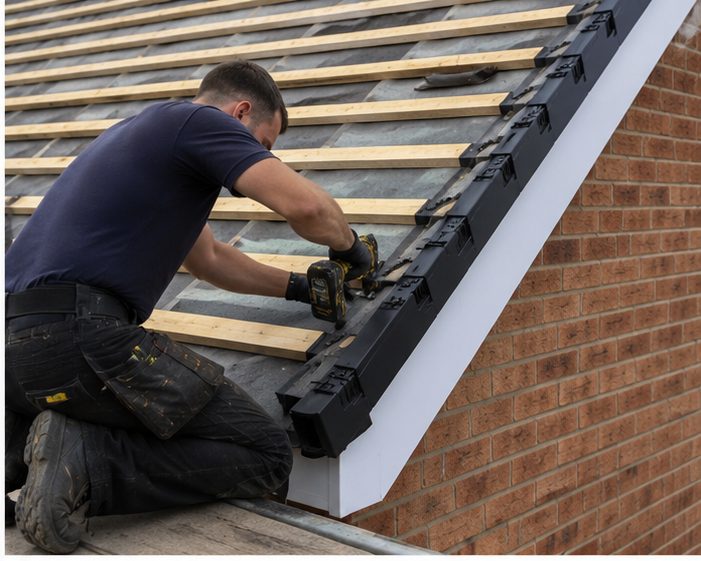
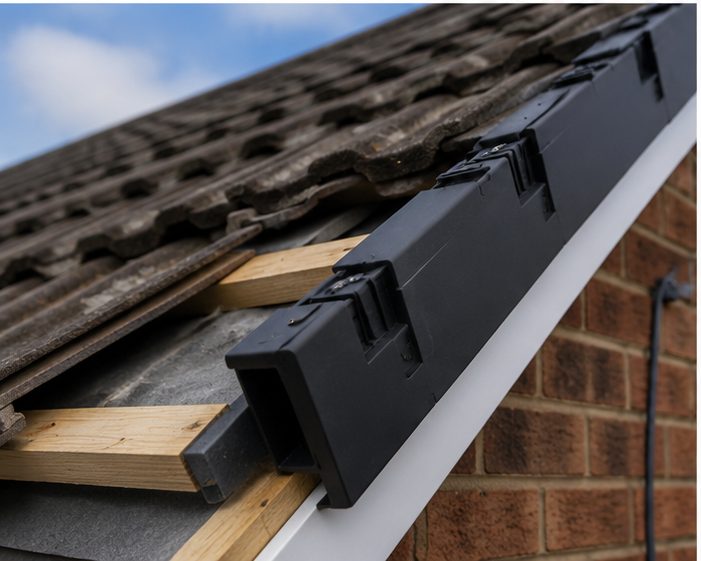
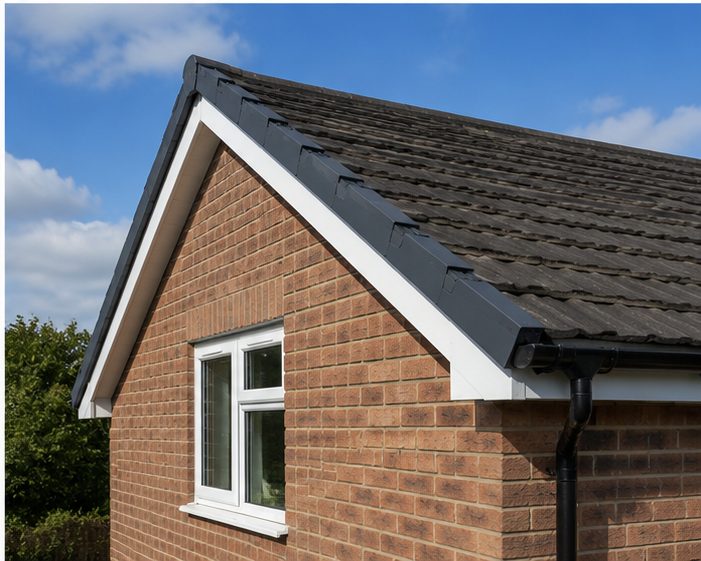
- Replacing cracked mortar verges. Removing crumbling mortar along the gable edge and fitting dry verge units that are fixed rather than bedded.
- Dry verge with a re-roof. Including the dry verge in a full re-roof, so the new roof edge is secured from the first day.
- Gable repairs on estate houses. Dealing with loose verge tiles and missing mortar on concrete tiled gables before wind gets underneath.
- Garage and porch gables. Fitting dry verge on smaller gable ends over garages and porches, finished to match the main roof.
- Tile-end and cap pieces. Closing the end of the verge neatly with matching pieces, stopping weather, birds and insects from entering.
- Checking tile compatibility. Looking at your tile profile on site to confirm that a dry verge will fit before we go further.
How we fit dry verge in Yate
We begin on site, looking at the verge from the ground and then up close. We check your tile profile, the battens and the state of the edge. Whether a dry verge fits depends on the tile, so we confirm that rather than guessing from a photo. You will see what we find at the edge before any work starts.
The old mortar is removed and the new units are fixed to the tile maker's guidance. If the problem is a wider fault, such as slipped tiles in the field of the roof, we tell you, because a dry verge does not cure that. Anything outside the verge is explained separately.