
Mortar on the steps or pavement below is the first sign of a verge failing. This guide explains why it keeps happening in Hotwells and what stops it.
Where a gable roof meets the wall, mortar usually seals and holds the last tiles. It looks solid, yet it is brittle and unforgiving. On exposed Hotwells roofs, where wind and rain come hard from the gorge side, mortar goes quickly. If you keep finding bits on the ground, it is telling you something about the edge above.
Why mortar does not last at the edge
Mortar is rigid and a roof is not. Temperature swings make tiles and walls expand and contract at different rates, and the bond between them cracks. Rain gets into the cracks, freezes, and pushes pieces out. At the exposed edge the wind adds pressure, working at every hairline crack until chunks drop away.
On terrace gables, the wall tops are often old and slightly uneven, which makes it harder for new mortar to take a firm hold at all. Fresh mortar over a damp or dusty surface can look right for a season and then let go.
Signs you can see from the ground
Look from the pavement or garden. Crumbs of mortar on steps and window sills, a ragged or stained edge along the gable, tiles that look tilted at the end and green or black staining on the wall below are all signs. Do not go up to pick at it. Loose mortar and wet surfaces make this risky, especially on steep streets where footing is poor.
- Mortar fragments on steps or sills
- Tilted end tiles at the gable
- Gaps showing along the verge line
- Staining running down the gable wall
- Daylight at the roof edge from inside
What we check
We examine the whole verge: the bedding, the end tiles, the barge timbers beneath and the pointing along the wall. We also check the loft side of the gable, since failed verges can let in rain that stains timbers. Where the roof is high or on a tight street, we plan access carefully so the inspection is thorough.
Repointing against dry verge
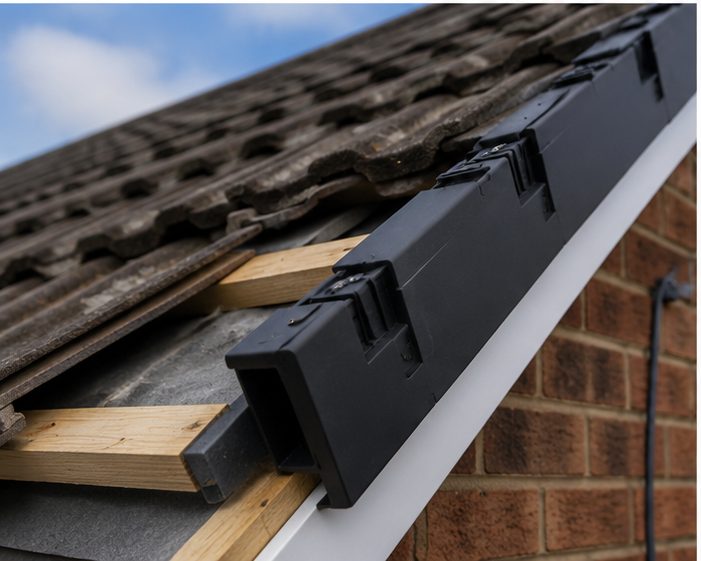
Repointing a verge gives a tidy result for a while, but if the cause is movement and weather, mortar will crack again. Doing it repeatedly means repeat access and repeat cost in effort. A dry verge removes the mortar problem. Fixed units and end pieces hold the tiles mechanically, following the tile maker's guidance, and compatibility with your tile profile is checked on site.
Fix the roof, not just the edge
A dry verge is not a cure for a roof failing elsewhere. If there are slipped tiles, tired felt or failing lead, we say so and deal with those too, otherwise the edge will be good and the leak will go on. Work like this may need planning or Building Regulations checks — we advise before work starts.
We would rather tell you the mortar is only part of the story than leave you with a tidy edge on a roof that still leaks. That honest view of the whole roof is part of every inspection we do, and it means any money spent goes where it will actually help.
Frequently Asked Questions
Is it safe to leave mortar falling?
It is better not to. Pieces can hit people and steps below, and the loose verge may mean tiles are no longer held down well in the wind. Keep clear of the area and call us to look.
Will repointing hold if done well?
It can, for a time, if the bedding beneath is sound. But the same forces act on it again. We explain both options so you can pick between repeating the repair and fixing the cause. We explain this on site.
How do I know a dry verge will fit?
Fit depends on your tile profile, and we check on site. If it suits, we fit it following the tile maker's guidance. If not, we tell you plainly and discuss a sound mortar repair instead. We explain this on site.
Talk to our team about dry verge systems in Hotwells
Every roof is different — the fastest way to get an accurate answer is a quick chat with our team.