
Blisters, cracks and splits each tell you something different about a flat roof. Reading them correctly is how we decide between a quick repair and a longer-term fix on Greenbank homes.
Flat roofs on Greenbank's bay tops, rear extensions and garages face sun, frost and standing water. Over time the covering shows its age in a few recognisable ways. Understanding what each sign usually means helps you decide whether to keep an eye on it or call someone sooner rather than later.
Blisters: trapped moisture and air
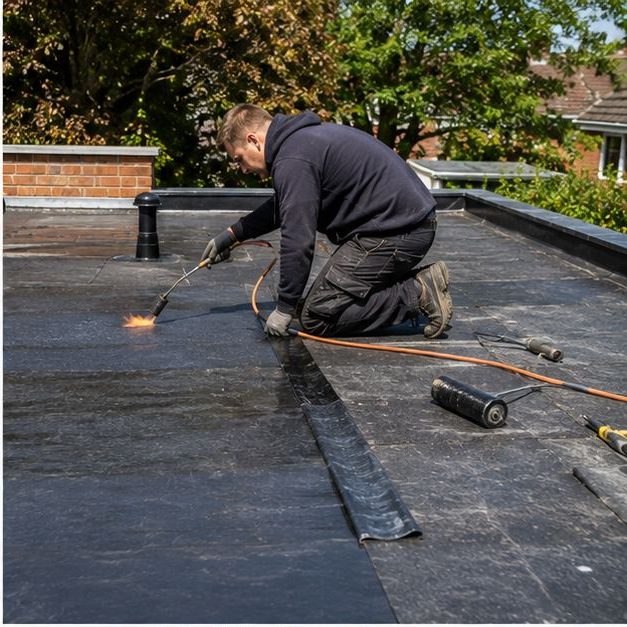
A blister is a raised bubble, usually where moisture or air has been trapped between the covering and the deck. Sun warms it and the pocket swells. On felt systems, blisters often start where the layers were laid over damp boards or a poorly sealed joint. A small, firm blister may be left under watch. One that is soft, wet or growing is a sign that water is already getting in.
Cracks and splits: movement and age
Flat roofs expand and contract with temperature, and the covering has to move with them. Over time it dries out and stiffens, and a stress point such as a corner, joint or the edge gives way. Splits tend to follow the line of a board joint underneath. A hairline crack can sometimes be sealed, but a split that has opened wide lets water straight through to the deck.
- Age and weathering stiffening the surface.
- Movement at deck joints and corners.
- Foot traffic or heavy things left on the roof.
- Sun exposure on dark, unprotected surfaces.
Ponding makes everything worse
Standing water speeds up wear on any covering. If a roof holds puddles after rain, the sun and frost work on the same spots repeatedly, and blisters or splits tend to form there first. Blocked outlets and poor falls are common reasons. Clearing the outlet is the first thing we look at, though cleaning alone will not cure a dip in the deck. Bay tops and small extension roofs are especially prone to this, as they often have little fall.
What we check and what we do
We look at the type of covering, how widespread the faults are, and what is underneath. Pressing on the deck from inside the room, checking the ceiling for stains and inspecting edges and upstands tells us a lot. A localised fault is repaired and sealed. Where cracks, blisters and softness are spread across the roof, patching becomes a short-term fix and replacing the covering is the better answer. We say which, and why.
How to keep an eye on it
From the ground or an upstairs window you can notice changes: new bubbles, water that lingers a day after rain, or stains on the ceiling below. Take dated photos so you can compare. Please do not walk on the roof or cut into a blister yourself. That usually turns a manageable problem into a leak. If you notice a stain or drip below the flat section, tell us when it started.
Frequently Asked Questions
Is a blister always a leak?
No. A small, firm blister may be sealed and sitting dry. It becomes a concern when it is soft, splits open or grows, because that suggests moisture is getting under the covering. We check it and advise what to do.
Can a split be repaired?
Often, yes, where the surrounding covering is still flexible and the deck is dry. The repair has to suit the material. If splits are appearing across the roof, a repair is only a short-term answer.
Does the type of covering matter?
Yes. Rubber, fibreglass and felt each fail in different ways and are repaired differently. We identify what you have first, then judge how it has aged and whether repairing or replacing will serve the roof better.
Talk to our team about flat roofing in Greenbank
Every roof is different — the fastest way to get an accurate answer is a quick chat with our team.