
Finding a leak means following the water back, not looking above the stain. Here is the order we work in on Greenbank's older terraces, and the safe checks you can make from inside the house.
A damp patch on the ceiling tells you water has arrived, not where it started. On the Victorian and Edwardian terraces around Greenbank, rain can travel a long way along timbers before it shows. Tracing it is a matter of working methodically from the inside out and then checking the roof with care.
Start with the loft on a dry day
If you have a safe loft hatch, a torch is the best tool you own. Look for daylight where there should be none, dark wet patches on timber, drips on the underside of the covering and felt that is stained or hanging loose. Do not step off the joists or boards. Take photos and note which part of the roof the marks sit under. That gives us a starting point before we ever go outside.
Why the stain misleads
Water meets a rafter and runs down it, or follows the felt sideways, before it drops onto the ceiling. The spot you see below can be well downhill and to one side of the true opening. Bay-fronted terraces make this harder, since the roof lines change direction over the bay and water can turn corners. So we trust the pattern of marks above the ceiling more than the stain itself.
What we check outside
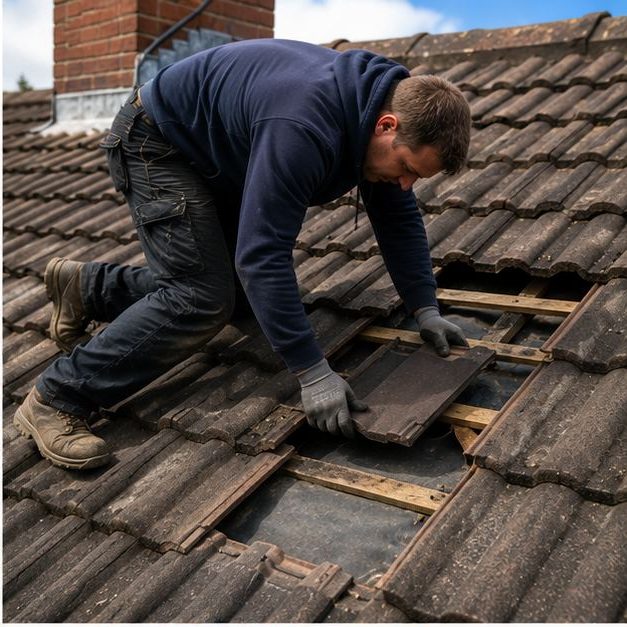
Working from where the loft marks point, we check the usual suspects in turn. Often it is something small that has let go in the wind or simply aged. Each of these is looked at from the angle the loft marks suggest, so we are not simply guessing.
- Slipped, cracked or missing tiles and broken slates.
- Ridge and hip bedding that has cracked or loosened.
- Lead flashings and valleys at chimneys and walls.
- Gutters, hoppers and downpipes that overflow or leak.
When it is hard to pin down
Some leaks only appear in wind-driven rain, or only from one direction. In that case we look at what is exposed on that side, such as the edge, a chimney stack or a junction with a neighbouring roof, and compare it with the loft evidence. Where it still will not show itself, we may suggest a controlled water test, working from the lowest point upwards so that the cause is proved before anything is changed.
What you can do before we visit
Keep a short log: when it drips, whether it follows heavy rain or strong wind, and how big the patch gets. This helps more than you might expect. Clear the area under the drip, and leave the roof alone. Everything outside the loft is a job for us, because roofs are slippery and tiles break underfoot. Tell us if anything changed lately, such as a storm, building work nearby or a new satellite dish or aerial fixed to the house.
Frequently Asked Questions
Can I find the leak myself from the ground?
You can spot obvious clues such as a missing tile, a slipped slate or an overflowing gutter from the pavement or garden. You cannot judge flashings or felt from there. For anything beyond that, call us for a proper look.
Why does my roof only leak in some weather?
Wind-driven rain pushes water sideways under tiles and into joints that stay dry in ordinary showers. A fault facing the weather may only show in a storm from that direction, which is why the history of when it drips helps.
Do you need to open up the ceiling?
Usually not. Most leaks are traced from the roof and the loft side. If a ceiling is already sagging or badly stained we may advise taking down the damaged section, but that is agreed with you first.
Talk to our team about roof repairs in Greenbank
Every roof is different — the fastest way to get an accurate answer is a quick chat with our team.