
There is no single best flat roofing material. The right one depends on the shape of the extension, the exposure and how the roof meets the house. Here is how we weigh it up.
Extensions on post-war houses around Kingsweston and Lawrence Weston often sit on open, breezy ground, and the flat roof on top takes the brunt of it. Three families of material do most of the work: single-ply rubber, fibreglass and felt systems. Each has strengths. The honest answer depends on your roof, so we start there.
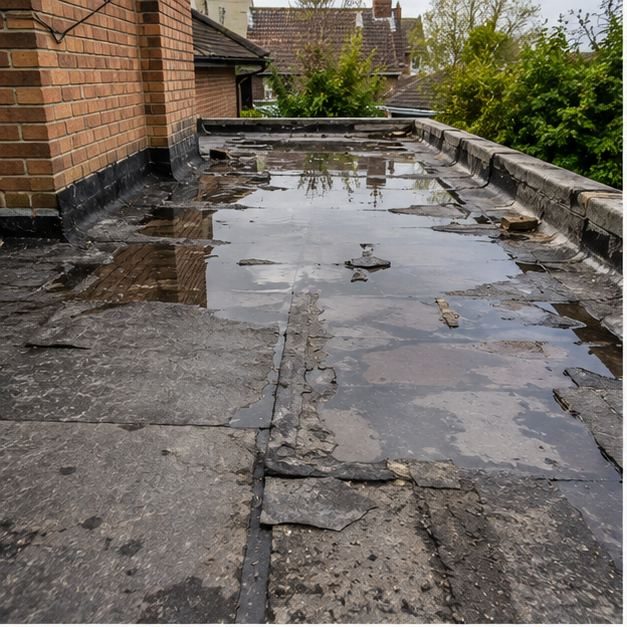
Single-ply rubber for larger, simple roofs
EPDM and similar single-ply membranes arrive in large sheets, so a plain rectangular extension can often be covered with very few joins. Fewer joins means fewer places for water to find a way in. It suits roofs with a clear, unobstructed surface. Around rooflights, pipes and awkward corners it needs careful detailing, which is where the quality of the fitting shows. Seams that are well made and few in number matter more than any claim on the roll.
Fibreglass for awkward shapes
GRP, or fibreglass, is laid wet and cures to a continuous surface with no seams. That makes it a good choice for small roofs, porches, bay tops and anywhere with lots of corners and upstands. It needs a sound, dry deck and a careful finish at the edges. Cold or damp weather affects the laying, so timing matters.
Felt systems and where they fit
Modern felt systems are built up in layers and are a familiar choice for garages and straightforward extensions. They can be a sensible option when the budget is tight or the roof is simple, but the standard of the joints and the edges decides how they perform. We explain the layers in plain terms so you know what is going on top of the house. Ask to see how the edges and wall junctions will be finished, since that is where felt roofs most often let go.
What matters as much as the material
The covering is only part of the answer. Falls need to be right so water runs off rather than sitting, the deck underneath must be sound, and insulation and edge trims need to be done well. A good material laid on a poor deck will still fail. On exposed ground, secure edge details matter even more because wind lifts weak ones.
- Enough fall for water to drain away freely
- A sound, dry deck with no rot
- Edge trims and upstands detailed properly
- Outlets and gutters able to take the run-off
How we help you choose
We look at the roof, how it joins the house wall, how much foot traffic it will see and what is already there. Then we tell you which materials suit and why, and which we would not use. You get a written description of the work, so the choice is clear before anything starts.
Frequently Asked Questions
Is fibreglass or rubber better for an extension?
Neither wins everywhere. Rubber suits large, plain roofs with few joins, while fibreglass suits small or awkward roofs with many corners. Your roof shape, deck condition and how it meets the house decide it, so we check these first.
Does the material matter more than the fitting?
Both matter, but poor preparation ruins good material. The deck, falls, edges and joins decide how the roof copes with wind and rain. We explain the preparation as part of the job, not just the covering you see. Any honest roofer should be able to describe each stage of the build-up plainly.
Might the work need permission?
Flat roof work on an extension may need planning or Building Regulations checks, and we advise before work starts. That is especially true where insulation or the roof structure is changing, so ask us early.
Talk to our team about flat roofing in Kingsweston
Every roof is different — the fastest way to get an accurate answer is a quick chat with our team.