
There is no single best flat roofing material, only the best fit for your extension. Here is how single-ply rubber, fibreglass and felt systems compare, and what decides between them.
Extensions on the inter-war and post-war houses around Shirehampton often finish with a flat roof, and the covering you choose affects how it copes with wind and weather. Single-ply rubber, fibreglass and felt systems each have a place. The right answer depends on the shape of the roof, how it is used and what is underneath it.
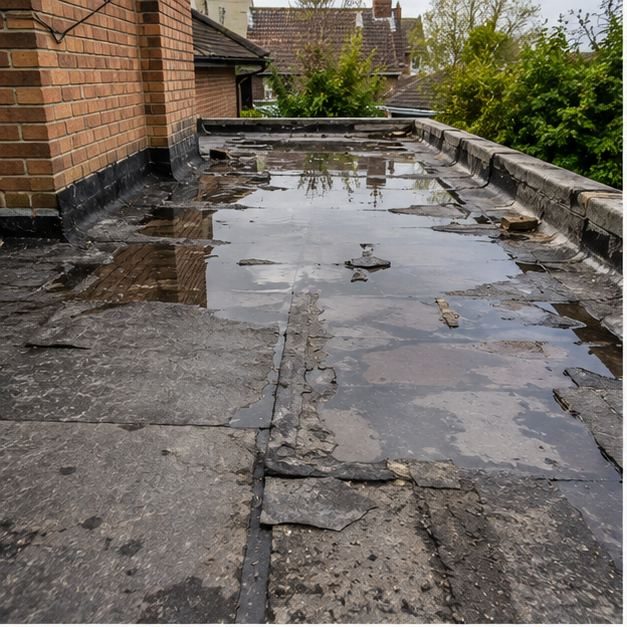
Single-ply rubber
EPDM comes as a large sheet laid over the deck with very few joints, which suits simple rectangular extensions well. Fewer seams means fewer places for water to find a way in. It handles movement in the structure reasonably well, and it is flexible enough to be dressed up walls and around outlets without a great deal of fuss.
Fibreglass
GRP is laid in place as a continuous skin, so it forms a seamless surface even around awkward shapes, upstands and corners. It is firm underfoot, which helps where the roof will be reached for maintenance. It needs a sound, well-prepared deck and careful edge trims, because the finish is only as good as the base it bonds to.
Because it sets hard, it is less forgiving if the structure underneath moves, so we look at how well the extension is tied into the main house before suggesting it. Edge trims and corner detailing are where a fibreglass job succeeds or fails, and we talk through those with you in plain terms.
Felt systems
Modern felt is laid in layers with joints that are sealed, and suits many extensions, garages and smaller roofs. It is familiar to most roofers and straightforward to repair. Its performance depends heavily on the quality of the jointing and detailing, so the person fitting it matters as much as the product itself.
On a small extension the felt may be the neatest, most economical option in terms of effort, though we would still look at the deck and edges first. Where the roof has many corners, rooflights or pipes coming through it, we may suggest a seamless system instead, since every extra joint is another place to watch.
What decides the choice
Wind exposure, the roof's shape, the number of penetrations and how much foot traffic it gets all count. Just as important is what lies beneath: the deck, the insulation and the falls that let water run to the outlet. A good material on a poor deck will still fail, so those details come first.
- Roof shape and the number of corners or upstands
- Condition and type of the deck underneath
- Insulation and ventilation needs of the room below
- How exposed the roof is to westerly wind
Questions before you commit
Ask what the roof will be laid on, how water will drain, and how the edges and wall junctions will be finished. Ask who will carry out the work and how the deck will be checked. A new extension roof may need planning or Building Regulations checks — we advise before work starts.
Frequently Asked Questions
Is one flat roof material stronger than the others?
Not in any simple way. Each performs well when laid on a sound deck with proper falls and good detailing. Failures are usually down to poor preparation, edges or joints rather than the material itself, so the installation matters most.
Can I choose the finish and appearance?
Within limits. Single-ply and fibreglass systems offer some choice of finish, and edge trims can be selected to suit the house. We talk through what suits your extension and what each option involves before you decide.
Does an extension roof need insulation?
Yes, in most cases the design must account for it, and the way it is built up affects condensation risk. We explain how the layers sit above or below the deck and what the choice means for your extension.
Talk to our team about flat roofing in Shirehampton
Every roof is different — the fastest way to get an accurate answer is a quick chat with our team.