Flat roofs in Shirehampton's wind and weather
Wind is the first thing we think about on a flat roof here. A flat covering is only held down at its edges and fixings, so gusts from the west try to lift the perimeter. Once an edge trim loosens, wind and rain get beneath the membrane and spread the damage across the roof.
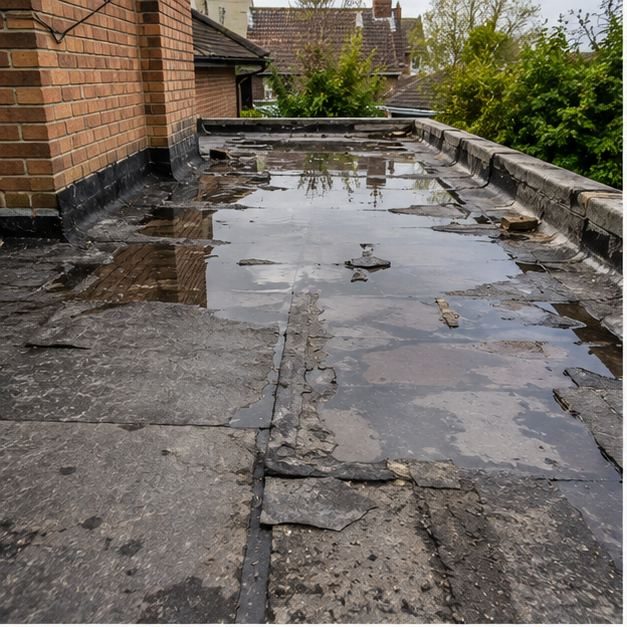
Extensions on village-style streets are often tucked close to neighbours' walls and gutters. Leaves collect in the corners, outlets clog and water lies against the upstand. That standing water is the commonest cause of the stains we are called out to, and it is easier to prevent than to cure later. The aim is a repair that is done once and done properly.
Older flat roofs on inter-war and post-war houses were often felt, laid on timber decks. After many winters those decks can soften beneath a cracked surface. We press for soft spots, look under the covering where we can, and tell you straight whether the structure beneath is still worth recovering. We would rather give a straight answer than a comfortable one.
Flat roofing jobs in Shirehampton
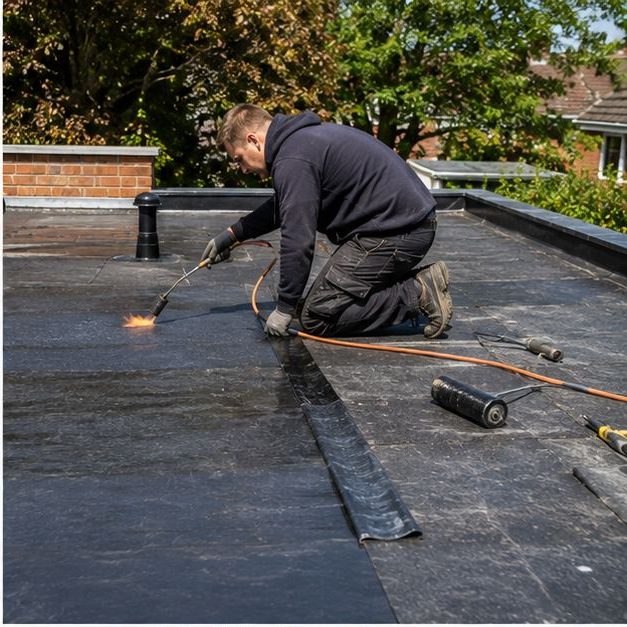
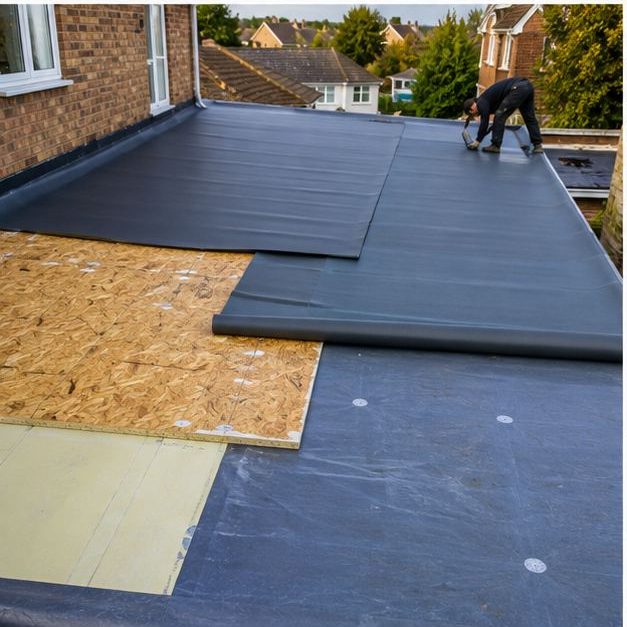
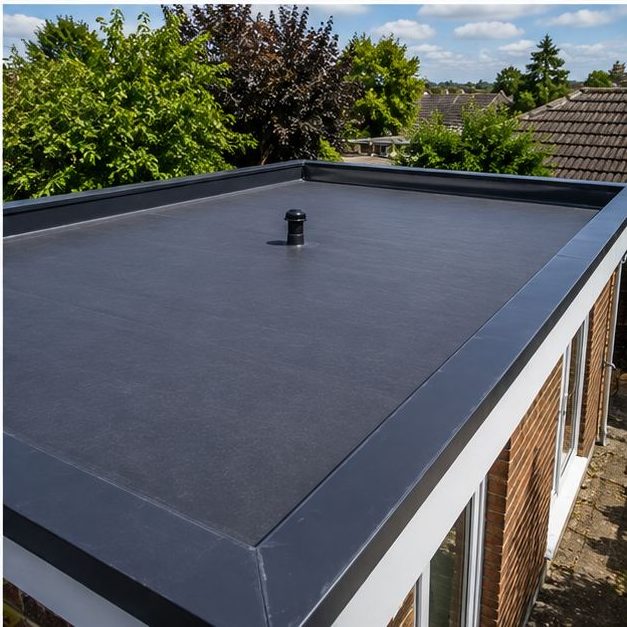
- Extension roof renewal. Stripping a worn flat roof on a kitchen or rear extension, checking the deck, and fitting a new covering with secure edges and sound upstands.
- Garage roofs. Repairing or replacing garage roofs where the covering has cracked or the edge trim has been lifted by wind.
- Edge trims and perimeters. Refixing or replacing edge trims that wind has loosened, so the membrane is held down along its full perimeter.
- Ponding and blocked outlets. Clearing and correcting outlets, and where the falls are poor, dealing with water that stands on the surface after rain.
- Splits, blisters and failed joints. Repairing localised damage where the rest of the covering is sound enough to justify it, and renewing the roof where it is not.
- Porch and dormer flat roofs. Smaller flat roofs over porches and dormers, where wall details and lead edges decide whether the roof stays dry.
How we handle a flat roof in Shirehampton
We look at the ceiling inside first, then go over the roof checking edges, joints, outlets and upstands, and testing the deck for soft areas. We talk through the materials in general terms, including single-ply rubber, fibreglass and felt systems, and recommend one after seeing the roof. Where the weather is against us, we wait for a safe window to carry on.
Because of the exposure, we pay extra attention to how the new covering is fixed at the perimeter. We explain what is urgent and what can wait, repair where the roof is sound enough, and recommend renewal where the damage is widespread. Access is planned so neighbouring properties are not disturbed.