
Standing water on a flat roof is a warning sign, not just an untidy puddle. Here is why it happens on buildings in Old Market and what can be done about it.
A puddle that is still there a day after the rain has stopped means the roof is not shedding water as it should. In central Bristol, flat sections behind parapets and on older extensions are particularly prone to it. Left alone, ponding speeds up wear and finds its way through weak spots.
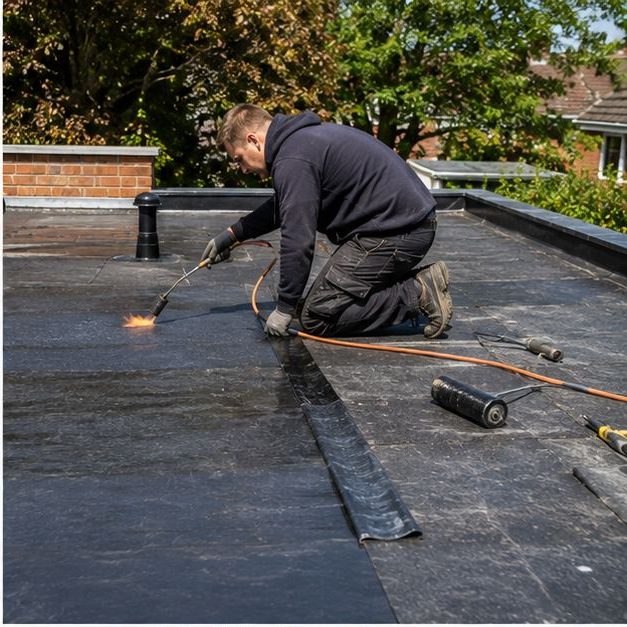
Falls that do not do their job
A flat roof is meant to slope very gently towards an outlet. If the original fall was shallow, or the structure has moved over time, water settles in the low spots instead of leaving. Sometimes the roof was simply built too flat from the start, and the covering has to be fixed with that in mind.
On older buildings that have been extended in stages, the falls of one roof may fight the falls of the next, and water ends up trapped at the join. That is a design fault, not bad luck, and it needs a design answer.
Sagging or weakened decks
Timber decks soften when moisture has been getting in. As the board loses strength, the surface dips and creates a bowl that collects more water, which weakens it further. We press on the surface from a safe position and check from below where we can, because the covering can look intact while the deck beneath has deteriorated.
Blocked outlets and parapet gutters
Where a roof drains into a hidden gutter or small outlet behind a parapet, leaves, silt and debris build up fast in an urban setting. Water backs up and sits. Often the roof itself is sound and clearing and correcting the outlet does the work. Where the outlet is too small or badly placed, we discuss changing it.
What we do about it
Where a roof drains into a hidden gutter or small outlet behind a parapet, leaves, silt and debris build up fast in an urban setting. Water backs up and sits. Often the roof itself is sound and clearing and correcting the outlet does the work. Where the outlet is too small or badly placed, we discuss changing it.
- Clear and test outlets, gutters and downpipes.
- Repair or relay small areas where the surface has failed.
- Replace damaged deck boards and restore the fall.
- Recover the roof where the damage is widespread.
Signs to watch from the ground
You can spot early trouble without going near the roof. Look for stains on ceilings below, damp on walls near the roofline, overflowing gutters and any visible bowing from a window above. If you see these, call us for a proper look rather than waiting for the next heavy rain to make it worse.
Frequently Asked Questions
Is a small puddle a problem?
Short-lived dampness after rain is normal. Water that remains for a day or more points to a drainage or fall problem, and it tends to speed up wear on the covering, especially around joints, edges and anywhere the surface is already thin or cracked.
Can pooling be fixed without a new roof?
Sometimes. If the covering and deck are in decent condition, clearing outlets or correcting a local dip may be enough. If the deck is soft or the surface is failing widely, a fuller replacement is the honest answer.
Why does the water sit near the parapet?
Hidden gutters and outlets behind parapets block easily, and the fall often runs towards them. When they clog, the water cannot leave and collects against the wall, which is also where leaks tend to start, so it deserves a prompt look.
Talk to our team about flat roofing in Old Market
Every roof is different — the fastest way to get an accurate answer is a quick chat with our team.