
A leak in central Bristol is rarely where the stain appears. This guide walks through what we look at, in what order, and what you can usefully note from inside before we arrive.
A damp patch on a ceiling tells you water is getting in, not where. In Old Market the route can run behind parapets, along old timbers or under flat sections before it shows. An inspection is really detective work, and we follow the water back to its source before suggesting any repair.
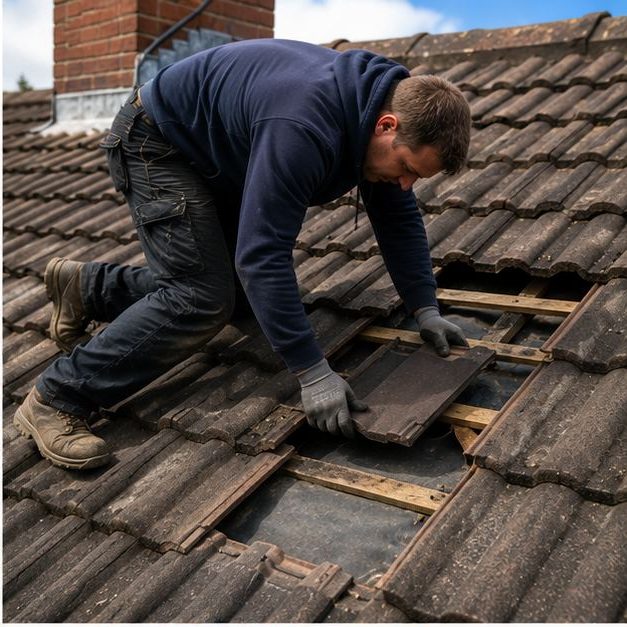
Starting from the inside
We usually begin in the loft or top-floor rooms. We look at the underside of the covering for daylight, wet or darkened timber, stained felt and any drips on the way down. Where there is no loft, we check ceilings and walls for the pattern of staining, because the shape of a mark often hints at the direction of travel.
Where a top-floor flat or converted space has no loft at all, the ceiling and wall pattern becomes the main clue. Please leave marks as they are until we have seen them, and avoid painting over a stain, because the original shape tells us a good deal about the route.
Following the water outside
Once we know roughly where the water enters, we examine the outside from a safe position and with proper access arranged. Slipped or broken tiles, cracked slates and worn ridge bedding are the usual suspects on pitched sections. On older buildings, we also look closely at chimneys and where roofs meet walls.
Parapets, valleys and hidden gutters
Terraces and commercial buildings here often have parapet walls with gutters tucked behind them. These collect leaves and debris and quietly overflow into the wall. Lead linings, valley gutters and the junctions between old and newer extensions are where we spend extra time, since small splits there can let in a surprising amount of water.
What you can note before we visit
You do not need to go near the roof, and should not. Useful information is easy to gather from the ground and from inside the building, and it genuinely helps us narrow down where to look first. These notes are worth making.
- When the leak shows: heavy rain, wind-driven rain, or after dry spells.
- Whether the stain grows, dries out or reappears in the same place.
- Any overflowing gutters or damp patches on outside walls.
- Photographs of ceiling marks with the date you took them.
What happens after the inspection
We explain what we found in plain terms, show you photographs where we can, and separate what is urgent from what can wait. If a temporary measure is sensible to stop further damage, we say so. The repair itself is then described clearly before any work starts, including how access will be arranged.
If more than one fault turns up, we put them in order so you know which one is causing damage now and which can be planned for later. You then decide what to do with the facts in front of you, without any pressure to rush.
Frequently Asked Questions
Why does the leak show up far from the hole?
Water runs along rafters, battens and felt, following the line of least resistance before it finds a gap or soaks through plaster. That is why we trace it back rather than repairing wherever the stain happens to appear.
Do I need to go up and look myself?
No, and please do not. Roofs are dangerous to walk on, particularly wet ones and flat ones with parapets. Check from the ground and from inside, note what you see, and let us carry out the proper inspection.
Can a leak be fixed in one visit?
Sometimes, if the fault is simple and access is straightforward. Hidden defects, rotten timber or awkward access can mean the work needs planning. We tell you what to expect once we have found the real cause.
Talk to our team about roof repairs in Old Market
Every roof is different — the fastest way to get an accurate answer is a quick chat with our team.