
Rot in a fascia is almost always about water that has nowhere to go. Here is how it takes hold on older buildings in Old Market and how to stop it coming back.
Timber rots when it stays wet, and a fascia board is in an exposed position. On Georgian and Victorian terraces in Old Market, original boards have often been painted and repainted many times, which can hide trouble underneath until the surface finally gives way and the gutter starts to drop.
Water sitting where it should not
The most common cause is a gutter that leaks or overflows onto the board. A cracked joint, a blocked outlet or a sagging run keeps the timber damp for long stretches. Rot starts at the bottom edge and behind the board, where you cannot see it from the street.
A fascia hidden behind a parapet or a neighbouring structure can stay wet for far longer than one in open air, simply because the wind cannot dry it out. Timber with no chance to dry is timber that rots, whatever the paint says.
Paint that has done its job and given up
Timber fascias depend on their paint film to keep water out. Once it cracks or peels, moisture is drawn into the grain. Repainting over damp wood often traps the problem. By the time bubbling shows, the board beneath may already be soft, particularly at joints and the lower edge.
If you can see the paint lifting from the ground, the board has usually been taking in water for some time already. Fresh paint over that is a cosmetic fix, and the soft timber underneath carries on deteriorating out of sight and out of mind.
A roof space that cannot breathe
Without airflow at the eaves, warm moist air in the roof space condenses and finds its way into the timber from inside. Blocked or missing ventilation at the soffit is a quiet contributor to rot. Fixing the fascia while leaving the ventilation poor only invites it back.
Urban conditions and tight access
Boards on taller central buildings are hard to reach, so maintenance gets deferred. Shared walls, parapets and neighbouring downpipes can also direct water onto boards that would otherwise stay dry. Being out of sight and out of reach is a big reason rot goes unnoticed for so long.
How replacement stops the cycle
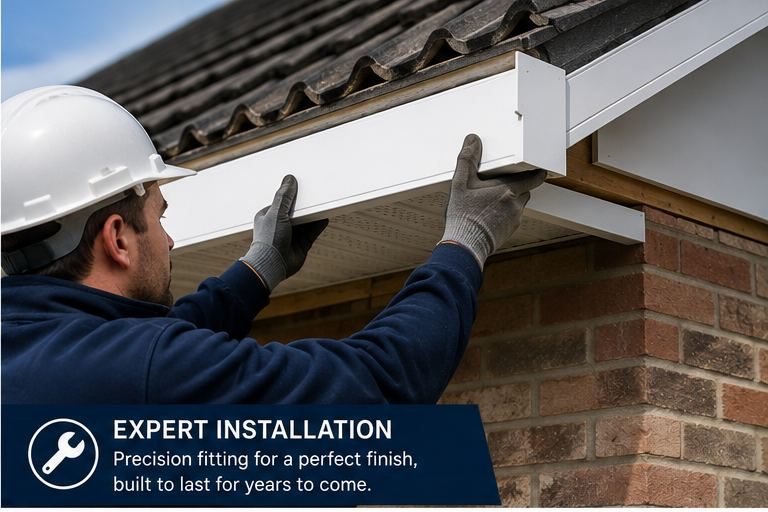
Properly done, replacement means removing the old boards and gutters, checking the rafter ends and eaves, fitting new boards, adding vented soffits or vent strips, and refitting gutters. White is common, with darker and wood-effect finishes also available. UPVC is very low maintenance and is simply cleaned. We check what older soffit boards are made of before disturbing them.
- Look for gutter drips and stained brickwork below the roofline.
- Note peeling paint or dark patches on the board.
- Check from the ground for sagging gutters.
Frequently Asked Questions
Can I just paint over a soft fascia?
Paint will not cure rot and can trap moisture inside the timber. If the board is soft, the better answer is to replace the affected length, or the whole run if the damage is widespread. We check the timber behind before deciding.
Why does rot start at the bottom of the board?
Water runs down the face of the board and collects on the lower edge, where it soaks into end grain and joints. Overflowing gutters make this worse, so the bottom edge is often the first part to fail and the last to be noticed.
Will new boards rot again?
UPVC does not rot, so the board itself will not decay. The key is fixing what caused the problem, namely leaking gutters and poor ventilation, so that the rafter ends and the roof space stay dry as well.
Talk to our team about UPVC fascias and soffits in Old Market
Every roof is different — the fastest way to get an accurate answer is a quick chat with our team.